
In this article:
We spoke to Dr Vinatha Puli, Senior Consultant – Gynaecologist and Obstetrician at Cloudnine Group of Hospitals, Hyderabad, about the role of cervical mucus when you are trying to conceive. Knowing how it changes throughout your menstrual cycle, you can track your most fertile days.
What Is Cervical Mucus and How Does It Change During Your Cycle?
The cervix is the lower part of your uterus that opens into the vagina. Cervical mucus is produced by glands present in your cervix. Its consistency and quantity may change in response to hormonal fluctuations, particularly oestrogen and progesterone.According to Dr Vinatha Puli, rising oestrogen levels before ovulation make cervical mucus increasingly wet, clear, stretchy and slippery.
It may resemble raw egg white, a change that helps sperm move through the cervix and creates favourable conditions for fertilisation.
After ovulation, progesterone usually makes the mucus thicker and less abundant. However, mucus patterns differ between individuals and may not follow the same pattern every month.
How Does Cervical Mucus Help You Conceive?
Cervical mucus plays an important role in supporting sperm as they travel towards the egg. Around your fertile window, its thinner, more slippery consistency makes it easier for sperm to pass through the cervix. It also supports sperm survival within the reproductive tract.As Dr Vinatha Puli explains, the most fertile days generally include the days leading up to ovulation and the day of ovulation itself. Sperm can survive for several days under favourable conditions, while the egg usually remains available for fertilisation for about 12–24 hours after ovulation.
If you are trying to conceive, having intercourse every one to two days during your fertile window can improve your chances. Observing cervical mucus may help you recognise when this period is approaching.
How Can You Track Cervical Mucus to Identify Your Fertile Days?
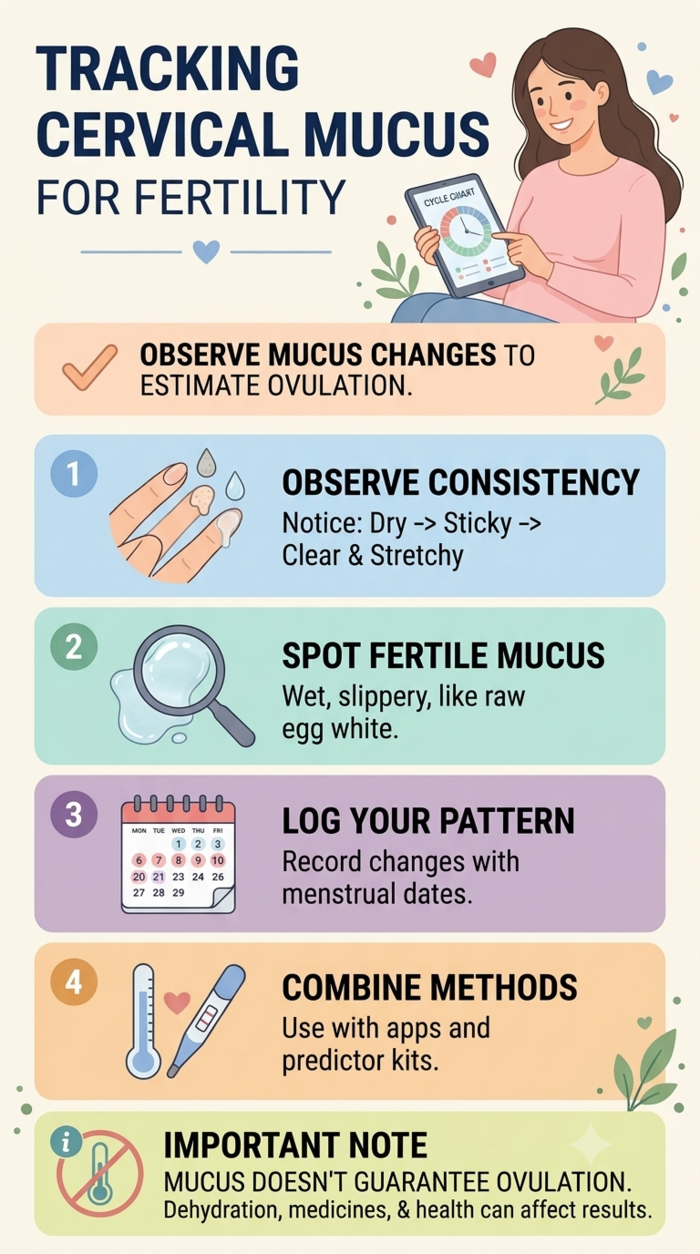
You can observe changes in your vaginal discharge to estimate when you may be approaching ovulation. Here are a few practical steps:- Check the consistency: Notice whether your discharge is dry, sticky, creamy, watery or clear and stretchy.
- Look for fertile-type mucus: Wet, slippery mucus that resembles raw egg white often indicates that you are in or approaching your fertile window.
- Track the pattern: Record your observations alongside your menstrual dates to identify recurring changes.
- Combine tracking methods: Menstrual cycle tracking or ovulation predictor kits may provide additional clues about ovulation timing.
Dr Vinatha Puli highlights the importance of interpreting these changes carefully, as mucus patterns may vary and are not a definitive measure of ovulation.
When Should You Be Concerned About Changes in Cervical Mucus?
Changes in cervical mucus are usually a normal part of the menstrual cycle. However, certain symptoms may indicate an infection rather than a normal hormonal change.Consult your doctor if your discharge has the following characteristics that indicate an infection:
- An unpleasant smell
- Unusual colour
- Itching or burning
Cervical mucus can offer useful clues about your fertile window and help you understand your body's natural fertility signals. Combine these observations with other ovulation-tracking methods, and seek a fertility evaluation if conception takes longer than expected.
FAQs on Why Is Cervical Mucus Important When Trying to Conceive?
- Does clear, stretchy cervical mucus mean I am ovulating?
Clear, stretchy mucus resembling raw egg white often signals that ovulation is approaching or that you are within your fertile window. However, it cannot confirm that ovulation has occurred. - Can I get pregnant without noticing fertile cervical mucus?
Yes. You may not always notice these changes, even when ovulation occurs. You can combine menstrual cycle tracking with ovulation predictor kits to estimate your fertile days. - What should I do if my cervical mucus seems unusual?
If your discharge has an unpleasant smell, unusual colour, itching or burning, consult a healthcare professional to check for a possible infection.