
In this article:
What Is Antiphospholipid Syndrome in Pregnancy?
Antiphospholipid syndrome, also called Hughes syndrome or "sticky blood" syndrome, is an autoimmune condition in which the body produces antibodies called antiphospholipid antibodies.These antibodies make the blood clot more easily and can block the small vessels that supply the placenta. As a result, the placenta may not receive enough blood and oxygen, increasing the risk of miscarriage and other pregnancy complications.
APS may occur on its own or along with another autoimmune disease, such as systemic lupus erythematosus (SLE). It is found in about 10–15% of women with recurrent pregnancy loss.
How Does APS Cause Recurrent Miscarriage?
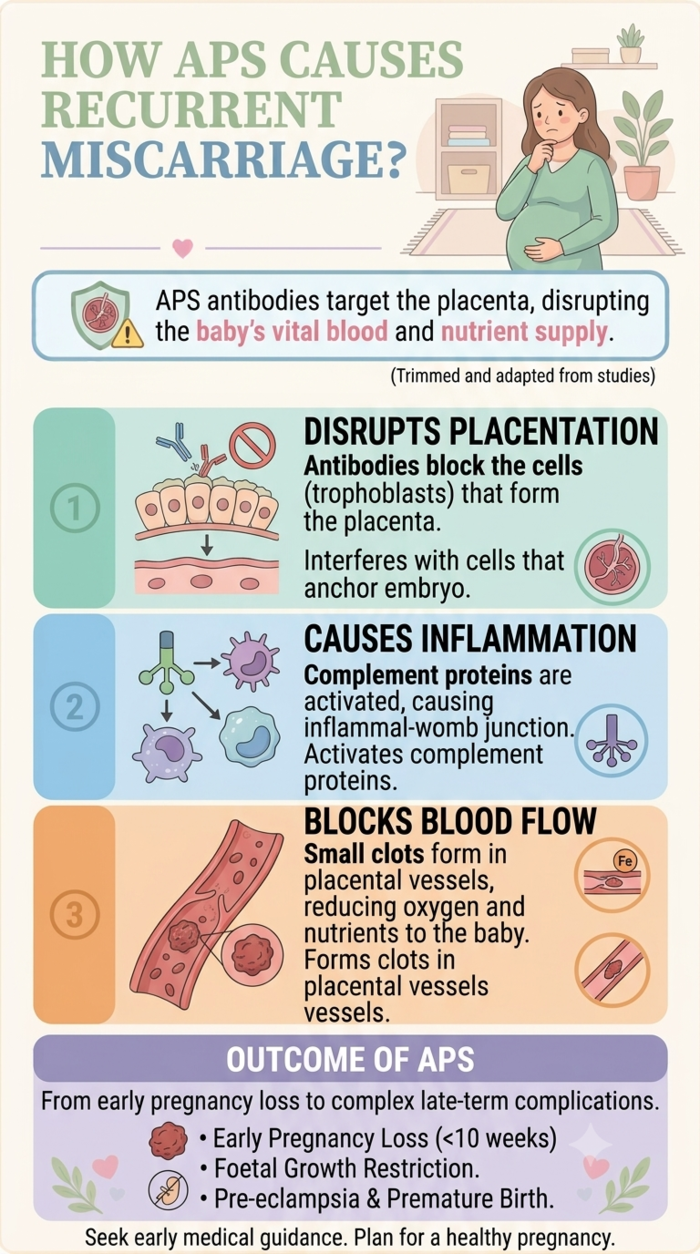
The placenta needs a steady blood supply to provide oxygen and nutrients to the developing baby. In APS, antiphospholipid antibodies can promote abnormal clotting and inflammation around the placenta.The antibodies can affect pregnancy in three ways:
- They interfere with trophoblast cells, which form the placenta and anchor the embryo to the womb lining.
- They activate complement proteins, causing inflammation where the placenta meets the womb.
- They can form small clots in placental vessels, reducing the blood and oxygen reaching the baby.
What Are the Symptoms of APS in Pregnancy?
APS often causes no symptoms. Repeated pregnancy loss may be the first sign.Possible signs include:
- A blood clot in the leg or lung
- Stroke or other clot-related problems
- Repeated miscarriages
- Stillbirth or other pregnancy complications
- A lace-like, reddish-blue skin rash called livedo reticularis
- Other autoimmune symptoms, particularly when APS occurs with lupus
Although APS can increase pregnancy risks, appropriate treatment and close antenatal surveillance improve the chances of a successful outcome for many women. Care often involves a coordinated team of obstetricians, haematologists and other specialists.
How Is Antiphospholipid Syndrome Diagnosed?
Testing may be considered when a woman has a history suggestive of APS, particularly repeated pregnancy losses or an unexplained blood clot.The blood tests look for three main antiphospholipid antibodies:
- Lupus anticoagulant
- Anticardiolipin antibodies
- Anti-beta-2 glycoprotein I antibodies
The doctor also checks for at least one clinical feature:
- Three or more consecutive miscarriages before 10 weeks
- One or more loss of a normal foetus after 10 weeks
- Preterm birth before 34 weeks due to placental disease
How Is APS Treated During Pregnancy?
For women with obstetric APS and a history of three or more early recurrent miscarriages or a previous foetal loss, EULAR recommendations support treatment with low-dose aspirin plus preventive-dose heparin during pregnancy. Aspirin is preferably started before conception, while heparin is generally added after pregnancy is confirmed.Heparin does not cross the placenta and is commonly used during pregnancy when anticoagulation is needed. Low-molecular-weight heparin (LMWH) is often preferred because of its practical advantages.
EULAR recommends considering continuation of preventive-dose heparin for six weeks after delivery in women with obstetric APS who received it during pregnancy.
Can Women With APS Have a Healthy Pregnancy?
APS increases pregnancy risks, but appropriate monitoring and treatment can reduce complications.Pregnancy care may include regular blood pressure checks, urine testing, blood tests, and ultrasound monitoring of the baby's growth and placental blood flow.
Women with recurrent miscarriages can discuss APS testing with their obstetrician, particularly when there is a history of unexplained pregnancy loss, a previous blood clot or other features that raise suspicion of an autoimmune clotting disorder.
Good antenatal follow-up is important because APS can affect not only miscarriage risk but also placental function, foetal growth and the mother's risk of developing blood clots.
Early recognition of APS and a pregnancy plan tailored to the woman's clotting and pregnancy history can help reduce the risk of recurrent miscarriage and other complications.
FAQs on Antiphospholipid Syndrome in Pregnancy: Why It Can Cause Repeated Miscarriages
- Is antiphospholipid syndrome curable?
There is no cure. Medicines lower the risk of clots and pregnancy complications. - When should you be tested for APS after miscarriage?
Testing is considered when the pregnancy history or other medical features suggest APS, especially with recurrent pregnancy loss or an unexplained blood clot.