Knowing what to expect and taking proactive steps helps you prepare and support your body's healing during the early postpartum weeks.
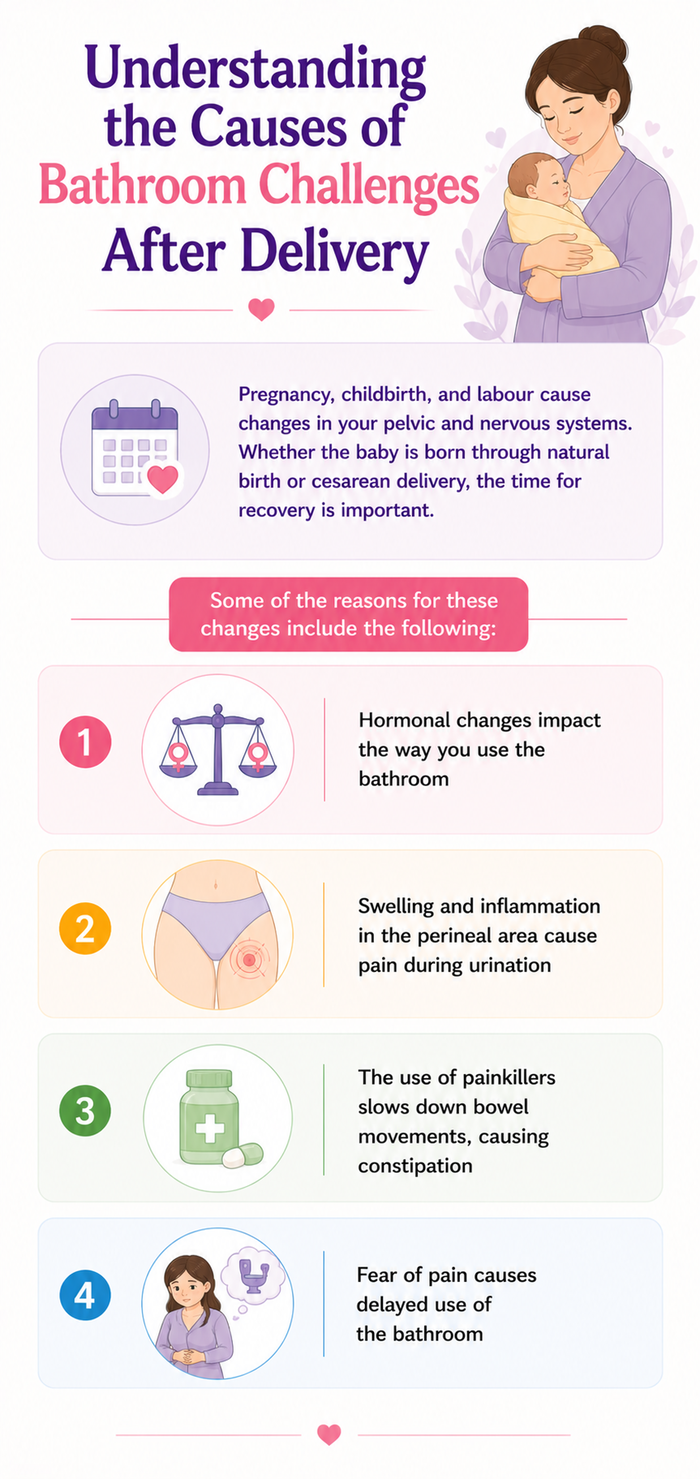
Understanding the Causes of Bathroom Challenges
Pregnancy, childbirth, and labour cause changes in your pelvic and nervous systems. Whether the baby is born through natural birth or cesarean delivery, the time for recovery is important.
Some of the reasons for these changes include the following:
- Hormonal changes impact the way you use the bathroom
- Swelling and inflammation in the perineal area cause pain during urination
- The use of painkillers slows down bowel movements, causing constipation
- Fear of pain causes delayed use of the bathroom
Issues Related to Urination
Most women tend to experience problems while urinating after childbirth. These may be:
- Painful urination: Tears and stitches experienced in the perineum area cause painful urination
- Problematic urination: It is possible that swelling could restrict urination
- Urinary urgency: Rapid filling of the bladder due to a change in the tone of the muscles
- Incontinence: Inability to control the bladder because of the weakening of the pelvic muscles
Useful tips to cope:
- Rinse the vagina with lukewarm water after urinating
- Drink a lot of water to dilute the urine
- Avoid delaying urination, as it causes discomfort and raises the risk of infections
- Start pelvic floor exercises after consulting your doctor
Problems Related to Passing Stools
Some common issues arising while passing stools after childbirth include the following:
- Constipation: Alterations in the hormonal system and decreased activity can slow down digestion
- Fear associated with tearing and stitching: Mothers who undergo episiotomy and tearing experience fears because of increased pressure while having bowel movements
- Haemorrhoids: They are large veins around the anal region that might cause some pain to the mother
- Straining: Poor muscle tone will lead to painful straining
Tips for easy stool passage:
- Consume high-fibre foods such as veggies and fruits
- Have adequate water intake
- Consume medications for stool softening as directed by your doctor
- Use sanitary pads when you defecate to protect your perineal region
Post-Caesarean Delivery Care
Women who deliver babies via a caesarean delivery may face some obstacles, which may vary from those of normal deliveries.
- Pain in the abdomen limits mobility
- Pain relief medication causes constipation
- Movement is difficult at first
Useful tips:
- Engage in physical exercises after consulting your doctor to help with easy bowel movements
- Ensure your abdomen is well supported during sneezing and while using the bathroom
- Take the prescribed medicines from your doctor
Personal Hygiene and Prevention of Infections
Hygiene is essential after childbirth, not only for recovery but also for comfort.
- Ensure you clean your perineal area, starting from the front and moving backwards, to prevent any infections
- Ensure you change your sanitary pads as often as possible to keep yourself dry
- Ensure you wash your hands before and after using the toilet
- Be careful of signs such as a burning sensation or a foul smell
When to Consult Your Doctor
You may need professional intervention for the following:
- An inability to pass urine within several hours of delivery
- Intense pain when passing urine or stools
- Constipation that lasts for several days
- Bleeding from piles
- Urinary tract infection symptoms, including fever, chills, and body pain
The combination of patience, correct knowledge, and maintaining cleanliness allows you to resume your regular bodily functions within a brief span of time. Personal hygiene at this stage of recovery will allow a woman to concentrate on caring for your child.
Whether you’re pregnant, a new mom, or navigating postpartum, you don’t have to do it alone. Join our support group to connect, share, and support one another.
FAQs on Going to the Bathroom After Birth: What to Expect and How to Cope
- How soon will I begin having normal bowel movements after giving birth?
Usually, it takes no more than a few days to one week before the return to regular bowel function. Proper nutrition, hydration, and exercise can help speed up the process. - Does urination hurt after delivery?
It is quite common for women to feel pain while urinating post-delivery, whether it is a vaginal birth or a cesarean delivery. However, if things get worse, you should see your doctor. - Can laxatives help me achieve good bowel movements after delivery?
Yes, certain laxatives can help with postpartum bowel movements, but consult your doctor first. Most laxatives are safe for breastfeeding mothers. Prioritise fibre, fluids, and walking instead, using laxatives only if needed.