In this article:
- Delayed periods
- Minor abdominal pain
- Bloated gut
- Constipation
- Mood swings
- Nausea
However, there are numerous other reasons for experiencing constipation. Therefore, it cannot be seen as the only indication that someone is pregnant.
Can Constipation Be One of the First Signs of Pregnancy?
Some people experience constipation right at the beginning of pregnancy due to hormonal changes occurring even before the first trimester begins.
These changes make one’s digestion slower. Therefore, bowel content does not pass fast enough through one’s intestines, making it harder to pass stools.
However, constipation is not one of the most specific signs of pregnancy.
You should consider getting tested for pregnancy if constipation occurs along with the following signs:
- A missed period
- Breast tenderness
- Fatigue
- Nausea
- Frequent urination
- Food aversions
- Increased sense of smell
Why Does Early Pregnancy Cause Constipation?
The main reason is hormonal change.
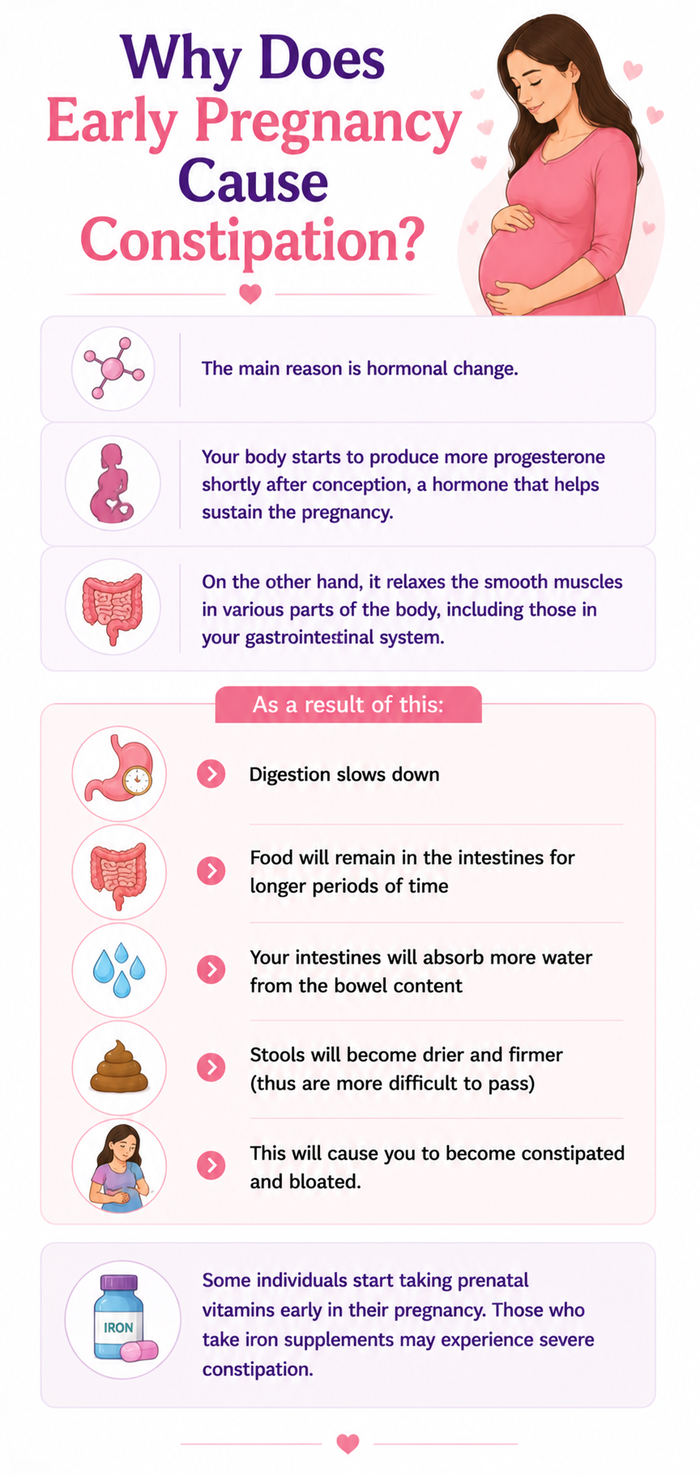
Your body starts to produce more progesterone shortly after conception, a hormone that helps sustain the pregnancy.
On the other hand, it relaxes the smooth muscles in various parts of the body, including those in your gastrointestinal system.
As a result of this:
- Digestion slows down
- Food will remain in the intestines for longer periods of time
- Your intestines will absorb more water from the bowel content
- Stools will become drier and firmer (thus are more difficult to pass)
Some individuals start taking prenatal vitamins early in their pregnancy. Those who take iron supplements may experience severe constipation.
When Does Constipation Happen After Conception?
There is no exact timeline.
Every pregnancy is different.
Some people notice digestive changes within the first few weeks after conception. Others may not experience constipation until later in the first trimester.
In some cases, constipation may appear before a missed period. However, it is usually accompanied by other early pregnancy symptoms rather than occurring alone.
Early Pregnancy vs PMS: How Can You Tell the Difference?
You may also experience constipation during PMS (premenstrual syndrome). Therefore, you might not be able to differentiate whether your bowel issues are happening due to PMS or early pregnancy.
| Symptom | PMS | Early Pregnancy |
| Constipation | Sometimes | Common |
| Bloating | Common | Common |
| Breast tenderness | Common | Common |
| Fatigue | Sometimes | Common |
| Nausea | Rare | More common |
| Missed period | No | Usually |
| Frequent urination | Rare | More common |
Constipation, along with missed periods, increases the chances of being pregnant. Yet, getting tested for pregnancy is the only means of confirming your suspicion.
When Should a Woman Take a Pregnancy Test?
Constipation alone is not a reason to take a pregnancy test.
However, testing may be worthwhile if:
- Your period is late
- You have had unprotected sex
- You notice nausea or breast tenderness
- You feel unusually tired
- You are experiencing several early pregnancy symptoms together
Home Remedies to Manage Constipation During Early Pregnancy
The following are the simple lifestyle measures that may help you manage constipation in early pregnancy:
1. Drink Enough Fluids
Water helps soften stools and supports healthy digestion.
Try to drink fluids regularly throughout the day, especially during hot weather.
2. Increase Fibre Intake
Fibre adds bulk to the stool and helps it move through the intestines more easily.
Good options include:
- Apples
- Pears
- Guava
- Oats
- Whole wheat products
- Lentils
- Beans
- Leafy green vegetables
3. Stay Physically Active
Regular movement can help stimulate bowel activity.
Simple activities may include:
- Walking
- Prenatal yoga
- Light stretching
4. Do Not Ignore the Urge
Delaying bowel movements can make constipation worse.
Try to use the toilet when you first feel the urge.
5. Establish a Routine
Many people find it helpful to visit the toilet at the same time each day, especially after meals.
If you're planning to conceive and are getting constipated more frequently, it may indicate that you are pregnant. However, it’s not the only sign of early pregnancy. So, you should contact your doctor if constipation lasts for more than a few weeks.
Whether you’re pregnant, a new mom, or navigating postpartum, you don’t have to do it alone. Join our support group to connect, share, and support one another.
FAQs on Is Constipation an Early Sign of Pregnancy?
- Can constipation happen before a missed period?
Some people notice constipation during the early weeks after conception, even before a missed period. However, it is usually accompanied by other pregnancy symptoms. - Is constipation common in the first trimester?
Hormonal changes during early pregnancy can slow digestion, making constipation a common first-trimester complaint. - Does constipation mean I am pregnant?
Constipation has many possible causes, including diet, dehydration, stress, and changes in routine. A pregnancy test is the only reliable way to confirm pregnancy.