
In this article:
How Does Breast Milk Supply Work?
Milk production runs on demand. Each time the breast is emptied, the body is signalled to make more. When milk stays in the breast, a protein called feedback inhibitor of lactation (FIL) builds up and slows production.Prolactin drives milk making, and oxytocin triggers the let-down reflex that releases milk. Newborns usually feed 8 to 12 times in 24 hours, and this frequency builds supply.
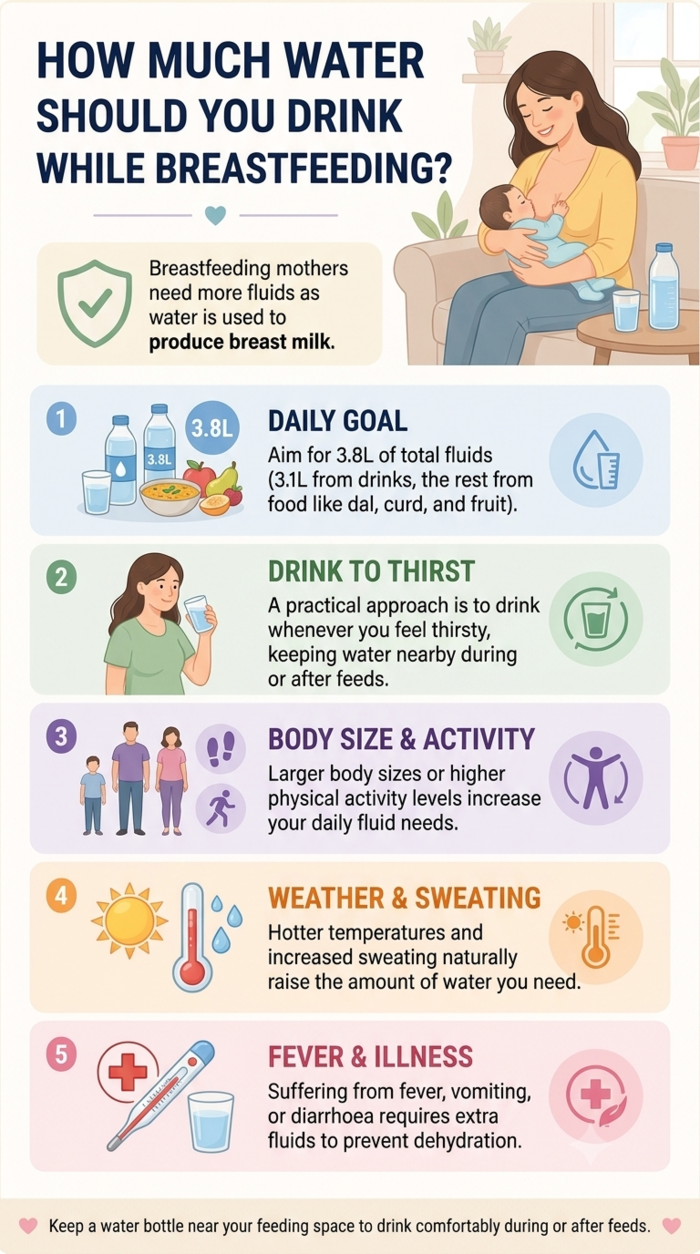
How Much Water Should You Drink While Breastfeeding?
Breastfeeding mothers generally need more fluids than women who are not lactating because some of the water they consume is used to produce breast milk.The US National Academies set an adequate total water intake of 3.8 litres a day for lactating women, including about 3.1 litres from drinks. Water in food, such as dal, curd, fruit and vegetables, makes up the rest.
However, there is no single water intake target that suits every breastfeeding mother. Your requirements depend on factors such as:
- Your body size and activity level.
- The amount of breast milk you produce.
- The weather and temperature.
- Whether you are sweating more than usual.
- Whether you have a fever, vomiting, or diarrhoea.
Mothers should drink water whenever they feel thirsty, and they should also make sure to keep fluids easily accessible during feeding sessions. The goal is to stay adequately hydrated, not to force excessive fluid consumption.
Does Dehydration Affect Breast Milk Supply?
Dehydration occurs when your body loses more fluids than it takes in. Breastfeeding mothers may become dehydrated if they do not replace fluids lost through sweating, urination, and breast milk production. However, mild dehydration does not automatically cause breast milk supply to drop.Severe or prolonged dehydration can affect maternal health, causing symptoms such as:
- Dark yellow urine or reduced urination.
- Dry mouth and lips.
- Headaches.
- Dizziness or light-headedness.
- Unusual tiredness.
- Increased thirst.
What Is the Best Way to Increase Breast Milk Supply?
If you are worried about producing enough breast milk, increasing water intake alone is unlikely to solve the problem. Breast milk production mainly follows a supply-and-demand mechanism. The more effectively milk is removed from the breasts, the more milk your body receives signals to produce.The following practices can help support milk production:
- Breastfeed frequently: Feed your baby whenever they show hunger cues rather than following a rigid schedule.
- Check your baby's latch: A shallow or ineffective latch can prevent your baby from removing enough milk. Make sure your baby's mouth covers a good portion of the areola and that sucking is comfortable.
- Allow effective milk removal: Let your baby continue feeding while actively sucking and swallowing. Offer the other breast when they finish the first.
- Express milk when needed: If your baby cannot breastfeed effectively or you are separated from your baby, regular pumping or hand expression can help maintain milk removal.
- Seek lactation support: A lactation consultant can assess your baby's latch, feeding pattern, and milk transfer to identify possible reasons for low supply.
Which Drinks Are Best for Breastfeeding Mothers?
Water is one of the simplest ways to meet your fluid requirements. However, you do not have to rely exclusively on water. Other fluids and water-rich foods can also contribute to your daily intake.Some suitable options include:
- Milk: Provides fluids along with protein and calcium.
- Buttermilk: A convenient option in Indian households, particularly during hot weather.
- Soups and dal: Provide fluids along with nutrients.
- Coconut water: Contains water and electrolytes, although it is not necessary for routine hydration.
- Water-rich fruits: Watermelon, oranges, muskmelon, and cucumber can contribute to fluid intake.
FAQs on Hydration During Breastfeeding: Does Drinking More Water Increase Milk Supply?
- Can drinking too much water dilute breast milk?
No. The body keeps the fat, protein, and lactose content of milk stable. - Does drinking more water increase breast milk supply?
No. Drinking water beyond your body's requirements has not been shown to increase breast milk production. - Does warm water or jeera water increase milk supply?
They add to fluid intake. Studies have not shown that they raise milk volume.