
In this article:
Nutritional Value of Avocado
Here is what 100 grams of avocado offers and the key nutrients you can get from this fruit:| Nutritient | Amount per 100 g |
| Energy | 160 kcal |
| Protein | 2 g |
| Total fat | 14.7 g |
| Carbohydrates | 8.5 g |
| Fibre | 6.7 g |
| Folate | 81 mcg |
| Potassium | 485 mg |
| Magnesium | 29 mg |
| Vitamin C | 10 mg |
| Vitamin E | 2.1 mg |
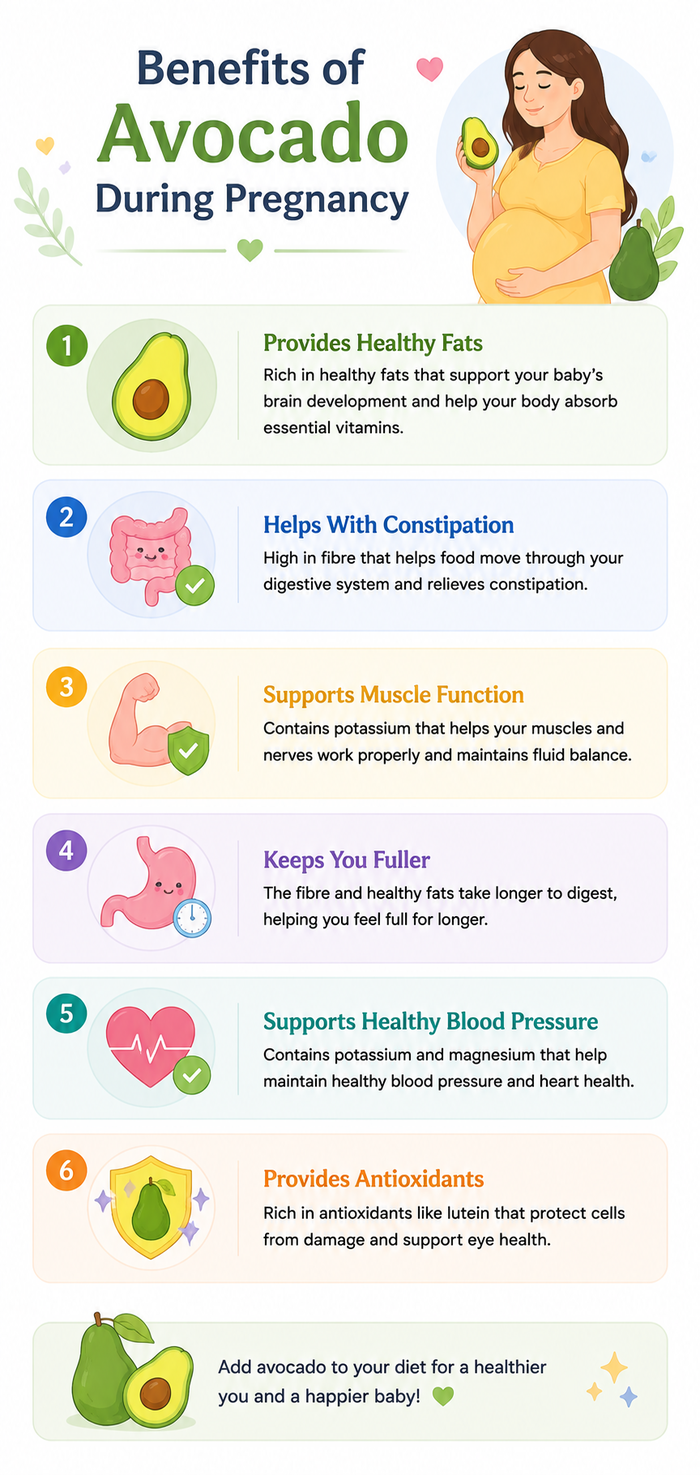
Benefits of Avocado During Pregnancy
Provides Healthy FatsAvocado is rich in healthy fats. Your baby needs these fats for normal growth and brain development. Healthy fats also help your body use certain vitamins from the food you eat.
Helps With Constipation
Constipation can occur during pregnancy because your digestion may slow. Avocado contains fibre, which helps food move through your digestive system.
Supports Muscle Function
Avocado contains potassium, which helps your muscles and nerves work properly. During pregnancy, your body also needs to maintain a healthy fluid balance. Potassium plays a role in supporting this balance.
Keeps You Fuller
You may feel hungry more often during pregnancy. The fibre and fat in avocado take longer to digest. This can help you feel full for longer and may reduce the frequency of hunger between meals.
Supports Healthy Blood Pressure
Avocado contains potassium and magnesium. These minerals help maintain healthy blood pressure and support your overall heart health during pregnancy.
Provides Antioxidants
Avocado contains antioxidants such as lutein, which help protect your body's cells from damage. Lutein is also an important nutrient for eye health.
Can You Eat Avocado in the First Trimester?
Yes, you can eat avocado during the first trimester. In the early weeks, your baby's brain and spinal cord begin to form. Your body needs folate during early pregnancy to support this development, and avocado is one food that provides it. Research shows that one serving of avocado may provide around 10% of your daily folate needs during pregnancy.It may also feel easier to eat when nausea or a low appetite makes regular meals difficult. However, avocado alone may not give you enough folate. This is why you should continue taking the folic acid supplement recommended by your doctor.
Simple Ways to Add Avocado to Your Pregnancy Diet
Avocado can fit into different meals throughout the day. Here are a few ideas you can try:- Mash avocado and spread it on whole-grain toast for a quick breakfast.
- Add small avocado pieces to your homemade salad.
- Blend avocado into a smoothie for a thicker, creamy texture.
- Pair avocado with well-cooked eggs or paneer to make your meal more filling.
- Make a simple homemade avocado dip and have it with vegetable sticks or whole-grain crackers.
When Should You Be Careful With Avocado During Pregnancy?
Avocado is safe for most pregnant women, but there are a few situations where you may need to be careful:- Avoid avocado if you have an allergy or develop itching, swelling, or breathing problems after eating it.
- If you are allergic to latex, you may also react to avocado.
- Eating avocado may cause bloating or stomach discomfort in some women.
- Avocado is high in calories, so eating too much may add extra calories to your diet.
- If you have a medical condition or follow a special diet, ask your doctor about the right amount for you.
Whether you’re pregnant, a new mom, or navigating postpartum, you don’t have to do it alone. Join our support group to connect, share, and support one another.
FAQs on 6 Benefits of Avocado During Pregnancy: Nutritional Benefits Every Expecting Mother Should Know
- Can I eat avocado every day during pregnancy?
Yes, you can eat avocado regularly during pregnancy. Just be mindful of the portion and consider what else you eat throughout the day. - How much avocado can I eat during pregnancy?
There is no fixed amount for everyone, but about half an avocado is a practical portion. The right amount depends on your overall diet and nutritional needs. - How can I eat avocado safely during pregnancy?
Wash the avocado before cutting it, use a clean knife, and eat it fresh. Store any cut avocado in the refrigerator and throw it away if you notice mould, a bad smell, or signs of spoilage.