In this article:
How Can You Be Exposed To Microplastics During Pregnancy?
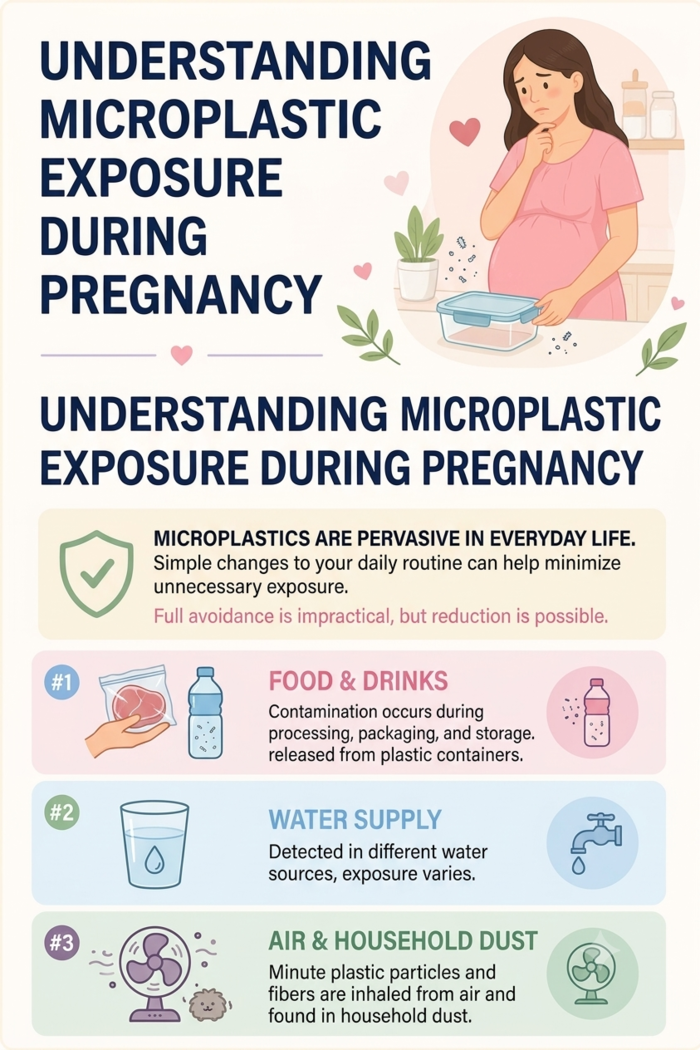
You may come into contact with microplastics through several everyday activities.- Through food and drinks: Microplastics may enter food during processing, packaging and storage. Some plastic containers may also release tiny particles during use.
- Through water: Microplastics have been detected in different water sources. Your exposure may vary depending on the source.
- Through air and household dust: Plastic fibres can become part of household dust. You may also inhale tiny particles present in the air.
Can Microplastics Reach Your Baby?
Certain studies suggest that microplastics may reach the placenta. Researchers have also detected them in amniotic fluid and foetal meconium.The placenta supplies oxygen and nutrients to your baby while providing some protection against harmful substances. According to Dr Lepakshi Dasari, detecting microplastics in placental tissue suggests that some particles may reach this important maternal–foetal interface. However, their exact effects remain unclear.
Researchers are investigating whether these particles can:
- Trigger inflammation.
- Cause oxidative stress.
- Affect placental cells.
- Cause cellular damage and disrupt hormonal pathways.
What Could Microplastics Mean For Your Baby's Health?
Researchers are studying several possible effects.1. Placental health
Experimental studies suggest that micro- and nanoplastics may affect placental cells and trigger inflammatory responses. Dr Lepakshi Dasari also highlights oxidative stress, cellular damage and hormonal disruption as possible concerns.
However, researchers have not established whether these effects occur at everyday exposure levels in pregnant women or lead to pregnancy complications.
2. Baby's growth
Some human studies have reported associations between microplastic exposure and outcomes such as
- Birth weight
- Gestational age
- Microplastic exposure
- Foetal growth
More human research is needed to understand the actual risks and possible long-term effects on maternal and foetal health.
Tips to Minimise Microplastic Exposure
It is not necessary to get rid of all the plastic items at home. Here are a few steps that will help you to achieve this goal:- Do not heat the food in the plastic containers; use glass or stainless steel containers
- Reduce the use of single-use plastic by taking a reusable water bottle everywhere you go
- Keep the food in glass or stainless steel containers
- Maintain a clean household by cleaning regularly
- Consume fresh or unpackaged food wherever possible
Follow your usual prenatal check-ups without getting overwhelmed by the exposure to microplastics.
The study of microplastics in pregnancy is quite new. While scientists have proven the presence of microplastics in pregnancy-related tissue, no information is yet available about their effect on babies.
FAQs on Can Microplastics Affect Your Baby During Pregnancy?
- Can microplastics cross the placenta?
Microplastics have been detected in human placental tissue and other maternal–foetal compartments. However, researchers are still studying how different particles move through the placenta and whether they cause meaningful health effects. - Should you stop using plastic completely during pregnancy?
No. Completely eliminating plastic is neither practical nor necessary. Instead, reduce avoidable exposure. For example, avoid heating food in plastic and use glass or stainless steel containers when convenient. - Can microplastics cause birth defects?
There is currently not enough human evidence to establish that microplastics cause birth defects. Some animal and laboratory studies have raised concerns about foetal development, but these findings cannot be directly applied to human pregnancy.