We got in touch with Dr Sadhna Singhal Vishnoi, Associate Director – Department of Obstetrics and Gynecology at Cloudnine Group of Hospitals, Punjabi Bagh, New Delhi, for expert insight on this condition.
What Is Couvade Syndrome?
Couvade syndrome is when a nonpregnant partner develops pregnancy-like physical or psychological symptoms while their partner is pregnant. The condition is recognised in medical literature, although researchers still do not have a single explanation for why it happens.The condition is named after the French word couver, meaning “to hatch” or “to brood”. The British anthropologist Edward Tylor described the pattern in 1865. It is not a recognised disease and does not mean the man believes he is pregnant.
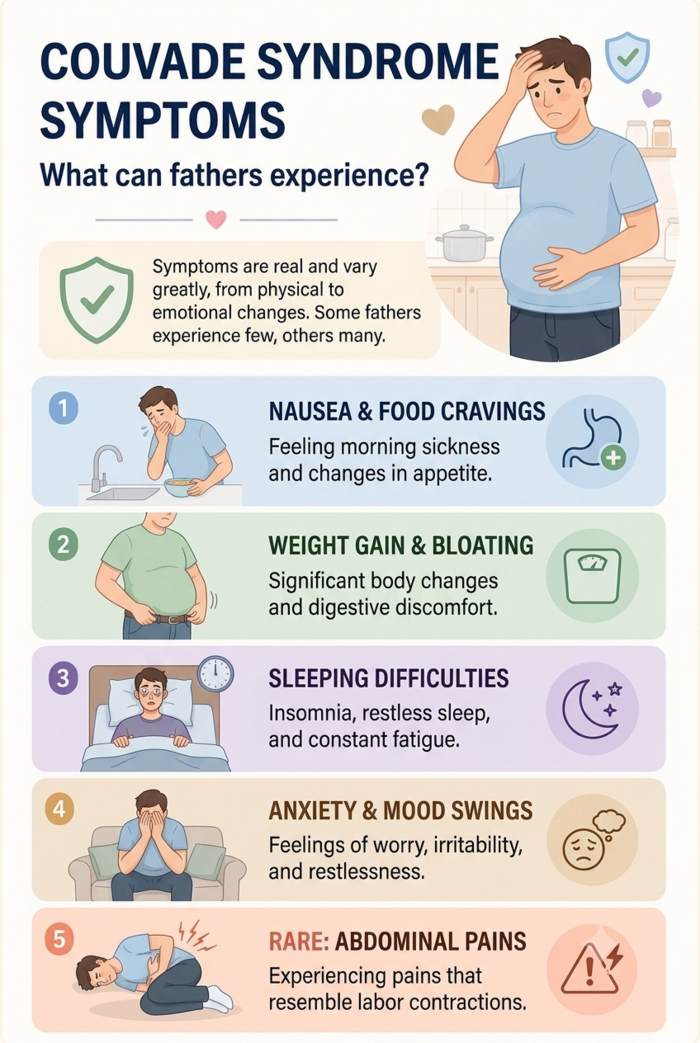
Couvade Syndrome Symptoms: What Can Fathers Experience?
Symptoms can vary widely from one person to another. Some fathers experience only one or two changes, while others report several symptoms.- Physical: Nausea, vomiting, indigestion, bloating, constipation, changes in appetite, food cravings, weight gain, back pain, increased sensitivity to smells, leg cramps, tiredness, and headaches
- Psychological: Mood swings, irritability, anxiety, trouble sleeping, nightmares, difficulty concentrating, and feeling low or helpless
- Rare: abdominal pain resembling labour pains
Couvade syndrome is not considered a pregnancy in the father, and symptoms should not automatically be attributed to it. Persistent or severe symptoms may have another medical cause and should be evaluated by a doctor.
Why Do Fathers Get Pregnancy Symptoms?
No single cause has been proven for sympathetic pregnancy. Several factors may play a role.- Emotional stress and anxiety: Preparing for a baby can bring financial concerns, changes in responsibilities, and worries about childbirth, parenting, and the health of the mother and baby. Stress can cause physical symptoms such as stomach upset, poor sleep, headaches, and changes in appetite.
- Empathy and involvement: Some fathers become deeply involved in the pregnancy, attending appointments, monitoring symptoms, and preparing for the baby. Researchers have suggested that greater emotional involvement and empathy may be associated with Couvade symptoms.
- Changes in daily routine: Pregnancy can change a couple’s eating habits, sleep schedule, and physical activity. If both partners eat more frequently, exercise less, or experience disrupted sleep, the father may also gain weight or feel tired.
- The transition to fatherhood: Becoming a parent is a major psychological change. A 2026 study found that Couvade-related experiences can involve emotional sensitivity, anxiety, relationship changes, and the development of a fatherhood identity, in addition to physical symptoms.
When Does Couvade Syndrome Start and How Long Does It Last?
Couvade syndrome symptoms can begin during the first trimester and may become more noticeable later in pregnancy. Some research describes a pattern in which symptoms appear early, improve during the middle months, and return during the third trimester.For many fathers, symptoms disappear after the baby is born. However, there is no fixed timeline because Couvade syndrome is not a standard medical disorder with defined diagnostic criteria.
How Common Is Couvade Syndrome?
Older research has reported rates ranging from about 11% to 65%, while other reviews have reported much wider ranges depending on how Couvade syndrome is defined.In India, most antenatal care focuses on the mother. Fathers are rarely asked how they feel.
A recent study found a high frequency of pregnancy-related complaints among expectant fathers, but the researchers assessed symptoms rather than using a universally accepted diagnostic test for Couvade syndrome.
Does Couvade Syndrome Need Treatment?
Couvade syndrome does not require specific treatment. Suggested measures include:- Attend antenatal visits and classes with your partner.
- Talk to your partner, a friend, or a doctor about worries.
- Keep regular meal times and sleep hours.
- Walk or exercise daily.
Couvade syndrome usually settles after childbirth, but symptoms that persist or worsen need a doctor’s evaluation.
Whether you’re pregnant, a new mom, or navigating postpartum, you don’t have to do it alone. Join our support group to connect, share, and support one another.
FAQs on Couvade Syndrome: Why Do Some Fathers Get Pregnancy Symptoms Too?
- Is couvade syndrome real?
Yes, it is a documented phenomenon. It is not listed as a formal disease, but studies in several countries, including India, report it. - Can couvade syndrome happen to fathers who are not first-timers?
Yes, though research mostly studies first-time fathers. - Does couvade syndrome go away on its own?
In most men, symptoms fade after the baby is born. Seek medical advice if they continue.