In this article:
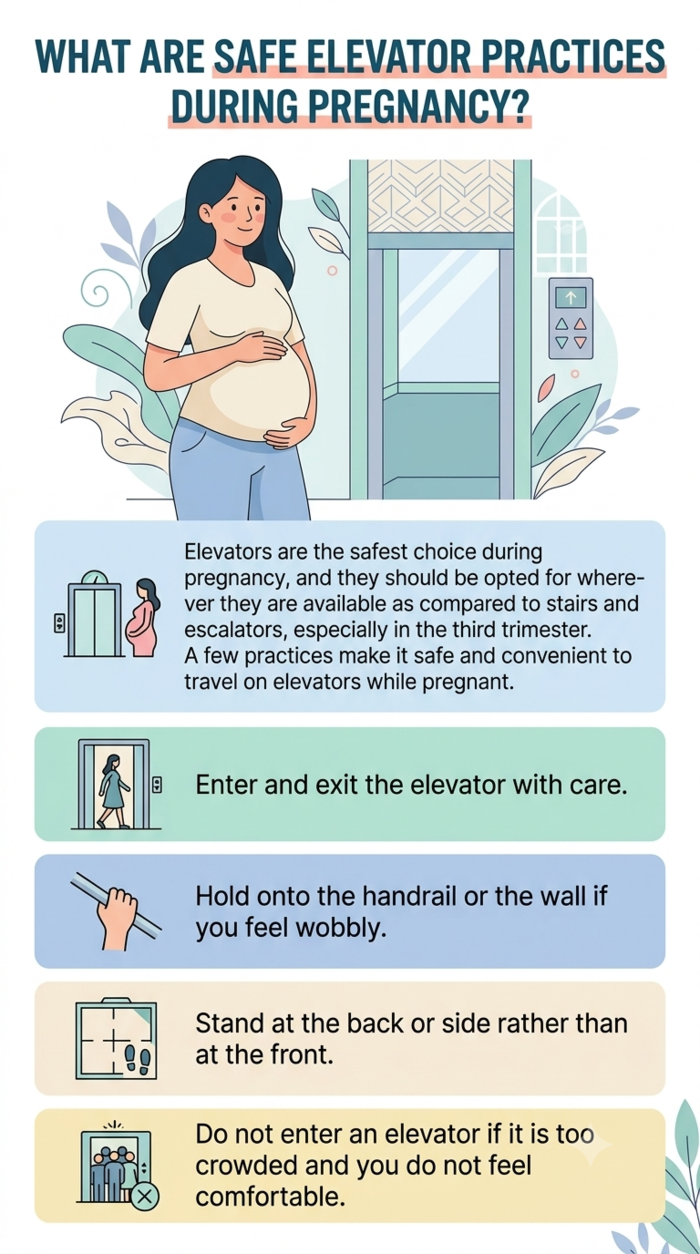
What Are Safe Elevator Practices During Pregnancy?
Elevators are the safest choice during pregnancy, and they should be opted for wherever they are available as compared to stairs and escalators, especially in the third trimester.A few practices make it safe and convenient to travel on elevators while pregnant.
- Enter and exit the elevator with care
- Hold onto the handrail or the wall in the elevator if you feel wobbly
- Stand at the back or side of the elevator rather than at the front of the elevator
- Do not enter an elevator if it is too crowded and you do not feel comfortable with the situation
What Are Safe Escalator Habits During Pregnancy?
Take more care with escalators when pregnant than with both elevators and stairs, as they involve movement, a limited place to stand on, and rapid boarding and deboarding action, all of which become increasingly difficult with pregnancy development.These are habits that should be adopted while using an escalator when pregnant.
- Always grasp the handrail when stepping onto the escalator and when stepping off; this is compulsory during pregnancy, no matter how stable one feels.
- Board and deboard slowly and cautiously; the danger points are where one goes up and down the escalator, as these are the points where falls usually happen.
- Stand centrally on the step; avoid standing close to the edges, as uneven borders may trip footwear.
- Face front and keep feet flat on the step; do not attempt to climb or go down on a moving escalator while pregnant, especially in the third trimester.
- Do not use the escalator if you have vertigo, are feeling ill, or are overly tired since falling off the moving escalator could be a possibility while there is always the option of using an elevator.
- Use flat and non-slippery shoes; high-heeled and slippery shoes should be avoided at all times, particularly during pregnancy.
What Are Safe Staircase Habits During Pregnancy?
The following are some staircase habits that are very important to follow when pregnant.- Always use the handrail on every single flight of stairs when going upstairs as well as downstairs.
- Ascend one step at a time and do not skip steps or rush, even when using stairs that are familiar to you.
- Look down at the stairs instead of looking straight. The bump affects your line of vision and can make it difficult for you to misjudge step depth if you are not looking where you are stepping.
- Go slowly, as you are under no pressure to reach anywhere on the staircase while pregnant. There is no time limit to climb the staircase while pregnant.
- Avoid carrying any heavy or bulky loads on stairs as both your hands will need to remain free to support you.
- Take additional precautions while climbing on outdoor, wet or unfamiliar staircases. They have a greater chance of causing a slip than indoor and dry stairs.
- Stop if you are feeling dizzy or short of breath while halfway up the staircase.
When to Contact Your Doctor
Most journeys up and down the stairs, elevators, or escalators while pregnant are fine. You should contact your doctor if the following is true for you.- You have had a fall, even a small one, especially one where your tummy has been impacted.
- You have pain in your pelvis or hip while using stairs that affects your ability to move.
- You have dizziness or lightheadedness while climbing stairs or escalators regularly.
- You notice decreased movements of your baby or abdominal pain following a fall.
Whether you’re pregnant, a new mom, or navigating postpartum, you don’t have to do it alone. Join our support group to connect, share, and support one another.
FAQs on What Are Pregnancy-Safe Elevator, Escalator, and Staircase Habits?
- Is stair climbing safe during the third trimester?
Yes, stair climbing is safe for pregnant women during their third trimester and may serve as a light physical exercise. It requires several simple precautions such as using the handrails, walking one step at a time and walking slowly. - Can an escalator lead to miscarriage or any kind of harm to the baby?
No, escalator use will not lead to miscarriage or any other harm to your child. Just follow all the precautions while using an escalator. - What do I need to do if I fall from stairs while pregnant?
See your doctor immediately even if you feel okay right after the fall. Some of the problems that might occur due to a fall while pregnant, such as placental abruption, might not manifest themselves straight away but could emerge within the next few hours after the fall.