Dr Sadhana Singhal Vishnoi, Director, Department of Obstetrics and Gynaecology at Cloudnine Group of Hospitals, Punjabi Bagh, highlights the symptoms that expectant mothers should be aware of.
Never ignore unusual pregnancy symptoms. Early medical assessment, regular monitoring and timely treatment can protect maternal health and support the baby's well-being.
What is High-Risk Pregnancy?
A high-risk pregnancy refers to a situation where the mother and unborn child, or both, have a high chance of experiencing health problems. Conditions that may lead to a high-risk pregnancy include hypertension, diabetes, thyroid diseases, multiple pregnancies, and certain existing medical conditions, with a history of complications during pregnancy.Nonetheless, having a high-risk pregnancy does not mean that health issues will arise in the future. Regular antenatal appointments and medical care will enable doctors to detect complications and determine whether any additional intervention is required.
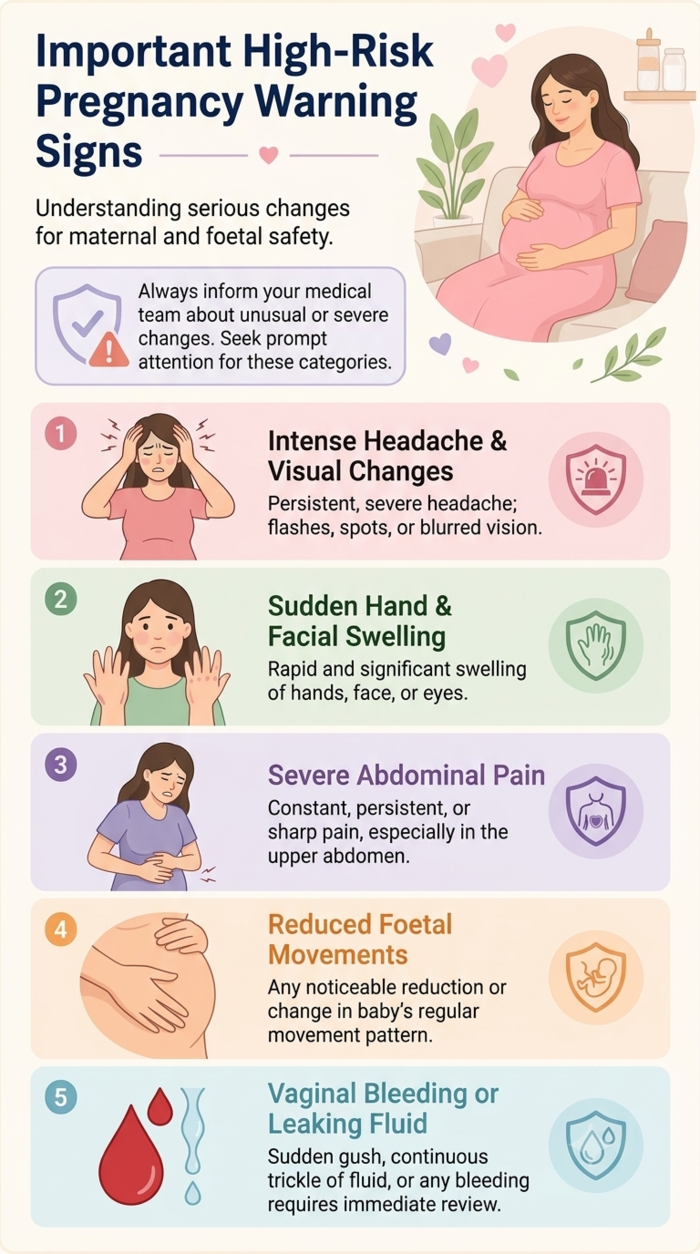
Important High-Risk Pregnancy Warning Signs
Some symptoms during pregnancy may be harmless, while others require prompt medical attention. Expectant mothers should understand the difference and avoid ignoring unusual or severe changes.1. Intense or Continuous Headaches
An intense headache that doesn't go away or feels unlike normal headaches shouldn't be taken lightly. It sometimes can be a sign of high blood pressure or pre-eclampsia, a pregnancy-related condition affecting the mother's organs and the child. It's especially important to seek medical help if the headache happens with visual disturbances, such as blurred vision, swelling, or upper abdominal pain.
2. Blurred Vision or Any Visual Changes
Complete and sudden visual loss, flashes, light spots in the visual field, or simply blurred vision may signal a serious health problem. These signs may happen in the case of pre-eclampsia and must be checked immediately, without waiting for an upcoming maternal appointment.
3. Sudden Facial and Hand Swelling
Sudden or significant swelling of the face or hands during pregnancy should not be ignored. Although mild swelling in the feet is common, rapid swelling, particularly with headaches or vision changes, may indicate pre-eclampsia and requires prompt medical assessment to protect mother and baby.
4. Severe Abdominal Pain
Persistent or intense abdominal pain should never be ignored or considered normal discomfort. Severe pain, especially in the upper abdomen or when accompanied by bleeding, dizziness or weakness, needs urgent assessment to identify the cause.
5. Vaginal Bleeding or Leaking Fluid
Vaginal bleeding during pregnancy requires medical advice, as the causes and urgency vary depending on the stage of pregnancy. A sudden gush or continuous trickle of fluid from the vagina may indicate that the waters have broken. Contact the treating gynaecologist rather than waiting for contractions to begin.
6. Reduced Foetal Movements
Once regular foetal movements are established, any noticeable reduction or change in the baby's usual movement pattern needs immediate medical assessment. Reduced movements can sometimes indicate that the body needs attention. Pregnant women should contact their maternity team promptly and should not wait longer.
7. Difficulty Breathing
New or unexplained breathlessness, particularly at rest, should be assessed promptly. Severe breathing difficulty, chest pain, fainting or blue lips require emergency medical care.
8. Painful Contractions Before 37 Weeks
Painful contractions occurring regularly before 37 weeks of pregnancy may indicate preterm labour. Other symptoms include lower back pain, pelvic pressure and period-like cramps. If these signs develop, contact the gynaecologist immediately. Early medical assessment helps determine whether labour has started and whether treatment is needed to protect the baby.
9. Severe or Persistent Vomiting
Severe or persistent vomiting during pregnancy should not be ignored, especially if you cannot keep food or fluids down. It may lead to dehydration, dizziness, reduced urination and weakness. Seek medical advice promptly if vomiting continues or affects daily activities, as it can help prevent complications.
Recognising high-risk pregnancy warning signs can help pregnant women make timely decisions and protect their health and their baby's well-being. Attend all antenatal appointments, take prescribed medicines and report unusual symptoms to the gynaecologist without delay. Keep your doctor's contact details handy and know where to seek emergency care. Never ignore severe pain, vaginal bleeding, vision changes, or reduced foetal movements. Remember, a high-risk pregnancy does not mean complications are inevitable. With timely medical attention and personalised care, many women can have healthy pregnancies and babies.
Whether you’re pregnant, a new mom, or navigating postpartum, you don’t have to do it alone. Join our support group to connect, share, and support one another.
FAQs on High-Risk Pregnancy Warning Signs You Should Know
- Can itching during pregnancy be a warning sign?
Yes, itching during pregnancy can sometimes indicate a liver condition called intrahepatic cholestasis of pregnancy, particularly when it affects the palms and soles without a rash. Contact your doctor immediately, as early evaluation helps identify complications and protect your baby's health. - Can seizures occur as a warning sign during pregnancy?
Yes, seizures during pregnancy can indicate changes in blood pressure, a serious complication often associated with pre-eclampsia. It requires immediate emergency medical attention, even if blood pressure was previously normal. Prompt treatment is essential to protect both the mother and baby and prevent life-threatening complications. - Can high-risk pregnancy become normal with treatment?
A high-risk pregnancy can often be managed successfully with appropriate treatment, regular monitoring, and lifestyle adjustments. Although the underlying risk factors may remain, timely medical care helps control complications, support the baby's development, and improve the chances of a healthy pregnancy and delivery.