
In this article:
Why Does Skin Change So Much During Pregnancy?
As the uterus expands through all three trimesters, the skin on the abdomen stretches rapidly. This puts pressure on the dermis (the deeper layer of skin), causing tiny tears in the collagen fibres. The visible result is stretch marks (striae gravidarum), which can appear as red, pink, or purple streaks on the belly, hips, and thighs. Hormonal changes also reduce the skin's natural moisture levels, making the surface dry and itchy.Genetics plays a crucial role in how many stretch marks you develop, but keeping the skin well moisturised throughout pregnancy is widely recommended to manage discomfort and support skin elasticity.
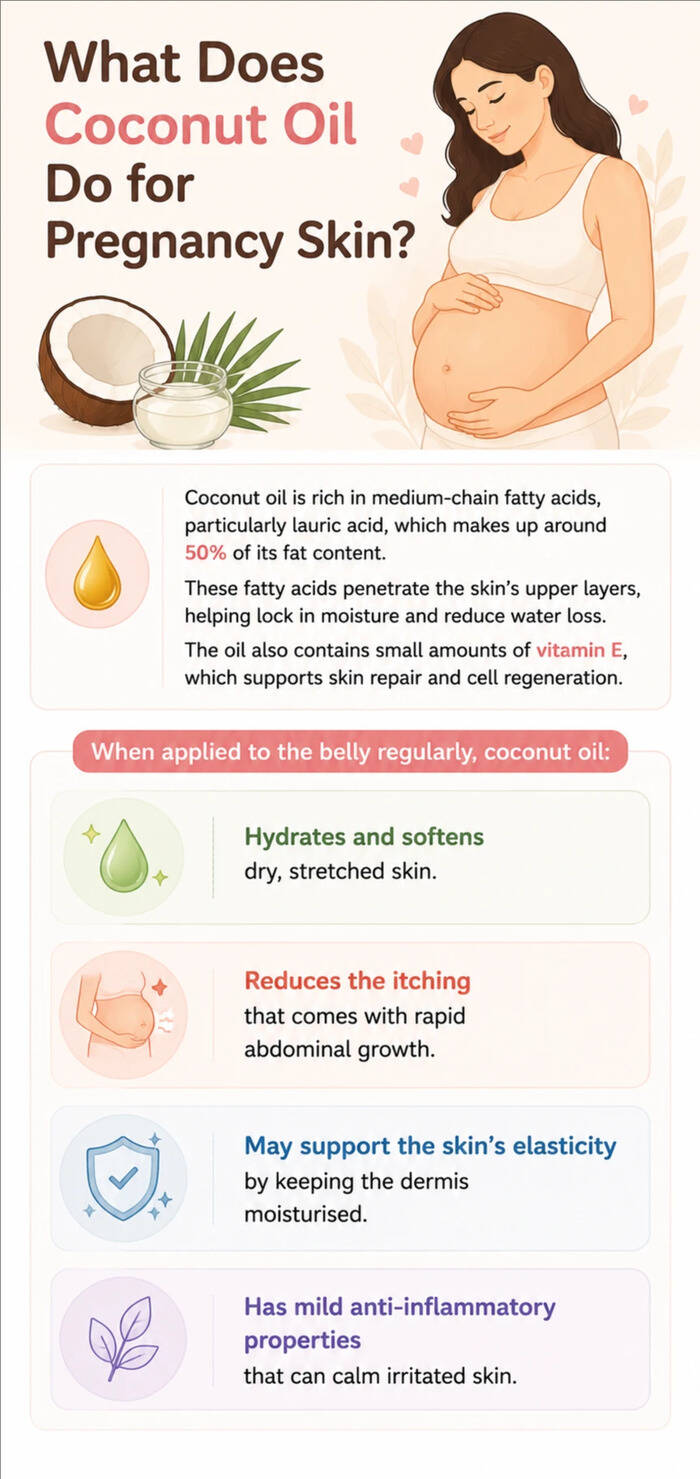
What Does Coconut Oil Do for Pregnancy Skin?
Coconut oil is rich in medium-chain fatty acids, particularly lauric acid, which makes up around 50% of its fat content. These fatty acids penetrate the skin's upper layers, helping lock in moisture and reduce water loss. The oil also contains small amounts of vitamin E, which supports skin repair and cell regeneration.When applied to the belly regularly, coconut oil:
- Hydrates and softens dry, stretched skin
- Reduces the itching that comes with rapid abdominal growth
- May support the skin's elasticity by keeping the dermis moisturised
- Has mild anti-inflammatory properties that can calm irritated skin
Does Coconut Oil Prevent Stretch Marks?
No topical oil or cream can completely prevent stretch marks. Whether they appear, and how severe they are, depend largely on skin type, genetics, the rate of weight gain, and hormone levels. Coconut oil can keep the skin supple, reduce itching, and may lower the severity of stretch marks that do form.If stretch marks are a concern, starting application in the second trimester, before the belly grows most rapidly, gives the best chance of keeping the skin as hydrated as possible during the most intense stretching phase.
How to Apply Coconut Oil to Your Belly During Pregnancy
- Choose the right type: Always use virgin or extra-virgin, cold-pressed coconut oil. This is the least processed form and contains no added fragrances, preservatives, or chemicals. Cold-pressed coconut oil is readily available in most grocery stores and pharmacies and is an affordable option.
- When to apply: The best time is after a warm shower or bath, when the skin's pores are open, and absorption is better. You can also apply it at bedtime.
- How to massage: Warm a small amount between your palms and gently massage in circular motions over the belly, hips, thighs, and breasts, areas most prone to stretch marks. Keep pressure gentle, particularly over the abdomen.
- How often: Once or twice daily from the second trimester onwards is sufficient.
- Patch test first: Apply a small amount to the inner forearm and wait 24 hours before using it widely. Though rare, some people are sensitive to coconut oil.
Are There Any Risks?
For most pregnant women, topical coconut oil is well tolerated. A small number of people may develop contact dermatitis or a rash if they are sensitive to coconut or tree nut products. If you notice redness, swelling, or a rash, stop use and speak with your doctor.Coconut oil is not a replacement for medical treatment. If you have a diagnosed skin condition such as eczema or pruritic urticarial papules and plaques of pregnancy (PUPPP), check with your obstetrician or dermatologist before relying on coconut oil alone.
Coconut Oil in the Indian Pregnancy Tradition
Coconut oil has been used in Indian households for centuries, in hair care, cooking, and skin care across southern states, Kerala, Tamil Nadu, Karnataka, and coastal Maharashtra and Goa.During pregnancy, the practice of massaging the body with coconut oil is deeply embedded in traditional postpartum and antenatal care. Ayurvedic traditions also recommend oil massages during pregnancy for relaxation and skin nourishment. This cultural familiarity makes coconut oil a practical, accessible, and trusted option for most mothers-to-be.
Applying coconut oil will not completely prevent stretch marks, but regular application from the second trimester can help keep the skin moisturised, reduce itching, and may lower stretch mark severity, all without exposing you or your baby to harsh chemicals.
Whether you’re pregnant, a new mom, or navigating postpartum, you don’t have to do it alone. Join our support group to connect, share, and support one another.
FAQs on Is Applying Coconut Oil to the Belly Safe During Pregnancy?
- Is it safe to apply coconut oil near the belly button during pregnancy?
Yes, applying coconut oil around the belly button area is safe. As the belly grows, the skin around the navel can become particularly stretched and dry. A gentle massage with coconut oil in that area is fine. - Can coconut oil remove stretch marks after pregnancy?
Coconut oil cannot remove stretch marks that have already formed. However, regular application may help reduce their appearance over time by supporting skin hydration and mild collagen repair. Most stretch marks naturally fade to a silvery tone within 6–12 months after delivery.