In this article:
What is Low Blood Pressure During Pregnancy?
Hypotension, or low blood pressure, is the medical term used to describe the condition where blood pressure levels are lower than normal. A blood pressure reading less than 90/60 mmHg is generally seen as low blood pressure.Blood pressure may drop because hormonal changes during pregnancy cause blood vessels to become relaxed and dilated, which lowers the resistance to blood flow. Although blood vessel widening can increase the blood supply, providing sufficient blood to the uterus and placenta, it can temporarily lower blood pressure. It is relatively common, especially during the first and second trimesters.
Low blood pressure during pregnancy is common due to hormonal and circulatory changes, but significant drops may cause dizziness, fainting, and require medical attention.
Causes of Low Blood Pressure During Pregnancy
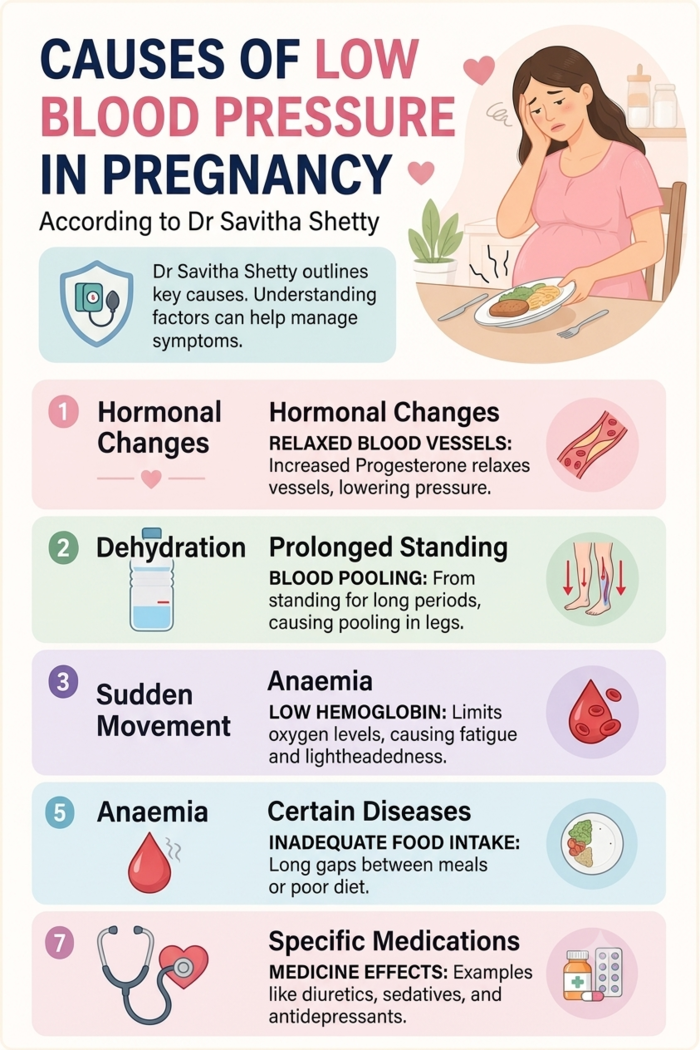
According to Dr Savitha Shetty, low blood pressure in pregnancy can be caused by several reasons, such as the following:- Hormonal changes: Increased progesterone, along with other pregnancy-related changes, has a relaxing effect on the blood vessels, which leads to low blood pressure
- Dehydration: Vomiting, lack of fluid intake, and excessive perspiration can reduce the blood volume in the body
- Prolonged standing: Standing for long periods can cause blood to pool in the legs, which may lead to dizziness
- Sudden position changes: Standing up quickly from bed or a chair can cause a temporary drop in blood pressure
- Anaemia: Low haemoglobin levels can cause fatigue, weakness, and lightheadedness
- Low blood sugar: Inadequate food intake or long gaps between meals may contribute to dizziness and weakness
- Certain diseases: Some health conditions affecting the heart and hormonal disorders can cause low blood pressure
- Certain medications: Some medicines like sedatives, antidepressants, and diuretics may reduce blood volume and lower blood pressure
Signs and Symptoms of Low Blood Pressure
Common signs and symptoms may include the following:- Feeling dizzy and unsteady, especially when standing up suddenly
- Brief loss of consciousness due to reduced blood flow to the brain
- Blurred vision
- Feeling sick (nauseous), particularly when standing for long periods
- Feeling unusually tired or lacking energy
- Experiencing confusion or trouble focusing
- Skin may feel cool or appear pale
- Rapid breathing or fast heartbeat
How is Low Blood Pressure Managed During Pregnancy?
To manage mild symptoms, the following measures are suggested by Dr Savitha Shetty:- Adequate fluid intake: Drink sufficient fluids throughout the day to maintain blood volume, especially if vomiting or sweating causes fluid loss
- Eat frequent meals: Avoid skipping meals so that there are minimal gaps between meals to help maintain stable blood sugar levels
- Changing position slowly: Sit up gradually before standing to reduce dizziness caused by sudden blood pressure changes
- Avoid prolonged standing: Take regular breaks and sit down if you feel dizzy
- Wear compression stockings: If recommended by a doctor, these may help improve blood circulation in the legs
- Monitor blood pressure: Regular antenatal checkups help identify persistent low blood pressure and assess the mother's health
- Review medications: A doctor may adjust medicines if they contribute to low blood pressure
When Should You Consult a Doctor?
Seek medical advice if dizziness occurs frequently, symptoms interfere with daily activities, or blood pressure readings remain unusually low. Your doctor may review your medical history, check your blood pressure in different positions, and recommend investigations based on your symptoms.Seek emergency care if low blood pressure is accompanied by fainting with incomplete recovery, severe abdominal pain, heavy bleeding, chest pain, or breathing difficulties. Prompt assessment helps identify serious causes and ensures appropriate treatment for both mother and baby.
Can Low Blood Pressure During Pregnancy Affect Baby's Growth?
Mild low blood pressure during pregnancy does not affect the baby's growth and development. However, severe or persistent hypotension may reduce blood flow to the placenta, potentially affecting the oxygen and nutrients reaching the developing baby. Regular antenatal checkups help monitor foetal growth and maternal health.Low blood pressure commonly occurs in pregnancy and improves with lifestyle changes. Persistent dizziness, fainting, or unusual weakness shouldn't be ignored. Drink more water, eat regular meals, change position gradually, and rest if needed. Take note of recurrent symptoms and report them to your gynaecologist. Seek immediate medical attention for alarming symptoms, such as bleeding, chest pain, and shortness of breath, to safeguard your health during pregnancy.
FAQs on Low Blood Pressure During Pregnancy: Causes, Signs, and Management
- Can low blood pressure during pregnancy cause headaches?
Yes, low blood pressure may sometimes cause headaches, particularly when accompanied by dehydration or dizziness. However, persistent or severe headaches should be evaluated by a doctor to rule out other pregnancy-related complications. - Should women with low blood pressure during pregnancy avoid exercise?
Not necessarily. Gentle physical activity may be the same for many pregnant women with low blood pressure. However, avoid exercising when dizzy or weak. Consult the gynaecologist about suitable activities, especially if low blood pressure causes frequent symptoms. - Can hot weather worsen low blood pressure during pregnancy?
Yes, hot weather can worsen low blood pressure by increasing sweating and fluid loss. Pregnant women should drink adequate water, avoid prolonged exposure to heat, wear lightweight clothing, and rest in cool surroundings.