
In this article:
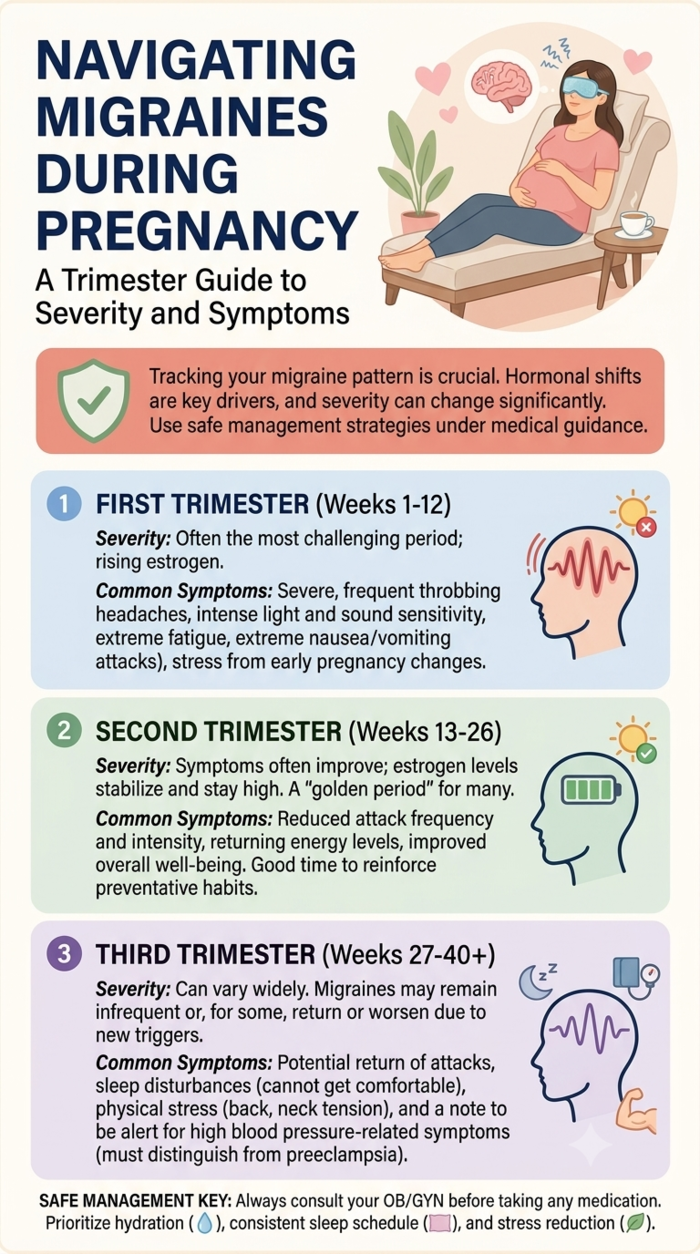
First Trimester: Why Is It the Most Difficult Period?
If you are experiencing strong migraines at the moment, you are not alone. Your body is undergoing a rapid increase in the production of oestrogen and progesterone in the earliest weeks of pregnancy, and your body's response to those changes is more sensitive than usual.Several common features of early pregnancy can contribute to migraines:
- Nausea keeping you dehydrated or preventing you from eating
- Fatigue as a result of poor sleep
- Stress associated with pregnancy
Second Trimester: It Is Usually Time for Improvement
The hormones in your body become stable at a high level in the second trimester, rather than fluctuating. And that is the reason why a lot of women experience relief from their headaches right now.This period is also a good opportunity to get back into a healthy habit, because now your morning sickness is gone and you feel better again. You can follow these steps.
- Establish a stable sleeping and eating schedule
- Establish a healthy water-drinking regimen
- Start exercising and practising yoga after getting your doctor's approval. It may really reduce the number of headaches in the future.
Third Trimester: New Forms of Vigilance
Many of you will experience migraines again in your third trimester. But what is most important about this stage is being able to tell when a common migraine is something else altogether and needs your close attention, such as preeclampsia.There is an added physical stress on your body from carrying a bump that can lead to headaches. An altered centre of gravity can cause tension in your neck, shoulders, and upper back, which then transfers to your head. It becomes harder to lie comfortably, thus making tension-type headaches worse due to a poor sleeping position. Swelling can affect some women by adding sinus pressure.
Posture Correction Techniques for the Third Trimester
You can follow these techniques:- Get a pregnancy pillow to hold your neck and lower back when you sleep.
- Sit in a position where your feet are flat, and your lower back is well-supported. Avoid slouching while sitting on the couch or even at work.
- Perform some shoulder and neck stretches throughout the day when you sit too much.
- Discuss prenatal massage with your doctor for tight shoulders and neck.
Create a Headache Log
Every woman has her own set of triggers; that’s why the very first action you should take is to maintain a headache diary. The next time you have a migraine attack, write down some brief notes. Start with the time of day when it occurred, as some patterns may be associated with fasting periods or sleeping times. Write what you ate or drank last, as it will help detect any food or caffeine trigger, along with noting how many hours of sleep you had at night, since lack of sleep is one of the most widespread triggers among all. In addition, it is recommended to assess your stress level on a scale of 1 to 10 so that both you and your doctor can determine how big a role stress plays. If you see that some visual or sensory symptoms occur right before the attack, write them down as well to identify a migraine with aura from other headaches. Bring this log to your prenatal appointments. It converts the general "sometimes I experience headaches" into actual, usable data for your doctor.Migraine, Tension Headache, or Something Else? Here's How to Tell
A normal migraine appears in the form of a unilateral, pulsating headache, normally hormone-induced but may also be caused by food, lack of sleep or stress, and it always features nausea, sensitivity to light and/or sound, sometimes accompanied by an aura. Migraine typically develops gradually and has a predictable pattern, and its management involves resting, staying hydrated, and whatever remedy your doctor prescribed. On the contrary, tension headaches usually manifest as compression and pressure in the head on both sides, normally caused by poor posture, long periods spent in front of a computer or fatigue, and often associated with muscle stiffness in the neck and shoulders. It is also characterised by gradual development.What About Migraines After the Baby Arrives?
Migraines do not magically disappear once the baby is born. In fact, some women discover that nursing their baby helps because prolactin will keep estrogen levels even. Other women may experience migraines immediately post-birth as a result of dropping hormones.For women who are nursing and experiencing migraines, medication choices need to be revisited. Not all medications that are okay when pregnant are safe to take while nursing. You should have this discussion with your doctor.
When Should You Speak to Your Doctor?
Contact your doctor if you have:- A new headache that is different from your normal migraines
- Vision problems, swelling, or pain under your ribs with your headache
- A sudden severe headache that is new to you
- Fever, stiff neck, or confusion with your headache
- More migraines or difficult-to-control migraines as your pregnancy progresses
Take care of yourself by listening to your body and communicating with your doctor early on regarding your options, and then again once you have had your baby if you are nursing.
Whether you’re pregnant, a new mom, or navigating postpartum, you don’t have to do it alone. Join our support group to connect, share, and support one another.
FAQs on Migraines in Pregnancy: A Trimester-by-Trimester Guide
- Does having migraines during pregnancy impact my baby's development?
The actual migraine headaches do not have any direct effect on your baby's development. It is more important how severe the migraines are, since they could potentially interfere with your ability to eat, drink, and sleep properly for long periods of time. - Are there any aromatherapy techniques or oils I can use for migraines when I am pregnant?
Being pregnant makes a woman much more sensitive to odours that can be strong enough to trigger migraines. If you still would like to use aromatherapy techniques, use them carefully, stop immediately if the headache gets worse and consult your doctor because not all essential oils are safe during pregnancy. - Is it true that some sleeping positions during pregnancy contribute to developing migraines?
Lying flat on your back in later stages of pregnancy affects circulation and can lead to worsening the headache. Lying on your left side is usually recommended in later stages of pregnancy anyway, so this position can be better for relieving tension headaches compared to lying on your back or stomach.