In this article:
If these infections are caught early, timely treatment can be given, and possible complications can be prevented.
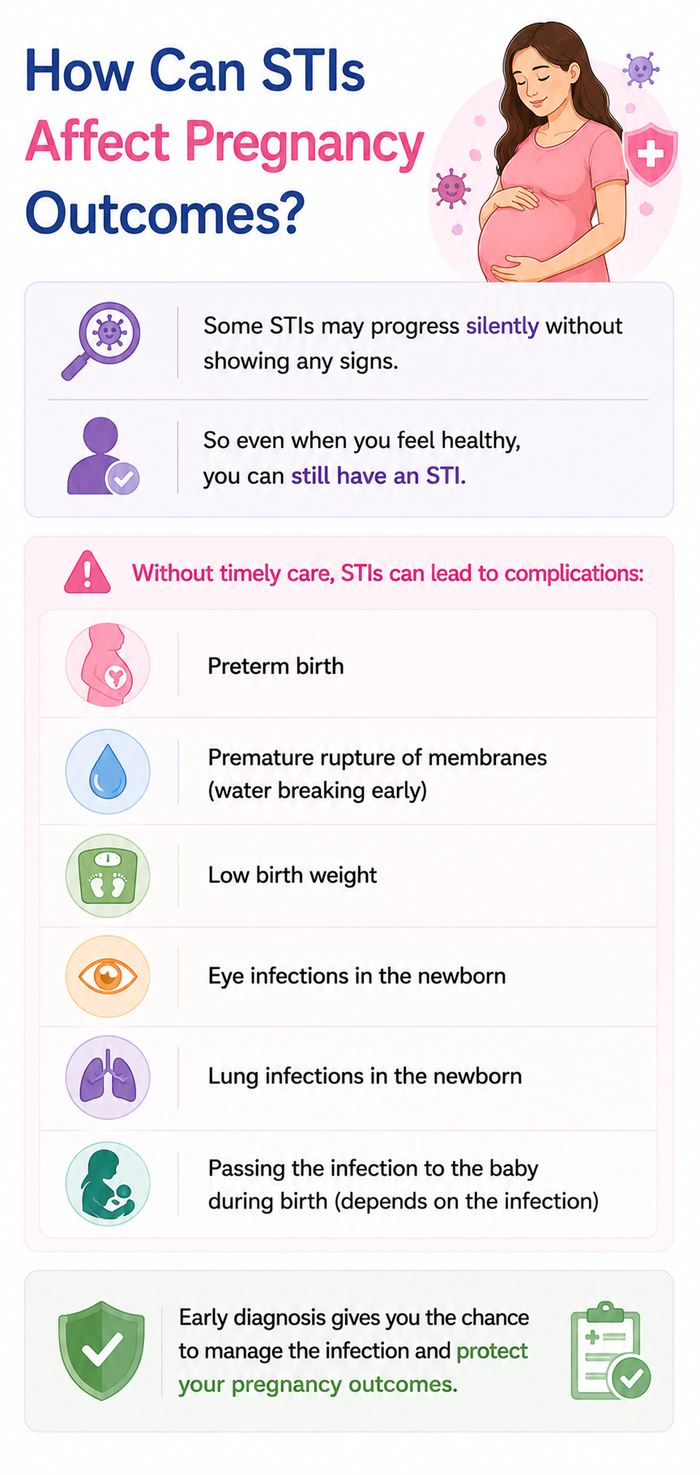
How Can STIs Affect Pregnancy Outcomes?
Some sexually transmitted infections (STIs) may progress silently without showing any noticeable signs, like pain or abnormal discharge.So even when you are feeling completely healthy, you can still have an underlying STI.
However, if you do not receive timely care, these infections may cause certain complications, including:
- Preterm birth
- Premature rupture of membranes (your water breaking early)
- Low birth weight
- Eye infections in the newborn
- Lung infections in the newborn
- Passing the infection to the baby during birth, depending on the infection
When May You Require a NAAT Test During Pregnancy?
A NAAT is not part of routine testing for every pregnancy. However, your doctor may recommend it when there is a medical reason to investigate certain infections.You may be advised to have this test if you:
- Have unusual vaginal discharge
- Notice pain or burning while passing urine
- Experience pelvic discomfort
- Have a previous history of an STI
- Have a sexual partner diagnosed with an STI
- Are considered at increased risk based on your medical history
- Develop symptoms that require further investigation
Which Infections May Require NAAT Testing For Diagnosis?
A NAAT is commonly used to detect certain sexually transmitted infections with high accuracy.| Kind of Infection | Possible Concerns During Pregnancy |
| Chlamydia | May increase the risk of infection in the baby during birth if left untreated |
| Gonorrhoea | Can affect both the pregnant person and the newborn during delivery |
| Trichomoniasis* | May cause genital inflammation and has been linked with certain pregnancy complications |
What To Expect During the Test?
You may expect the following during NAAT testing.| Step | What Should You Expect |
| Before the test | Usually, no fasting or special preparation is required |
| Sample collection | A first-catch urine sample or a vaginal/cervical swab may be collected, depending on the infection being tested |
| After the test | Most people can return to their normal daily activities immediately |
Is It Necessary To Get Treated For STIs During Pregnancy?
Many bacterial STIs can be treated during pregnancy with medicines that are considered safe when prescribed by your doctor.If an infection is detected:
- Adhere to the prescribed treatment exactly
- Do not miss your follow-up appointments
- Your partner may need to be tested or treated, too
- Do not engage in sexual activity until you have been told it is safe
Precaution To Reduce The Risk of STIs During Pregnancy
Simple precautions can help protect both you and your baby.- Attend all scheduled antenatal check-ups.
- Practise safer sex by using condoms correctly.
- Do not ignore unusual discharge, pain, or bleeding.
- Inform your doctor if your partner has been diagnosed with an STI.
- Complete any prescribed treatment without stopping early.
- Discuss any concerns openly during your antenatal visits.
Whether you’re pregnant, a new mom, or navigating postpartum, you don’t have to do it alone. Join our support group to connect, share, and support one another.
FAQs on NAAT Test During Pregnancy: Why Is It Done and What Does It Detect?
- Is it safe to undergo NAAT testing during pregnancy?
NAAT is generally considered safe during pregnancy. But you should get it done only if your doctor recommends it. - Is it possible to carry a pregnancy, staying unaware of the underlying STI?
Yes. Some STIs may not exhibit noticeable symptoms. That is why your doctor may advise testing if you have certain risk factors or symptoms. - What are the chances that your baby gets an infection from you during pregnancy?
Some infections can pass to the baby during pregnancy or childbirth. However, early diagnosis and treatment greatly reduce this risk.