In this article:
What Is a Babymoon?
A babymoon, therefore, is a trip that pregnant couples embark on before the baby's arrival. It is essentially a chance to relax, reconnect as a couple, and enjoy a moment as you count down to this huge life event. Unlike a normal holiday, however, it requires slightly more careful planning, with careful consideration for where you will go, what transport you will take and what activities you will do. If planned correctly, however, it should be a wonderfully relaxing holiday.
When Is the Best Time to Go on a Babymoon?
When you choose to go on a babymoon is crucial, with most doctors recommending travelling in your second trimester, between weeks 14 and 27 of your pregnancy. This window is a popular choice, due to the fact that morning sickness should typically subside, energy levels will be on the up, and although your bump will have grown, it should be quite manageable to travel at this time. Most airlines will restrict flying beyond 36 weeks (for singleton pregnancies), and it is often best to avoid very long journeys as your pregnancy progresses, as this could bring on complications. Regardless of any successful previous pregnancies and your well-being during the first trimester, it is vital to consult your doctor before booking any trip away.
How Do Chronic Conditions Affect Babymoon Planning?
The planning required for a babymoon with a chronic condition will need to take on an extra level of attention to detail, and in addition to taking the same considerations as anyone else, you will need to factor in the additional aspects mentioned below:
- You will need a clear green signal for travel before you can even begin thinking about your destinations.
- Make sure that you carry far more medication than you actually think that you may need on your holiday, and pack this in your hand luggage so that it is always easily accessible.
- As you may require more extensive care during a complicated pregnancy, you will need to find out the locations of the nearest hospitals or clinics prior to departure.
Choosing the Right Destination
While considering where to jet away to is important for any holiday, there are a few more specific factors that need to be thought about in pregnancy.
Closer to Home Is Generally Better: While long-haul flights carry with them only a small risk, it is best to avoid these journeys unless necessary. Take a look at closer destinations that can be reached in a couple of hours, or at most a day's travelling time.
Consider the Climate: Excessive heat may be extremely unpleasant when you are pregnant, so avoid places with high humidity or extreme temperatures and opt for comfortable, warmer climates.
Check Travel Advisories: Certain destinations may carry a higher risk during pregnancy, especially places that are currently experiencing an epidemic or that involve health risks such as diseases that are carried by mosquitoes. If a destination is currently being affected by a widespread outbreak such as the Zika virus, you will need to completely avoid travelling there.
Avoid Places Requiring Specific Vaccinations: Due to potential complications when travelling while pregnant, there are several vaccinations that are best avoided when pregnant, if possible. Ensure that your chosen destination will not require you to have a vaccine that is otherwise not deemed safe for use while pregnant.
Signs You Should Watch Out For While Travelling
If you experience any of the following, seek medical help without delay:
- A swollen stomach
- Unusual swelling of your hands, feet, or face
- Severe and painful headaches
- A reduction in the movements of your baby
- Pain in your stomach region
- Bleeding or strange discharges
- Trouble breathing or discomfort in your chest
- High temperature
Any pregnancy complications require medical attention immediately.
Travel Tips for a Comfortable Babymoon
On the Journey
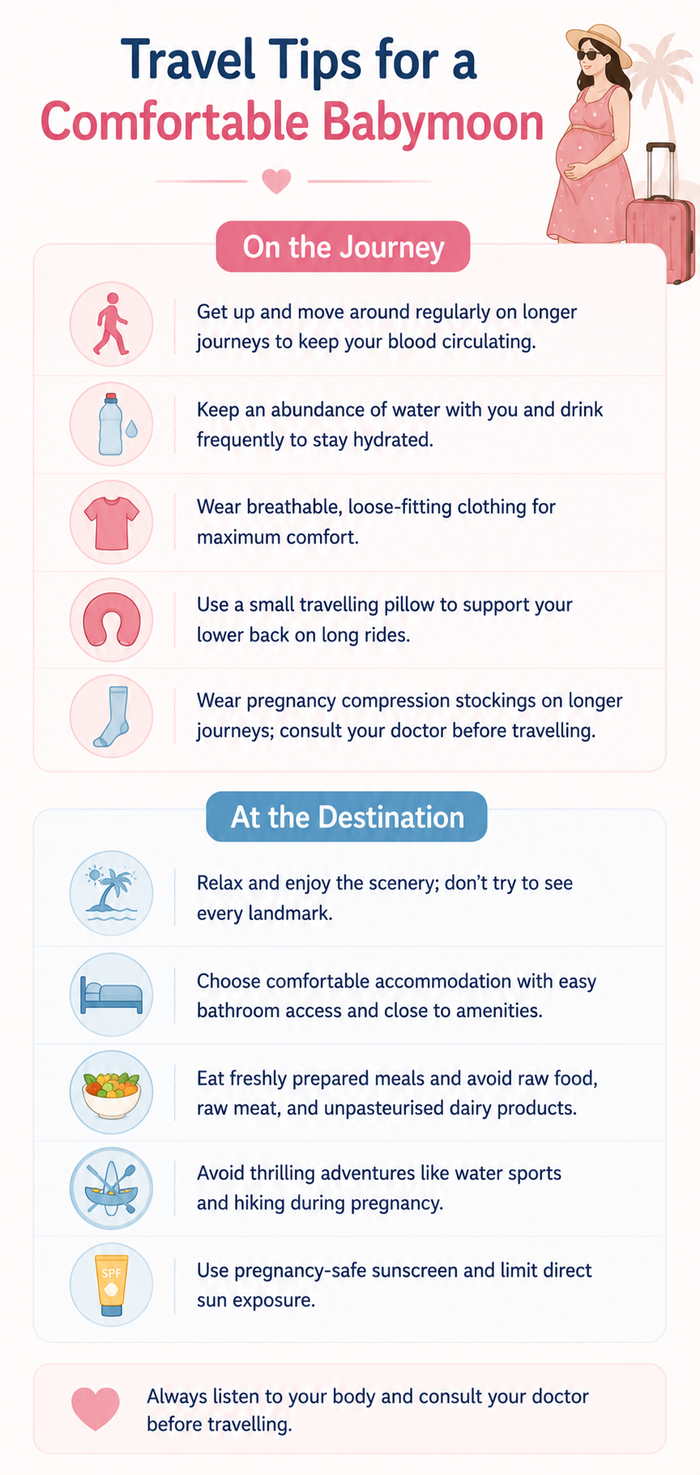
- Make sure you get up and move around regularly on longer journeys to keep your blood circulating.
- Keep an abundance of water with you and ensure you drink frequently to stay hydrated throughout your travels.
- Wear breathable fabrics and loose-fitting clothing that are ideal for longer journeys to maximise your comfort.
- Using a small travelling pillow to support your lower back can make all the difference to longer car and plane rides.
- Wear pregnancy compression stockings, especially on longer journeys, and this should be discussed with your doctor before travelling.
At the Destination
- A babymoon is not a time to try to see every landmark; relax and enjoy the scenery and yourself without feeling rushed.
- Prioritise a comfortable bed, easy access to bathrooms and rooms that are close to amenities at the destination.
- Be careful of the food that you are eating; always opt for freshly prepared meals, and be cautious of anything raw, such as fish or shellfish. Steer clear of raw meat and unpasteurised milk products also.
- Thrilling adventures such as water sports and hiking are not advised when you are pregnant, and it is recommended to avoid them to avoid accidental injuries.
- Your skin becomes more sensitive to sun exposure when pregnant, so always make use of pregnancy-safe sunscreen and be mindful of how much time you spend directly under the sun.
What to Pack for Your Babymoon
A successful babymoon holiday relies not only on having the right destination and time of year but on being properly prepared for what lies ahead. Your list may include:
- Ensure you carry enough for the entire trip, plus a few days extra to account for potential unforeseen delays or travel disruptions.
- Ensure this includes suitable painkillers prescribed by your doctor.
- Make sure that the insurance you are buying will cover all eventualities and not just standard illnesses; for example, the policy should offer some sort of coverage for complicated pregnancies and potential premature birth, which is also best discussed before purchasing.
- A range of healthy and portable snacks is a must to maintain blood sugar levels on journeys.
- Swollen feet can be incredibly uncomfortable when pregnant, so sensible and easy-to-wear shoes will be a lifesaver.
When Should I See my Doctor Before my Babymoon?
It is always recommended to speak with your doctor before you travel at any point of your pregnancy, and you need to especially speak with your doctor before you travel on your babymoon if;
- You have a high-risk pregnancy
- You have previously had a preterm labour or pregnancy loss
- You are pregnant with more than one baby
- If you have any underlying medical conditions
- Your holiday destination involves extreme changes in altitude, or are there any areas that require you to get health advice on
A babymoon does not have to be anything huge to be very special. Sometimes the most wonderful trips of all can be the smallest, simple, yet intimate days away; quiet days, good food, and time alone before life completely turns upside down in the most amazing of ways. With good planning and good advice from your doctor, your babymoon can really be all you ever hoped it would be.
Whether you’re pregnant, a new mom, or navigating postpartum, you don’t have to do it alone. Join our support group to connect, share, and support one another.
FAQs on Planning a Babymoon? Safety Tips for Pregnancy Travel
- Is it safe to travel by car during my pregnancy?
Short to moderate car journeys are safe during your second trimester, but always consult your doctor. You should try to take regular stops to have a stretch and a walk around, and stay well hydrated. Also, wear your seatbelt with the lap belt positioned well below your bump. - Can I travel internationally on my babymoon?
International travel is absolutely possible at all stages of your pregnancy; you will need to be sure that it is thoroughly planned. The country will need to be considered for its health facilities, if vaccinations are required, and if there are any travel health advisories currently active. - What happens if my babymoon plans need to change because of complications in my pregnancy?
Your health and your baby's health are absolutely important at all times. If you are told that it is unsafe to travel by your doctor, it is wise to follow the advice, and this may well just mean that you plan a staycation or a day trip instead.