In this article:
Understanding Baby Movements
The movements during pregnancy are usually felt within 18 to 25 weeks, which can differ for each woman. Initially, movements can be experienced as slight fluttering sensations. With time, as the baby grows larger, there will be stronger movements.Babies have different movement patterns that can be determined as pregnancy progresses. Most babies are active either in the daytime or during the night.
Common movements include:
- Kicking
- Turning
- Stretching
- Hiccups
Why Baby Movements Matter
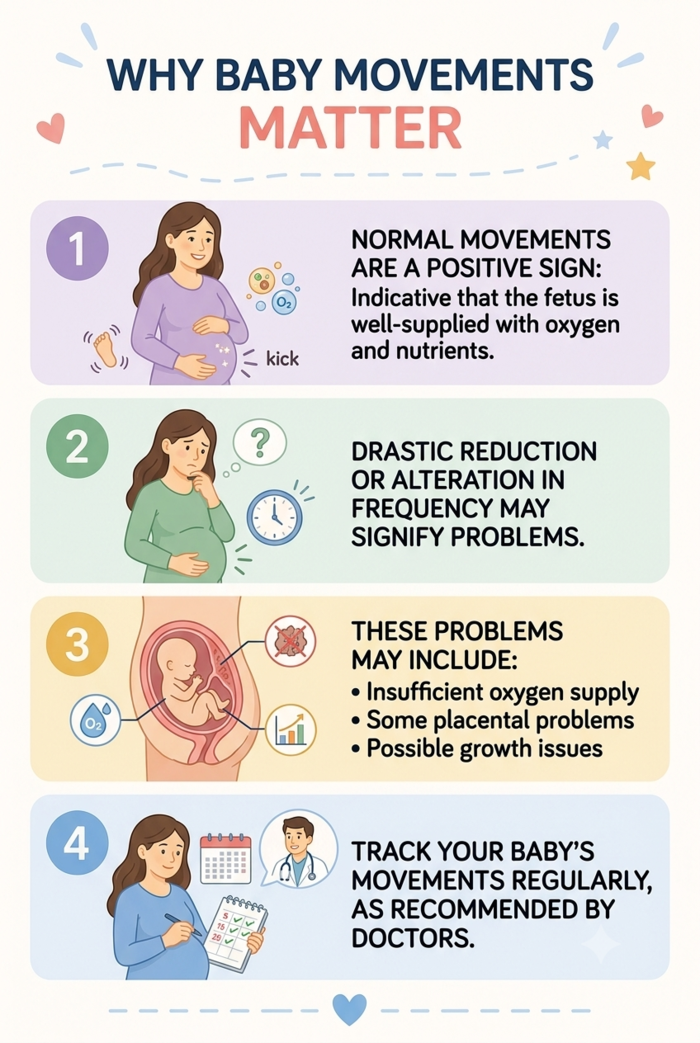
Normal baby movements during pregnancy are a positive sign of good health because any movement is indicative that the fetus is well supplied with oxygen and nutrients.However, any drastic reduction or alteration in the frequency of movements may signify some problems, such as the following:
- Insufficient oxygen supply
- Some placental problems
- Possible growth issues
How to Track Baby Movements
Monitoring activities allows for early detection of any changes. Kick counting is one of the techniques used.Kick counting technique:
- Select an appropriate time when your baby is most active
- Sit or lie in a comfortable position
- Each movement (kicking, turning, or fluttering) must be counted
- You should be able to detect at least 10 movements in 2 hours
- Drink a glass of cold water or juice
- Eat some snacks
- Lie on your left side and pat your abdomen
Red Flags to Watch Out For
Although sometimes your baby moves less, which is normal, sometimes you can encounter the following warning signs that need immediate medical attention:Abrupt Reduction in Movement
- Noticeably fewer kicks than usual after 28 weeks
- No movements felt for several hours during active periods
- Lack of Baby Movements For Many Hours
- No kicks or rolls felt for more than 8 to 10 hours
- Even after eating or lying on your side, there is still no response
- Could indicate fetal distress or lack of oxygen
- Weak or Faint Movements
- Movements feel significantly weaker than before
- Less forceful kicks or sluggish activity
- May signal reduced energy or compromised health
- Sudden Excessive Activity Followed by Silence
- Rapid, frantic movements all of a sudden
- Followed by a noticeable drop or no movement
- Can indicate fetal distress
- Decreasing Movement Over Days
- Gradual reduction in your baby's activity over a few days
- Less frequent movements compared to previous patterns
- May suggest growth or placental issues
When to Contact a Doctor
It is advised that you contact your doctor or go to the hospital immediately if:- There are fewer than 10 movements within 2 hours
- You experience any abrupt decrease in fetal movement
- You do not feel any movements, even after stimulation of the baby
- Something does not seem right
- Ultrasound scans
- Non-stress test
Baby Movement Myths
Below is a list of some myths regarding baby movements. The facts behind the myths will prevent unnecessary worries.Myth 1: Babies tend to move less frequently before birth
- Fact: Baby movements may feel different near the end of pregnancy because there is less space in the womb, but they should not become less frequent.
- Fact: A busy day does not usually affect the baby's movements. Babies have their own movement pattern, which, however, may be easier to notice when you rest.
- Fact: No baby movements are not ok and shouldn't be ignored. Healthy babies continue to move every day right up until birth.
Whether you’re pregnant, a new mom, or navigating postpartum, you don’t have to do it alone. Join our support group to connect, share, and support one another.
FAQs on When to Worry About Baby Movements: Red Flags to Watch Out For
- Are there days when babies can be inactive in the womb?
Yes, brief quiet periods can happen because babies sleep in the womb. But a clear decrease or no movement should be checked immediately. - Is it true that babies become more active after eating?
Yes, many babies move more after a meal because rising blood sugar can make them more active, which is usually a healthy sign. - Can a mother's stress impact a baby's movements?
Yes, stress may affect how often you notice baby movements, and it can change the movement pattern.