In this article:
What Does Thick Chalky White Discharge Usually Mean?
The discharge often has these features:- White or off-white in colour
- Thick and dry-looking
- Chalky, curd-like, or cottage cheese-like texture
- Usually odourless or mildly scented
- Accompanied by itching or irritation
Less-Known Fact
A yeast infection can be present even if the discharge is not abundant. In some cases, itching starts even before discharge becomes noticeable.Why Does Itching Occur Along With White Discharge?
Usually, infections alter the vaginal flora and the normal pH levels. Therefore, the change in the vaginal environment increases irritation of vaginal tissues.You may also notice:
- Redness around the vulva
- Burning while passing urine
- Mild swelling
- Discomfort during intercourse
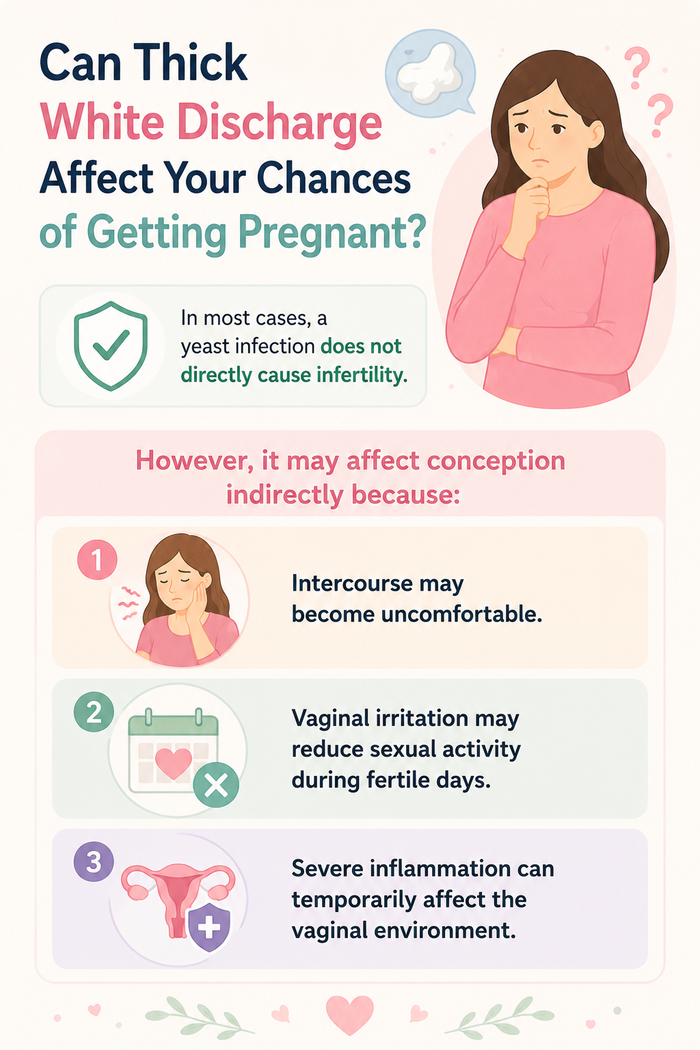
Can Thick White Discharge Affect Your Chances of Getting Pregnant?
In most cases, a yeast infection does not directly cause infertility.However, it may affect conception indirectly because:
- Intercourse may become uncomfortable
- Vaginal irritation may reduce sexual activity during fertile days
- Severe inflammation can temporarily affect the vaginal environment
A Point Many People Do Not Know
Certain fertility medications may raise your chances of developing a yeast infection since they affect hormone production. If any symptoms arise while undergoing fertility treatments, they should be reported to the doctor.Is It Common During Pregnancy?
Many women experience increased episodes of vaginal yeast infections during pregnancy.The following are the factors that increase the risk of vaginal infection:
- Oestrogen levels rise
- Vaginal glycogen levels increase
- Fungi grow more easily in this environment
What Changes Are Normally Seen In Discharge During Pregnancy?
Normal pregnancy discharge is usually:- Thin or milky
- Mild-smelling
- Not associated with itching
What Are The Other Conditions That Can Be Responsible?
The following are other causes that may cause thick, chalky white discharge:| Condition | Common Features |
| Bacterial vaginosis | Thin discharge with a fishy smell |
| Contact irritation | Itching after soaps, washes, or scented products |
| Allergic reaction | Redness and irritation after exposure to a new product |
| Certain sexually transmitted infections | May cause discharge, irritation, or pelvic symptoms |
When Should You See a Doctor?
You should consult your doctor in case the following occur:- Symptoms are severe
- You are pregnant
- Symptoms keep returning
- There is pelvic pain
- The discharge becomes green, yellow, or blood-stained
- You develop a fever
- There is a strong, unpleasant odour
How Can You Reduce the Risk of Recurrent Infections?
The following measures can help you reduce the risk of vaginitis:- Wearing breathable cotton underwear
- Changing out of wet clothing promptly
- Avoiding scented intimate products
- Avoiding unnecessary vaginal douching
- Maintaining good blood sugar control if you have diabetes
If you notice abnormal vaginal discharge persistently, discuss it with your doctor, especially if you are pregnant or trying to conceive.
Whether you’re pregnant, a new mom, or navigating postpartum, you don’t have to do it alone. Join our support group to connect, share, and support one another.
FAQs on Why Do I Have Thick Chalky White Discharge and Itching? Can It Affect Pregnancy?
- Can thick white discharge be an early sign of pregnancy?
Pregnancy may increase vaginal discharge, but itching and chalky white discharge are more commonly associated with a yeast infection than with early pregnancy itself. - Can a yeast infection harm my baby during pregnancy?
Most vaginal yeast infections do not harm the developing baby. However, symptoms should still be assessed and managed appropriately during pregnancy. - Why do I keep getting white discharge and itching before my period?
Hormonal changes before menstruation can alter the vaginal environment and make yeast overgrowth more likely in some individuals.