In this article:
Why Cookware Matters More During Pregnancy
During pregnancy, there are various filters in the placenta to filter out different toxins; certain toxins and metals from cookware do manage to enter the system through the food cooked. The most sensitive phase of fetal development is during the first trimester; hence, the greatest risks are in the early stages of pregnancy.The risks associated with the use of cookware during pregnancy include two broad aspects. The toxic substances that can be released due to breakdown at higher temperatures in chemical coatings, and metals that can enter food, especially acidic foods.
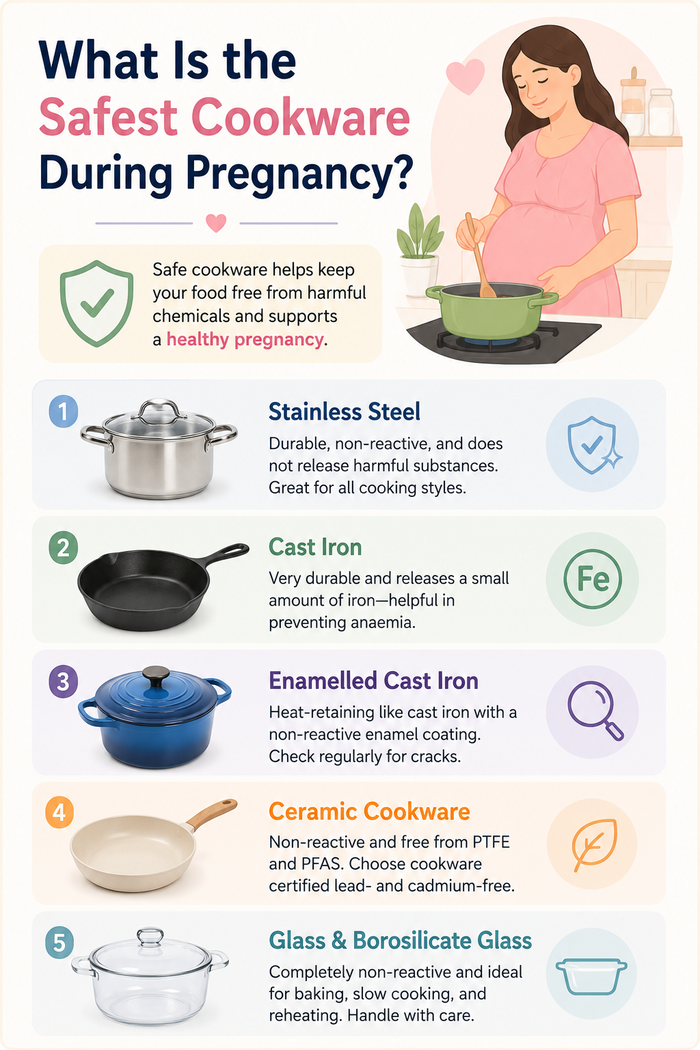
What Is the Safest Cookware During Pregnancy?
- Stainless Steel: Stainless steel is probably one of the most practical and safe cookware options during pregnancy. It is robust, non-reactive with most foods, and does not release any substances into food during usual cooking processes. It is highly advisable to use high-grade stainless steel, which will be the safest. Stainless steel is great for almost all cooking styles and maintenance.
- Cast Iron: Cast iron is a proven and durable type of cookware, which can be used safely during pregnancy. It releases a small amount of iron into food, which is actually a good thing, because most pregnant women have anaemia.
- Enamelled Cast Iron: Enamelled cast iron, like cast iron with a layer of glaze from vitreous enamel, includes the heat-retaining property of cast iron and a non-reacting surface that neither leaks iron nor reacts with acidic substances. This type of cookware is one of the safest and most multifunctional variants. The enamel layer of the utensils requires regular checking for cracks since it leaves the underlying layer of cast iron exposed.
- Ceramic Cookware: Ceramic cookware, or pots and pans with a ceramic coating instead of the non-stick coating made of PTFE, is often used during pregnancy as an alternative to conventional non-stick cookware. Ceramic is non-reactive and contains no PTFE or PFAS. You need to pay attention to whether the cookware is certified as free from lead and cadmium because there are cases when low-quality ceramic cookware contains these substances in its glaze.
- Glass and Borosilicate Glass: Glass cookware or glass dishes for the oven and borosilicate glass cookware are completely non-reactive and one of the purest options for cookware. This cookware is great for baking, slow cooking, and reheating food. The disadvantage of glass cookware is its fragility.
Tips for Safe Cooking While Pregnant
Making a few practical changes will go a long way without having to completely remodel your kitchen. These are the most practical changes you should make while being pregnant.- Change any non-stick pots and pans where the coating has worn off; these are the biggest risks in most kitchens.
- Do not overheat non-stick cookware; cook on low and medium heat, and do not preheat non-stick pans empty.
- Use wood or silicone spoons instead of metal utensils to avoid damaging the surface coating of the pan.
- If you have to prepare an acidic dish such as a curry sauce or some other food preparation that uses tamarind, lemon or vinegar, use stainless steel or enamel-coated cast iron cookware and not aluminium or worn-out non-stick pans.
- Always open a window or turn on the exhaust fan when you cook at high temperatures.
When to Contact Your Doctor
You should contact your doctor if:- You have been cooking consistently with severely degraded and scratched non-stick cookware and are worried about exposure.
- You have worries about exposure to heavy metals through cookware along with other food items and would like testing done.
- You have symptoms that are abnormal and would like to consider the possibility of any environmental factors in your home.
Whether you’re pregnant, a new mom, or navigating postpartum, you don’t have to do it alone. Join our support group to connect, share, and support one another.
FAQs on How to Choose the Right Cookware During Pregnancy
- Do I have to replace all my cookware before the arrival of the baby?
No, it is unnecessary to change all your cookware prior to pregnancy. Using the right one is important. Always consult your doctor if you have any doubts. - Is it safe to use non-stick cookware when pregnant?
For most women, using non-stick cookware is safe as long as it does not contain PFOA chemicals and does not have any scratches. Non-stick pots that have cracks in them emit toxic fumes, so they should be discarded. - Does it matter what kind of cookware I use during my pregnancy?
Yes, as you will likely be doing more cooking at home and are more vulnerable to the toxins around you during pregnancy, using healthy cookware can help to avoid exposure to extra chemicals.