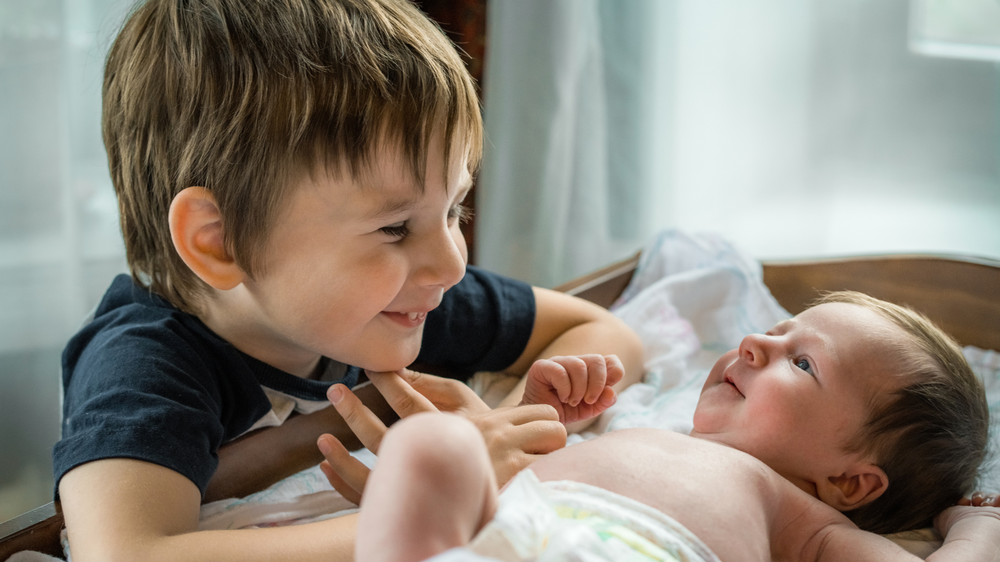
What Is Really Going On for Your Older Child
Common sibling feelings in the newborn phase:
- Displacement
- Jealousy
- Confusion
- Pride
- Love
Common Behavioural Changes After Bringing Home a Newborn
Some changes in behaviour are predictable and normal during this transition. Expect them, be prepared, and respond with patience, not frustration.
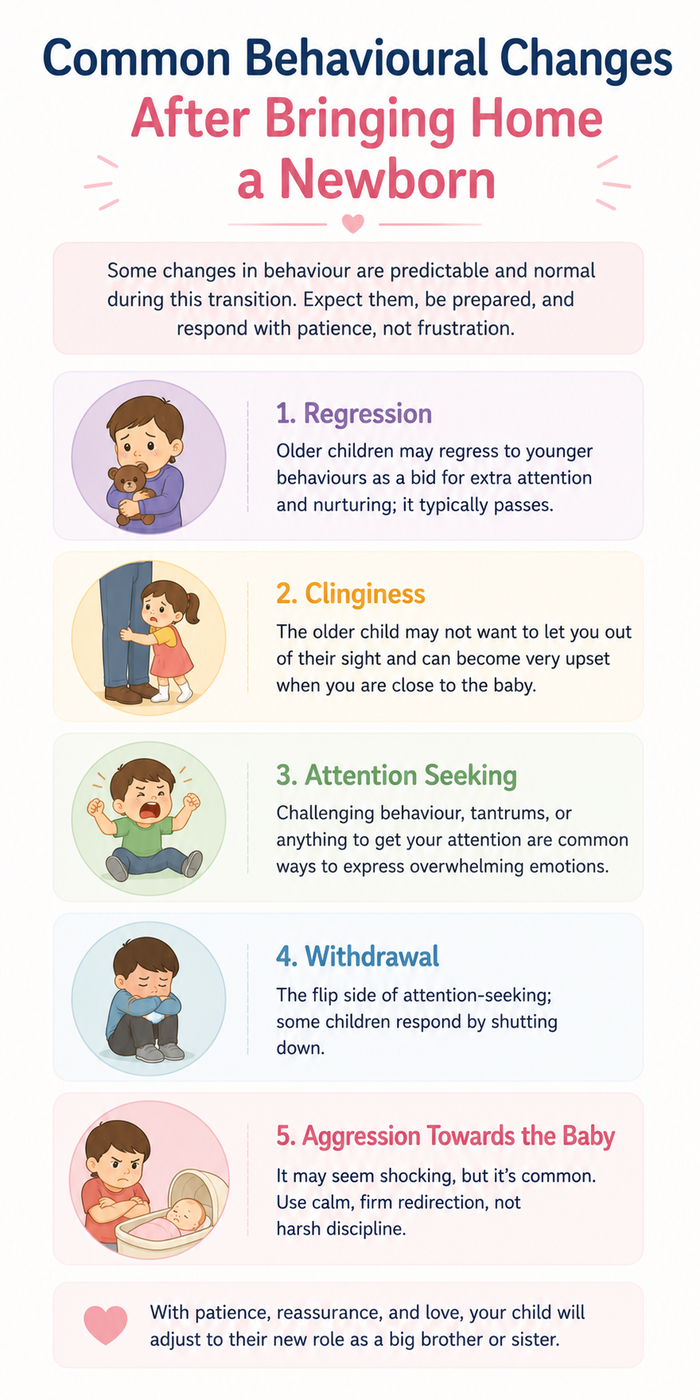
- Regression: This is very common. Older children might regress to younger behaviour, such as wetting the bed, thumb-sucking, "baby talk," or the need to be carried everywhere. Regression is a bid for extra attention and nurturing; it typically passes.
- Clinginess: The older child may not want to let you out of their sight and can become very upset when you are close to the baby.
- Attention Seeking: Challenging behaviour, tantrums, or anything to get you to look at him or her are common ways children express overwhelming emotions they do not have words for.
- Withdrawal: The flip side of attention-seeking; some children respond by shutting down.
- Aggression Towards the Baby: This might seem shocking, but it is fairly common. The trick is calm, firm redirection, not harsh discipline.
Practical Ways to Help Your Older Child Adjust to a New Baby
Daily One-on-One Time: Commit to spending a minimum of 10 to 15 minutes a day of uninterrupted, undivided attention time together doing something that your older child loves. This small bit of special time is your older child’s security blanket, reassuring him or her that he or she is still a priority.
Give Them Meaningful Tasks: Children feel useful and important when they are given simple, age-appropriate tasks that help with the baby. Your older child might fetch the baby’s nappy or muslins, sing a little song to the baby, choose an outfit, or be the one to tell people what their name is.
Validate Their Feelings: When he or she tells you that he does not like the baby, that they miss the old way, or that they wish the baby would go away, do not try to make him or her feel silly for those feelings; listen and assure them. Feeling validated and heard is a powerful soothing tool.
Keep Routines as Consistent as Possible: Familiar rituals provide structure during this big, disruptive change. Stick to the consistent bedtime stories, regular meal times, and weekend traditions for your older child as much as possible.
Celebrate Being the Big Sibling: Being the older sibling is special, so treat it that way. Praise their efforts. Focus on how much their presence means to the baby. Small interactions, when acknowledged positively by you, lay the foundation for a warm sibling bond.
Monitor How You Talk About the Baby: Be mindful of making the baby the centre of every conversation. Make an effort to ask your older child about their day, their friends, and what's on their mind.
The Other Parent or Support System: If you have a partner, you can often divide the attention in intentional ways. While one of you is feeding the baby, the other can focus entirely on the older child.
Signs You Need to Watch For
- Regression is severe or goes on for more than six to eight weeks without any improvement.
- Aggression toward the baby is persistent, frequent, escalating, or difficult to distract from.
- There are marked changes in the appetite, sleep, or enjoyment of normally pleasurable activities.
- Withdrawal or depression symptoms are evident, such as prolonged unusual sadness, loss of interest in play, or withdrawal from contact.
- Extreme, chronic anxiety is impacting your child's day-to-day functioning.
- Your child reports that they do not feel loved, that they are a burden, or that things won't ever be okay again.
How Long Does Sibling Adjustment Take?
Every child is different, and there is no fixed timetable for sibling adjustment. For most children, adjustment occurs between six and eight weeks, particularly as the baby's interactiveness increases and the older child starts to accept her as another companion instead of an inconvenience.
Some children settle down in a day or two. Others may take several months to do so. What is more important than the speed of the child's adjustment is the quality of support he receives.
When Do I See a Doctor?
You should call your child's paediatrician if:
- The behavioural changes are severe, intensifying, or not subsiding after two months.
- Your older child is presenting with signs of emotional upset that have an impact on their physical health, sleep or schooling.
- You are worried about aggression towards the baby.
- You feel overwhelmed managing both children's needs, and want guidance or a referral for family support services.
- Your child is making statements about feeling hopeless or extremely sad that concern you.
The arrival of a new baby does not take away from your older child's importance to you or your family-it merely demands of her stretch in new ways. With your love, understanding, support and reassurance, most children meet the demands beautifully. And the resulting sibling bond from the often messy start will be a precious gift that will be with you both throughout life.
Whether you’re pregnant, a new mom, or navigating postpartum, you don’t have to do it alone. Join our support group to connect, share, and support one another.
FAQs on Helping Older Siblings Adjust After the Baby Arrives
- What do I do if my older child is being rough with the baby?
Calmly intervene immediately, but without resorting to harsh punishments. Kindly redirect, stating, "We are always gentle with the baby. Let me show you how to touch them softly." Remember, aggressive behaviour may be driven by overwhelming feelings rather than a deliberate desire to harm. Consistent, calm redirection is much more effective than anger. - Should my older child be home from school for the first few days after the baby comes home?
Actually, the familiarity of school is very grounding for many children, especially in the first few days and weeks home. School provides an outlet where your older child can be a child among peers, where they do not need to compete for attention, and it provides structure. It is lovely for your child to be home to meet the baby, but keeping them home for an extended period of time may not help with their adjustment.