
In this article:
Understanding Aggressive Behaviour in Young Children
Aggression in young children takes many forms, and it includes hitting, biting, kicking, yelling, and throwing objects. Aggression in many cases is not intentional but imposed by frustration, tiredness or an inability to express feelings. This knowledge, therefore, should help you remain calm and help your child in the right direction.
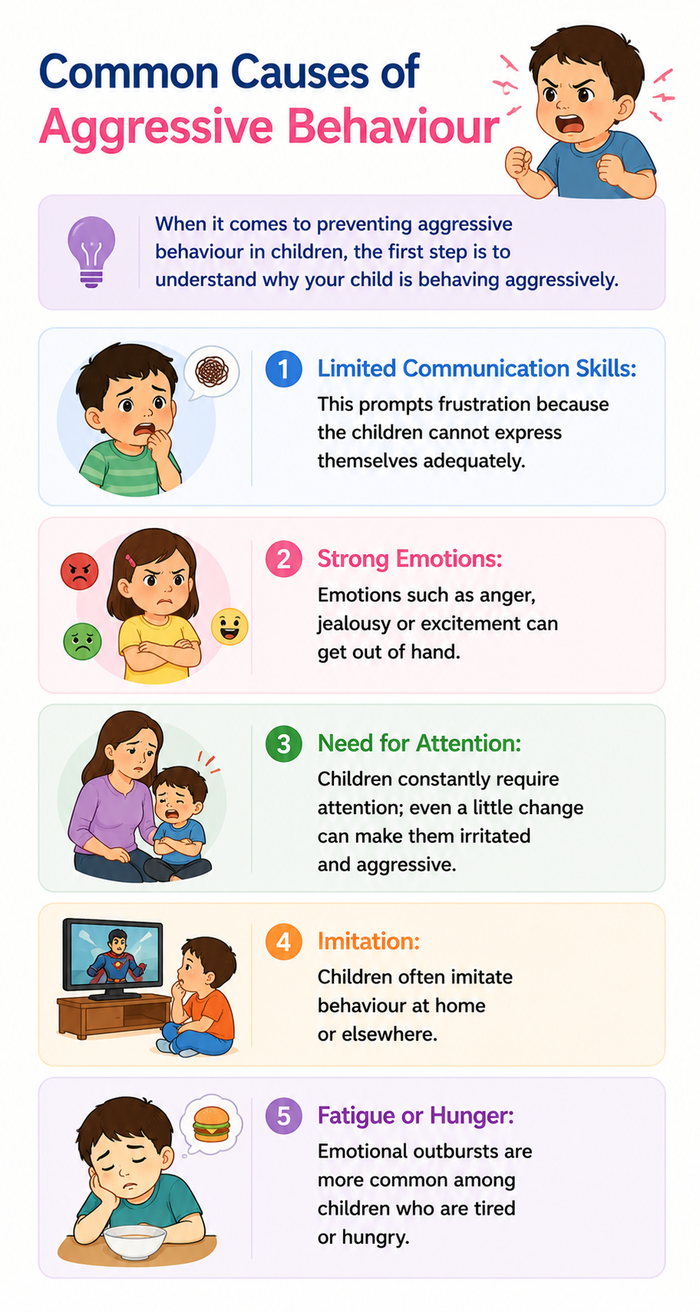
Common Causes of Aggressive Behaviour
When it comes to preventing aggressive behaviour in children, the first step is to understand why your child is behaving aggressively.
- Limited Communication Skills: This prompts frustration because the children cannot express themselves adequately.
- Strong Emotions: Emotions such as anger, jealousy or excitement can get out of hand.
- Need for Attention: Children constantly require attention; even a little change can make them irritated and aggressive.
- Imitation: Children often imitate behaviour at home or elsewhere.
- Fatigue or Hunger: Emotional outbursts are more common among children who are tired or hungry.
How to Deal With a Child’s Aggressive Behaviour?
Stay Calm and Respond Gently
How you react has a huge impact on the shaping of your child’s behaviour. Your reaction is a major determinant of your child’s behaviour pattern, and thus, when your aggressive child attacks you, you should not react with anger.
Speaking in a firm but gentle tone ensures that your child feels secure at the same time, understanding that the behaviour is not acceptable. Fear and confusion will be increased if shouting or punishing is used, rather than improving the behaviour.
Teach Your Child to Express Emotions
Helping your child to understand and give names to their feelings is one of the surest ways to address aggression. Encourage short statements such as: “I am angry” or “I want that toy”. Eventually, children learn that using words is a better way of communicating than using physical means.
Set Clear and Consistent Boundaries
Children must know which behaviour is acceptable and which is not. For example - “We do not hit.” “Hands are for helping, not hurting.” Consistency is the key. When rules are applied calmly and regularly, children begin to understand limits and feel more secure.
Encourage Positive Behaviour
Notice and appreciate good behaviour when the child handles a situation in a calm manner or shares with other children.
Simple praise such as: “You did an excellent job of waiting for your turn,” or “I like how you used your words." Positive reinforcement encourages children to repeat the good behaviour.
Create a Predictable Routine
Predictability in a child’s environment always makes the child feel more secure. Having a daily routine for meals, playtime, and sleep can help reduce stress and prevent behavioural issues. When work schedules are unpredictable, children may feel unsettled, leading to frustration and aggressive behaviour.
Manage Triggers Effectively
Watch situations that lead to aggressive behaviour. These may include: sharing of toys, ending screen time, and transitions such as bedtime or leaving a park.
Preparing Your Child in Advance
“We will leave the park in 5 minutes. After this, it’s time for dinner.” This gives your child time to acclimate and reduces sudden agonies.
Teach Problem-Solving Skills
Constructive problem-solving can start to be taught even in small children. Help them find the answers with questions such as: “Instead, what can we do?” “Can we take turns?” This helps children to consider alternatives rather than reacting impulsively.
Limit Exposure to Aggressive Influences
Children learn through observation. Verbal insults, violent TV shows, and offensive words will influence their actions. Choose suitable materials for children and encourage a peaceful and respectful environment at home.
Use Time-In Instead of Time-Out
Instead of isolating your child, try sitting with him and helping him to calm down. This methodical approach makes the child feel supported.
Emotional Regulation
This strengthens the attachment between parent and child. You can say: “I’m here with you. Let’s calm down together.”
Ensure Basic Needs Are Met
Many behavioural issues result from neglect of basic needs. Ensure that your child gets enough sleeping hours, consumes regular and healthy meals, has time to play and relax. A well-rested and well-fed child is more likely to handle emotions better.
Be a Positive Role Model
Children learn more from what you do than what you say. This would include exhibiting composed behaviour, showing respectful communication skills, and learning constructive ways of managing stress that will inspire your child to do the same.
When to See a Doctor
Although sudden aggression is normal, there are times when certain behaviours need professional help.
- When aggressive behaviour is recurring and severe
- If your child is hurting himself/herself and other people
- If attempts at managing his/her behaviour prove ineffective
- If the aggression is interfering with normal social interaction
It can be difficult dealing with the aggressive behaviour of young children, but in many cases, this is just another phase of normal emotional development of the child, which requires patience and perseverance of the parents and will help their child find healthier methods of expressing himself/herself.
A lot can be done by keeping a daily routine, establishing some boundaries for the child, encouraging good behaviour, and teaching the child how to express emotions properly. Moreover, it should be remembered that children are very responsive to the surrounding world, so it is important to keep the environment favourable for proper upbringing.
Most likely, with time, every child learns to control his/her own emotions and behave properly.
Whether you’re pregnant, a new mom, or navigating postpartum, you don’t have to do it alone. Join our support group to connect, share, and support one another.
FAQs on Tips to Prevent Aggressive Behaviour in Young Children
- Does aggressiveness come naturally in toddlers?
Aggressiveness comes naturally in toddlers, given that they are still learning how to express emotions and communicate effectively. - How can I stop my toddler from hitting other people?
Given that you are the guardian or parent, try to stay calm and set ground rules for your toddler to find new ways to communicate. - Does punishment help reduce aggressiveness?
Punishment does not work because it only adds more fear and frustration to a child than any behavioural change.