In this article:
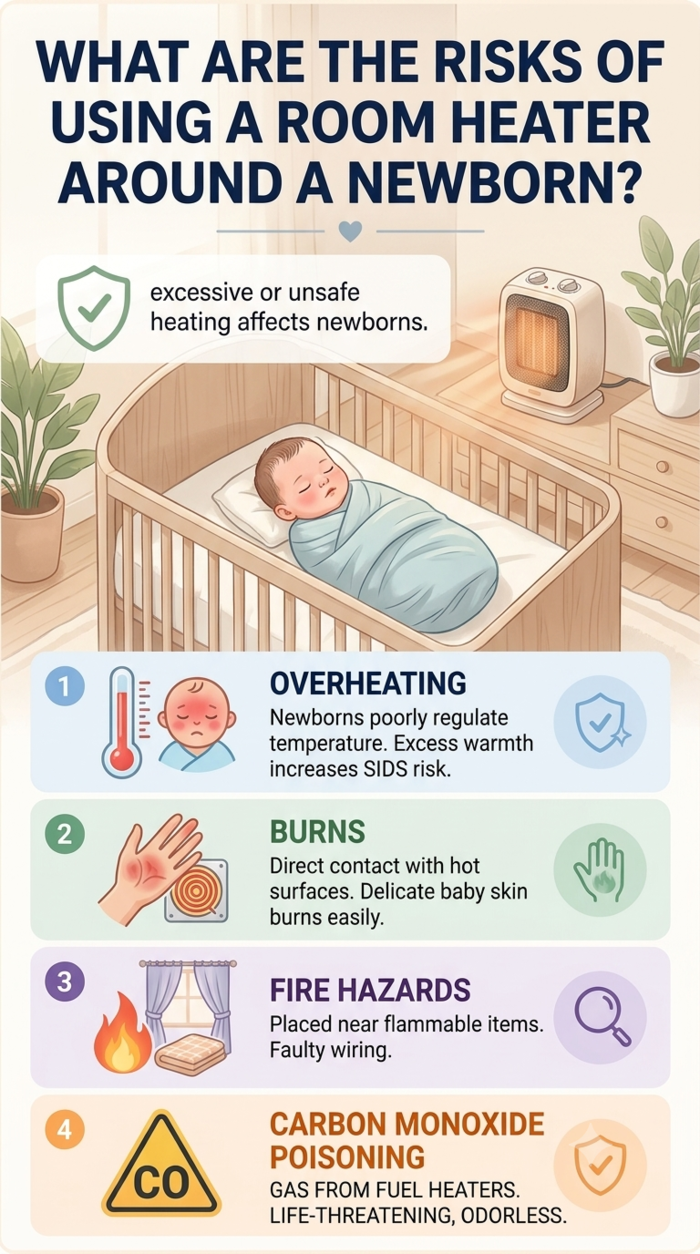
What Are the Risks of Using a Room Heater Around a Newborn?
Although room heaters provide warmth, excessive or unsafe heating can affect a newborn in several ways.- Overheating: Newborns cannot regulate their body temperature as effectively as older children and adults. A room that becomes too warm, combined with thick clothing and blankets, can cause overheating. Excessive warmth during sleep is also associated with an increased risk of sudden infant death syndrome (SIDS).
- Burns: Direct exposure to hot surfaces, heating coils, or concentrated heat can burn a baby's delicate skin.
- Fire hazards: Heaters placed near curtains, mattresses, blankets, or clothing can cause accidental fires. Faulty wiring and overloaded electrical sockets also increase this risk.
- Carbon monoxide poisoning: Gas, kerosene, and coal-burning heaters can release carbon monoxide, a colourless and odourless gas. Exposure can cause headaches, dizziness, breathing difficulties, and potentially life-threatening poisoning.
Which Room Heater Is Safer for a Newborn Baby?
Their safety depends on the heating mechanism, design, and how they are used.- Oil-filled radiator heater: These heaters provide gradual, consistent warmth without exposed glowing heating coils. Models with a thermostat and overheat protection can be a suitable option for warming a room.
- Ceramic heater: These heaters warm a room relatively quickly. Choose a model with tip-over protection, overheat protection, and a stable base.
- Halogen or radiant heater: These heaters produce direct radiant heat and have exposed hot elements in some models. They can cause burns or ignite nearby fabrics.
How to Use a Room Heater Safely Around a Baby
If you need a heater during winter, follow these precautions:- Maintain a safe distance: Keep the heater at least three feet (approximately one metre) away from the baby's cot, mattress, curtains, blankets, and furniture.
- Avoid direct heat: Do not point the heater towards the baby. Direct heat can raise the baby's body temperature and increase the risk of burns.
- Use a thermostat: Choose a heater that allows temperature control and has automatic shut-off and overheat protection.
- Ensure ventilation: Keep the room adequately ventilated. Never use fuel-burning heaters in closed bedrooms.
- Check electrical safety: Plug an electric heater directly into a suitable wall socket. Avoid extension boards, overloaded sockets, and damaged electrical cords.
- Switch it off when unattended: Turn off the heater when leaving the room and before going to sleep. Never leave it operating without adult supervision.
- Keep the heater stable: Place it on a flat, dry surface where it cannot tip over.
A baby should ideally sleep on their back on a firm, flat surface without loose blankets or pillows. Regularly check the baby's temperature by touching their chest or back rather than their hands and feet. The objective is to maintain a comfortably warm environment without overheating.
What Is the Ideal Room Temperature for a Newborn Baby?
International safe-sleep guidance commonly recommends keeping a baby's sleeping room between 16°C and 20°C. However, room temperature requirements can vary with climate, clothing, bedding, and the baby's health.Look for these signs that your baby may be overheating:
- Sweating or damp hair.
- Hot chest or tummy.
- Flushed or unusually red skin.
- Unusual restlessness or discomfort.
How to Keep a Newborn Warm Without a Room Heater
A room heater is not always necessary to keep a newborn comfortable during winter. Parents can use several safer ways to maintain warmth.- Dress the baby in layers: Use soft cotton clothing and add a lightweight layer if the room feels cold. Avoid excessive layering.
- Use appropriate bedding: Choose lightweight, breathable blankets. Keep blankets below the baby's shoulders and ensure they cannot cover the face. Avoid quilts, heavy comforters, and loose bedding.
- Practise skin-to-skin contact: Kangaroo Mother Care (KMC), in which the baby rests against the caregiver's bare chest, helps maintain body temperature and supports breastfeeding.
- Maintain a comfortable room environment: Close windows if cold air is entering directly, but do not compromise ventilation, particularly when using heating appliances.
- Continue breastfeeding: Frequent breastfeeding provides nutrition and helps maintain the baby's energy and hydration.
FAQs on Is It Safe to Use a Room Heater Around a Newborn Baby?
- Is a blower safe for a newborn?
A blower is safe only if its airflow is kept away from the baby. Hot air blown directly at a child can dry the skin and airways. - Can I use a humidifier with a room heater?
Yes. A cool-mist humidifier offsets dry air. Clean it regularly and keep it out of the baby’s reach.