

In this article:
What Is Hydrops Fetalis?
Hydrops fetalis, also called fetal hydrops, occurs when excess fluid collects in at least two foetal compartments. These can include:- Under the skin, causing swelling
- Around the lungs, called pleural effusion
- Around the heart, called pericardial effusion
- In the abdomen, called ascites
What Causes Hydrops Fetalis?
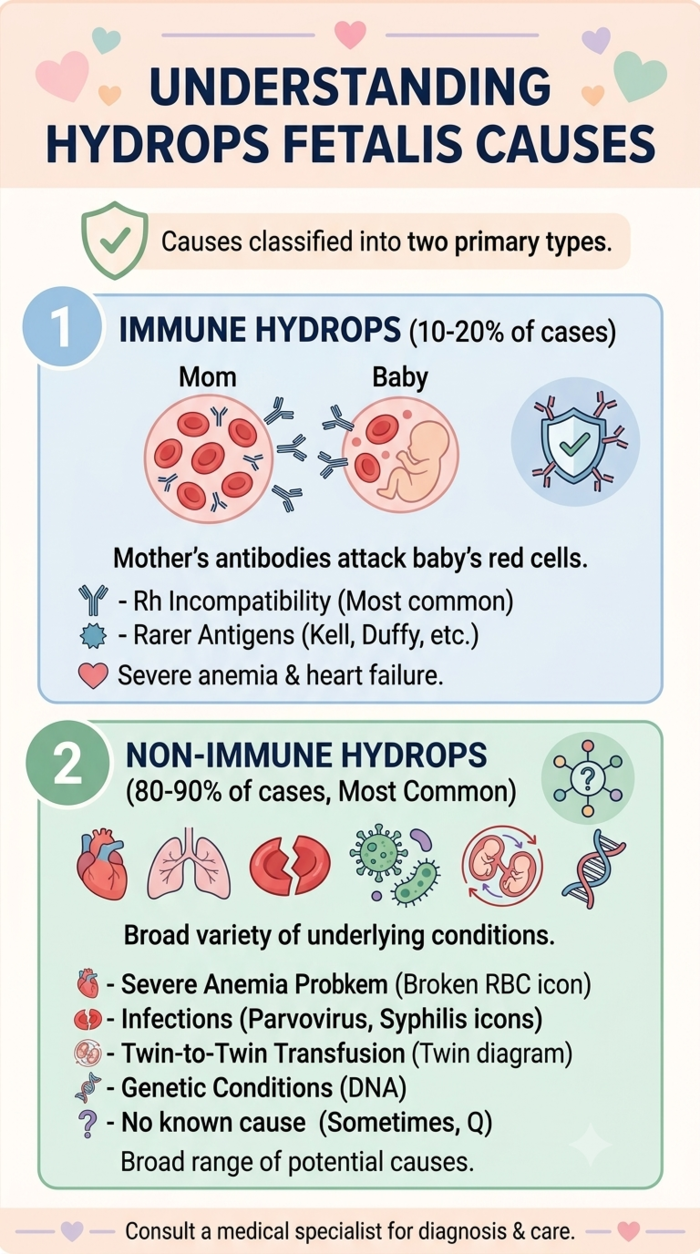
Doctors classify it into two types.- Immune hydrops (10% to 20% of cases): The mother's antibodies attack the baby's red blood cells, most often in Rh incompatibility, when an Rh-negative mother carries an Rh-positive baby. Rarer antigens such as Kell, Duffy, and Kidd can also trigger it. Red cell destruction causes severe anaemia and heart failure in the baby.
- Non-immune hydrops (80% to 90% of cases): Causes include heart or lung problems, severe anaemia (homozygous alpha-thalassaemia), infections such as parvovirus and syphilis, twin-to-twin transfusion syndrome, and genetic conditions such as Turner syndrome. In some cases, no cause is found.
Hydrops fetalis carries a significant risk of complications and pregnancy loss. Early diagnosis and identifying the cause are essential to planning care, understanding prognosis and supporting parents through informed decisions.
Hydrops Fetalis Symptoms and Diagnosis
Mothers usually have no symptoms. Ultrasound may show an enlarged liver, spleen or heart, extra amniotic fluid or a thickened placenta.Further tests include the mother's blood group and antibody test, middle cerebral artery (MCA) Doppler to check for foetal anaemia, foetal echocardiography, infection and genetic tests, and foetal blood sampling.
Current SMFM guidance recommends diagnostic testing for pregnancies in which fetal effusions are detected and recommends offering more advanced genetic testing when initial investigations do not identify a cause.
Hydrops Fetalis Treatment Before and After Birth
Treatment depends on the cause and the week of pregnancy:- Intrauterine blood transfusion for foetal anaemia, the standard treatment for immune hydrops.
- Laser treatment for twin-to-twin transfusion syndrome.
- Treatment of foetal heart rhythm problems.
- Delivery planning with a neonatologist (treated immune hydrops is usually delivered at about 37 weeks).
Can Hydrops Fetalis Be Prevented?
Immune hydrops is largely preventable. ACOG guidance advises anti-D immunoglobulin for Rh-negative mothers at 28 weeks and after delivery, and Indian guidance extends it to sensitising events such as miscarriage or bleeding. Knowing your blood group at the first antenatal visit allows timely doses.Non-immune hydrops cannot always be prevented, but early antenatal scans, infection screening, and thalassaemia carrier testing help identify risk.
Hydrops Fetalis Survival Rate
The prognosis depends on the cause, gestational age, severity of fluid accumulation, presence of genetic or structural abnormalities, and whether the underlying condition can be treated.Among babies born alive with non-immune hydrops, about half survive, and outcomes vary substantially between causes. This figure is higher than the 20% to 30% above because it excludes pregnancies that end before birth. Babies born before 30 weeks, or with chromosomal or other severe congenital abnormalities, have a poorer prognosis.
A diagnosis of hydrops does not automatically mean that the baby cannot survive. Some babies respond to treatment and recover, particularly when the underlying cause is identifiable and treatable.
FAQs on Can a Baby Survive Hydrops Fetalis?
- Does hydrops fetalis mean the baby has a genetic problem?
No. Genetic conditions are one possible cause, but hydrops can also result from anaemia, heart problems, infections, chest abnormalities and other conditions. - Can thalassaemia cause hydrops fetalis?
Yes. Severe fetal anaemia can cause hydrops, and homozygous alpha-thalassaemia is one of the recognised causes. Thalassaemia carrier testing for both parents before or early in pregnancy helps identify this risk. - Is hydrops fetalis dangerous for the mother?
It can be. Some mothers develop mirror syndrome and need close monitoring.