In this article:
How Does Being Overweight Affect Ovulation?
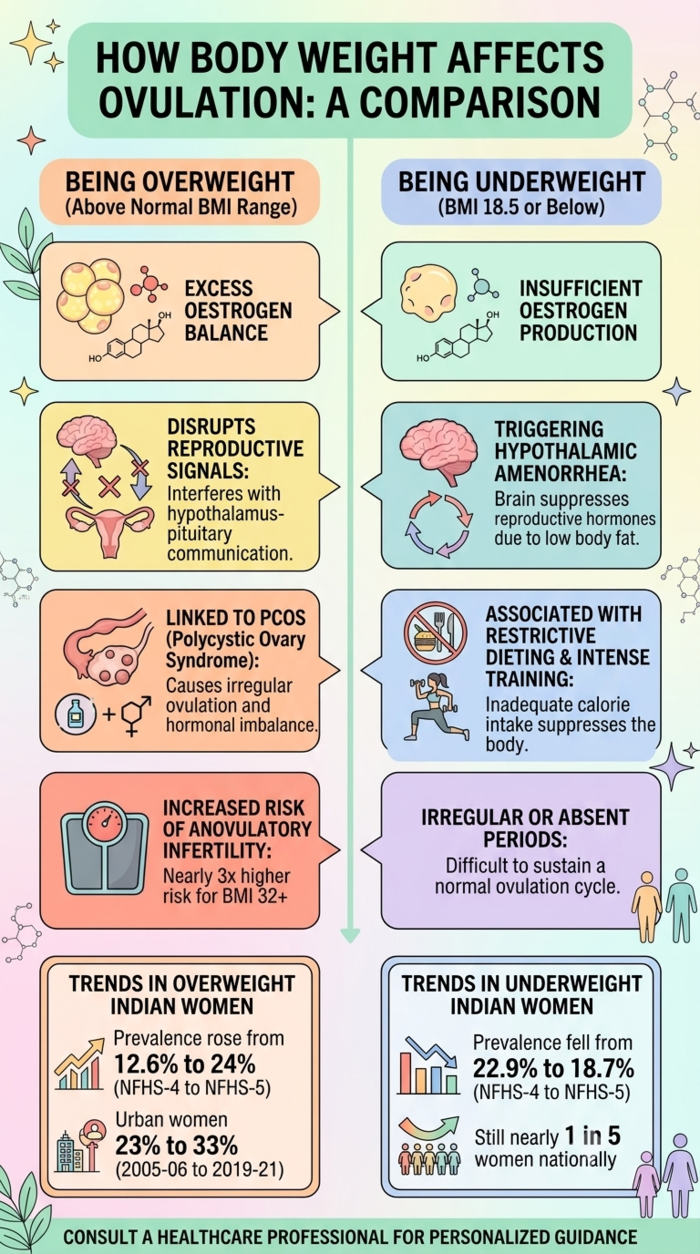
Fat cells produce oestrogen. As body weight increases, fat cells grow in number and size, and release more oestrogen into the bloodstream. This extra oestrogen interferes with the normal feedback signals between the ovaries and the brain's reproductive control centre (the hypothalamus and pituitary gland), which can disrupt the hormone signalling needed for ovulation and menstruation, and can suppress periods altogether.Excess weight is also closely linked to polycystic ovary syndrome (PCOS), recently renamed polyendocrine metabolic ovarian syndrome (PMOS). Obesity is associated with PCOS, a condition marked by irregular ovulation, insulin resistance, and elevated androgen (male hormone) levels.
Studies show that the relative risk of anovulatory infertility is nearly three times higher in women with a body mass index (BMI) of 32 or above, and even in women without PCOS, a BMI above the normal range can jeopardise ovulation in those with otherwise regular cycles.
According to NFHS-5 (2019–21), overweight and obesity prevalence among Indian women rose from 12.6% to 24% between NFHS-4 and NFHS-5, with urban Indian women showing an even sharper rise, from 23% in 2005–06 to 33% in 2019–21.
How Does Being Underweight Affect Ovulation?
The opposite extreme carries its own risk. A BMI of 18.5 or below can make it harder to conceive.With too little body fat, the body doesn't produce enough oestrogen to sustain a normal cycle. This can trigger a condition called hypothalamic amenorrhea, where insufficient body fat suppresses reproductive hormones, leading to irregular or absent periods. This pattern is often seen in underweight women who follow restrictive diets or train intensely without adequate calorie intake.
Underweight is also common among Indian women, though it has improved over time. The share of Indian women with a BMI below 18.5 fell from 22.9% to 18.7% between NFHS-4 and NFHS-5, still nearly one in five women nationally, and higher in several rural and low-income regions.
What Is a Healthy BMI for Ovulation?
A BMI between 18.5 and 24.9 is generally considered the healthy range for regular ovulation. Weight loss can help restore ovulation in women with obesity-related anovulation.In a study, women with PCOS and anovulatory infertility who lost an average of 3.85 kg over six months saw 67% resume ovulation, with an average BMI drop of just 1.6 points.
Weight loss regularises menstrual cycles and increases the chance of spontaneous ovulation and conception in anovulatory overweight and obese women. This shows that even modest, sustainable changes can make a measurable difference.
On the other hand, gradual, supervised weight gain under medical guidance can help restore ovulation in underweight women.
Practical Steps to Support Fertility
Small, consistent changes in diet, activity, and monitoring can help restore ovulation for both overweight and underweight women.For overweight and obese women:
A gradual weight loss of 5–10% of body weight, rather than rapid dieting, is enough to improve ovulation in many cases.Reducing refined carbohydrates and increasing protein and fibre intake helps manage insulin resistance, a common cause of anovulation in PCOS.
For underweight women:
Adequate, consistent calorie intake is the key. Amenorrhoea linked to low body weight is usually reversible with weight gain, reduced exercise intensity, or both, since it stems from hypothalamic dysfunction rather than permanent damage to the reproductive system.Recovery can take several months. A gradual, supervised weight gain under medical guidance is more effective than sudden increases in calories.
For both groups:
- Stay physically active: Thirty minutes of activity most days, such as brisk walking, swimming, or yoga, supports hormone balance without over-taxing the body.
- Track the menstrual cycle: Recording cycle length and signs of ovulation, such as basal body temperature (BBT) or cervical mucus changes, helps identify patterns before consulting a doctor.
- Get relevant tests done early: Thyroid function, fasting insulin, and hormone panels (FSH, LH, AMH) help pinpoint the exact cause of irregular ovulation and guide the right treatment plan.
- Avoid extreme or unsupervised weight change: Both crash diets and rapid, unmonitored weight gain can disrupt hormone signalling further rather than correct it.
You’re not alone in your journey when trying to conceive. Join our supportive community to connect with others, share experiences, and find encouragement every step of the way.
FAQs on Can Being Overweight or Underweight Affect Ovulation?
- What BMI stops ovulation?
There's no single cut-off, but the risk of anovulation (failure to ovulate) rises notably below 18.5 and above 30. Risk also increases progressively for BMI between 25 and 30, especially with abdominal weight gain. - Does PCOS always cause weight gain?
No. PCOS can occur in women of normal weight too, though obesity is common alongside it and can worsen its symptoms, including irregular ovulation. - How long does it take for ovulation to return after weight loss?
It varies by individual, but studies show ovulation can resume within 2–3 months of consistent, moderate weight loss in women with obesity-linked anovulation.