In this article:
Which Cough Syrup Ingredients Are Safe During Pregnancy?
The safety of a cough syrup depends on its active ingredients:- Dextromethorphan (used for a dry cough): Research has shown no increased risk of birth defects when taken in recommended doses.
- Guaifenesin (helps loosen mucus): Guaifenesin is generally considered safe, but some doctors recommend avoiding it during the first trimester due to limited studies on its effects in early pregnancy.
Which Cough Syrup Ingredients Should You Avoid?
Several common cough syrup ingredients are not recommended during pregnancy.Decongestants (pseudoephedrine and phenylephrine)
Pseudoephedrine may be associated with birth defects involving the baby's abdominal wall. Decongestants such as phenylephrine may affect blood flow to the placenta and should generally be avoided throughout pregnancy. Oral decongestants should be avoided, especially in early pregnancy, due to a potential association with rare birth defects, including foetal gastroschisis (a condition where the baby's intestines develop outside the body through a hole in the abdominal wall).
Codeine
If a doctor prescribes codeine, it should only be taken for short periods during pregnancy. Regular use, particularly near the end of pregnancy, may cause withdrawal symptoms or breathing problems in the baby.
Alcohol-containing syrups
Some cough syrups with dextromethorphan contain alcohol; it is important to review the label before using. Alcohol has no safe level of consumption during pregnancy and should be avoided entirely.
First-generation antihistamines
First-generation antihistamines such as diphenhydramine and chlorpheniramine should be used with caution due to their sedative and anticholinergic effects. Second-generation antihistamines like loratadine or cetirizine are preferred when an antihistamine is needed for an allergy-related cough.
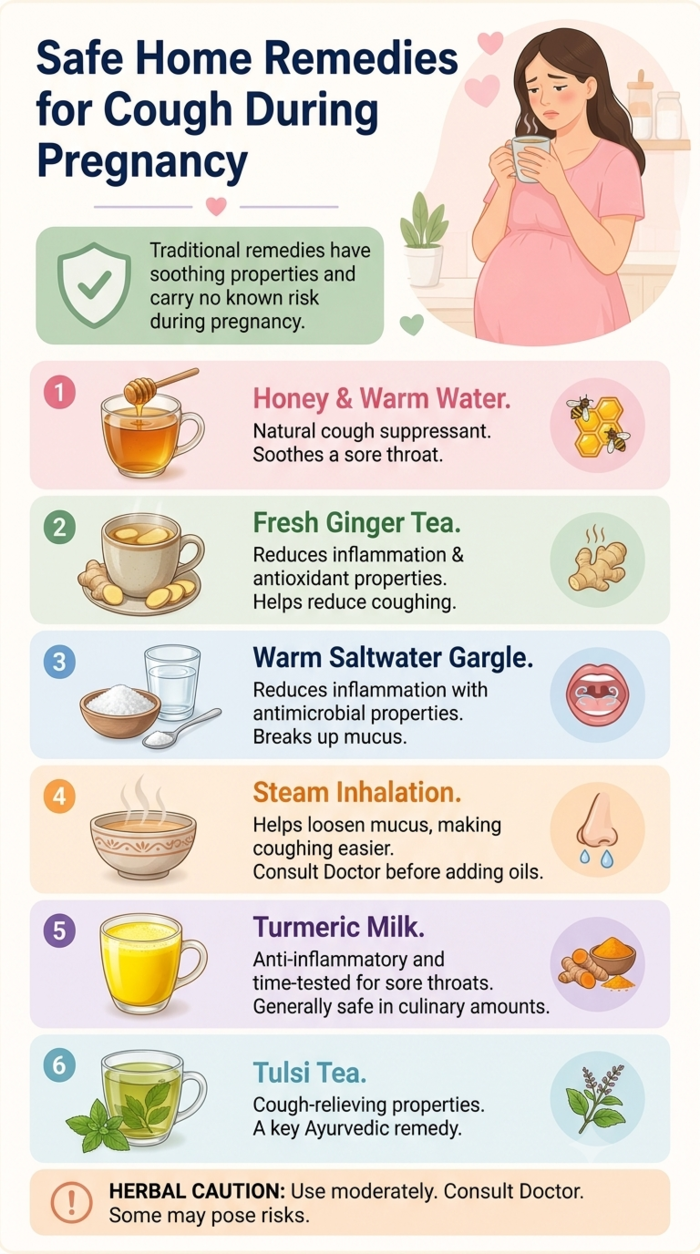
Safe Home Remedies for Cough During Pregnancy
Many traditional remedies have soothing properties and carry no known risk during pregnancy.- Honey with warm water or tea: This acts as a natural cough suppressant, reducing inflammation and soothing a sore throat. Mix a tablespoon of honey into warm water or herbal tea.
- Ginger tea: Has natural anti-inflammatory and antioxidant properties that can help reduce coughing and soothe the throat. Slice fresh ginger into boiling water, simmer for a few minutes, strain, and add a little honey.
- Warm saltwater gargle: Reduces inflammation, soothes a sore throat, and has antimicrobial properties that can help break up mucus.
- Steam inhalation: Helps loosen mucus, making coughing easier. Add a drop of eucalyptus oil only after checking with your doctor.
- Turmeric milk: A pinch of turmeric in warm milk has anti-inflammatory properties and is a time-tested remedy for sore throats and coughs. It is generally considered safe in culinary amounts during pregnancy.
- Tulsi tea: Tulsi has cough-relieving properties and is the primary ingredient of many Ayurvedic cough medicines.
When Should You See a Doctor for a Cough During Pregnancy?
Home remedies and short-term use of a safe single-ingredient cough syrup are usually enough for a mild cough from a cold. See a doctor promptly if:- Your cough lasts more than 7–10 days without improvement
- You have a fever above 38°C (100.4°F)
- You notice shortness of breath or chest pain
- Your cough is producing green or yellow mucus
- Your cough is disturbing your sleep or eating significantly
When in doubt, skip the medicine cabinet and call your doctor. A safe cough remedy during pregnancy is always one that has been confirmed right for you and your baby.
Whether you’re pregnant, a new mom, or navigating postpartum, you don’t have to do it alone. Join our support group to connect, share, and support one another.
FAQs on Can You Take Cough Syrup During Pregnancy?
- Can a severe cough harm the baby during pregnancy?
A mild to moderate cough does not directly harm the baby. However, an untreated severe or prolonged cough, particularly if linked to an underlying condition such as asthma or a chest infection, can produce complications. Consult a doctor if your cough is persistent, worsening, or accompanied by fever or breathing difficulty. - Can I take cough drops or lozenges instead of cough syrup during pregnancy?
Most cough drops containing menthol or honey are considered safe during pregnancy when used in moderation. However, medicated lozenges containing benzocaine, phenol, or high doses of menthol should be avoided. Always check the ingredient list before use, and prefer honey or ginger-based lozenges where possible. - Can a cough syrup cause a miscarriage?
No cough syrup ingredient is directly linked to miscarriage when used at recommended doses. However, certain ingredients, such as high-dose decongestants, may affect blood flow to the placenta. Always use the lowest effective dose for the shortest time and confirm with your doctor before taking any cough preparation during pregnancy.