In this article:
What Are the Stages of C-Section Scar Healing?
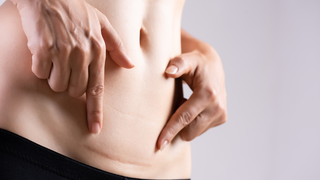
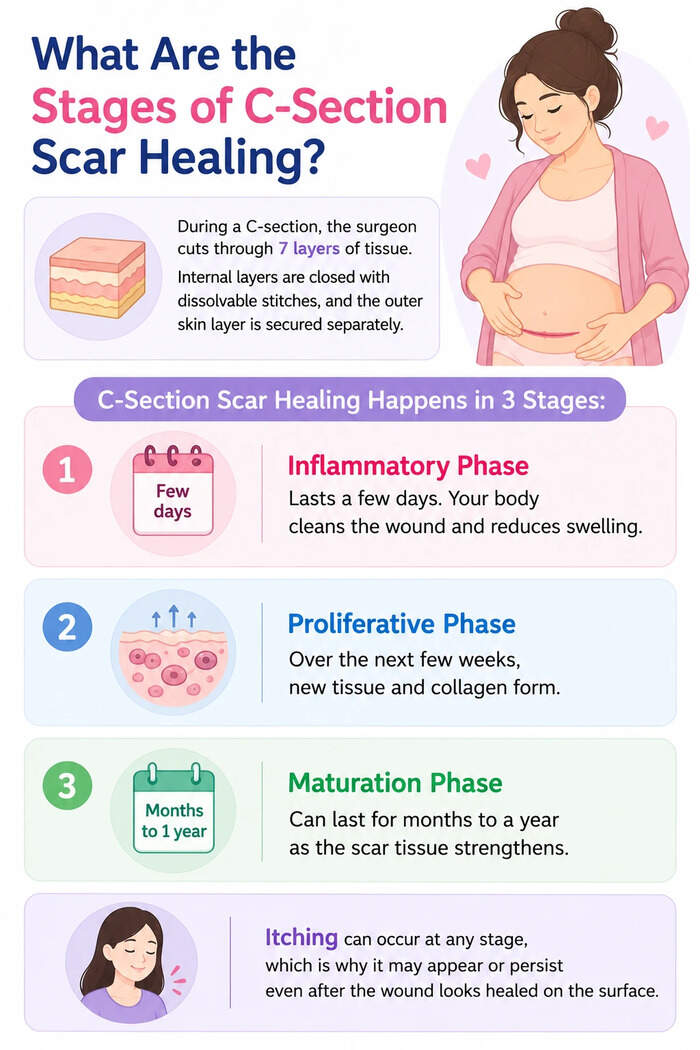
During a C-section, the surgeon cuts through seven layers of tissue. Internal layers are closed with dissolvable stitches, and the outer skin layer is secured separately.The healing of a caesarean scar involves three stages:
- An inflammatory phase lasting a few days
- A proliferative phase over the following weeks during which new tissue and collagen form
- A maturation phase that can last months to a year as scar tissue strengthens
What Causes C-Section Scar Itching Months After Surgery?
Several factors combine to produce itching in a healed caesarean scar.- Nerve regeneration: A C-section cuts through the skin, fat, and muscle of the lower abdomen, severing small nerves in the process. As these nerves regrow, they send irregular signals that the brain interprets as itching. This is one of the most common causes of itching at the incision site in the months after surgery, and it can persist until the nerves have fully re-established their normal pathways.
- Collagen remodelling: After the wound closes, the body continues to rebuild and reorganise the collagen fibres inside the scar. This internal restructuring can compress or irritate the surrounding nerve endings, producing itching, tightness, or sensitivity that persists for months or even years after the surface appears fully healed.
- Dry skin at the scar site: Scar tissue lacks oil glands, making it prone to dryness and irritation. The lower abdomen also moves constantly every time you sit, stand, or carry your baby, which can stretch the skin over the scar and worsen dryness.
- Histamine release: Your body produces histamines as part of the inflammatory response that helps repair tissue after surgery. These histamines stimulate nerve endings near your incision, causing the itchy sensation.
- Adhesions: As the scar heals internally, tissue layers can stick to each other or to underlying muscles and organs. These adhesions restrict movement and irritate the nerves in the surrounding area, which can produce itching, tightness, or a pulling sensation months or years after surgery.
- Hormonal changes: After delivery, oestrogen levels drop sharply. Lower oestrogen reduces the skin's ability to retain moisture, making the scar area drier and more prone to irritation. This is why itching sometimes intensifies in the weeks after birth, even when the wound itself is healing normally.
- Clothing friction: The C-section scar sits along the lower abdomen, directly in the path of waistbands, undergarments, and fitted clothing. Tight or synthetic fabrics press against the scar repeatedly throughout the day, aggravating nerve endings that are already sensitive during healing.
When Should I Worry About C-Section Scar Itching?
Most C-section scar itching is a normal part of healing and settles with time. However, some signs indicate the scar needs medical attention.Seek medical attention if you notice:
- A scar that is raised, thickening, or growing beyond its original boundary, which may indicate a keloid or hypertrophic scar
- Itching accompanied by spreading redness, fever, or discharge from the scar site
- Scar pain or itching that worsens rather than improves over time
- Itching severe enough to affect sleep or daily activity
How to Relieve C-Section Scar Itching at Home
The following measures help reduce itching and support scar recovery at home.- Moisturising: Applying gentle, fragrance-free moisturising cream regularly helps keep the skin soft and reduces dryness-related itching. Coconut oil and other traditional oils used during the jaappa period provide surface hydration, but silicone-based products have stronger clinical evidence for scar management.
- Scar massage: Gentle circular motions with clean fingertips can reduce itching and improve healing. This is typically safe to begin around six weeks after surgery, once the incision has fully closed, and is best discussed with your doctor first.
- Cool compresses: Applied for a few minutes at a time, provide short-term relief.
- Silicone sheets or gel: Silicone scar sheets or gel, started around four to six weeks after surgery when the incision is fully closed, create a protective barrier that helps maintain moisture and may reduce excessive scarring.
- Physical therapy: Specifically, myofascial scar release has shown benefit for women experiencing ongoing scar pain or itching, including those whose C-sections were six to nine years prior.
- Loose clothing: Wearing cotton clothing with a waistband that sits below the scar reduces friction throughout recovery and beyond, particularly in warmer climates.
Whether you’re pregnant, a new mom, or navigating postpartum, you don’t have to do it alone. Join our support group to connect, share, and support one another.
FAQs on Why Do C-Section Scars Itch Months Later?
- Why does my C-section scar itch when I'm pregnant again?
Hormonal changes, including those during a subsequent pregnancy, can be a trigger for scar itchiness. The skin over the scar also stretches as the abdomen grows, which can reactivate sensitivity in the nerve endings around the scar. - Can itching mean my C-section scar is infected?
Itching alone is not a sign of infection. An infected scar typically presents with spreading redness, swelling, discharge, fever, or worsening pain.