
In this article:
Why Do Toddlers Grind Their Teeth at Night?
Bruxism can be caused by multiple factors, including:- Teething and tooth development: Among young children, teeth grinding can be a pain response to teething. As new teeth erupt, the jaw may feel uncomfortable, and grinding can be the body's way of managing that sensation.
- Stress and changes in routine: Kids might grind their teeth due to stress, from worry about a change in routine, or even from arguments with parents and siblings. Changes such as starting a new playschool, the arrival of a sibling, or shifts in daily routine can trigger this response in toddlers.
- Misaligned bite: When the upper and lower teeth do not sit evenly together, the jaw attempts to find a comfortable position, leading to grinding.
- Certain medications and health conditions: Teeth clenching and grinding can also come from hyperactivity, cerebral palsy, or a reaction to common medications. Some ADHD medications are known to worsen bruxism as a side effect.
- Genetics: If one or both parents have a history of bruxism, their child may be more likely to develop the condition.
- Mouth breathing: Toddlers who breathe through their mouths, due to nasal congestion, enlarged adenoids, or allergies, are more prone to teeth grinding. Mouth breathing alters the resting position of the jaw and tongue, which can trigger grinding during sleep.
- Sleep disturbances and snoring: Children with disrupted sleep patterns, snoring, or obstructive sleep apnea are at higher risk of bruxism. During episodes of partial airway blockage, the body may trigger jaw movement as a reflex to reopen the airway.
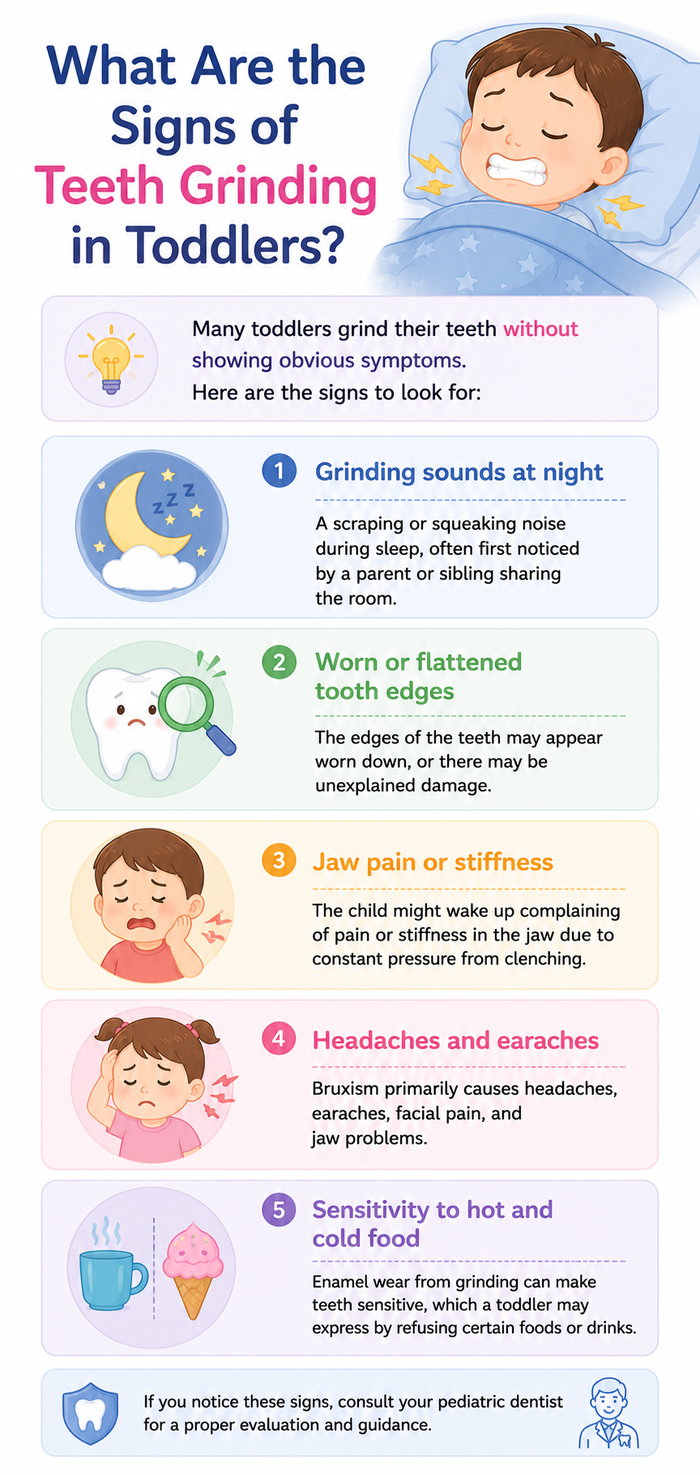
What Are the Signs of Teeth Grinding in Toddlers?
Many toddlers grind their teeth without showing obvious symptoms. The signs to look for include:- Grinding sounds at night: A scraping or squeaking noise during sleep, often first noticed by a parent or sibling sharing the room
- Worn or flattened tooth edges: The edges of the teeth may appear worn down, or there may be unexplained damage
- Jaw pain or stiffness: The child might wake up complaining of pain or stiffness in the jaw due to constant pressure from clenching
- Headaches and earaches: Bruxism primarily causes headaches, earaches, facial pain, and jaw problems
- Sensitivity to hot and cold food: Enamel wear from grinding can make teeth sensitive, which a toddler may express by refusing certain foods or drinks
Does Teeth Grinding Damage a Toddler's Teeth?
Wear and tear on the teeth's enamel from grinding can lead to painful chewing or make the teeth more sensitive to hot and cold.In most toddlers, the grinding affects only the milk teeth and stops before the permanent teeth arrive. However, if grinding is persistent and forceful, the enamel will not only wear down, but the teeth may chip, flatten, or fracture.
In instances of prolonged and frequent teeth grinding, there is a chance of developing temporomandibular joint disorder (TMD), which causes severe pain in the jaw and can make it difficult for a child to chew or open their mouth.
When Should You See a Dentist?
If your child is between the ages of 3 and 7, has no other symptoms, and the grinding seems related to teething or tooth development, a watchful waiting approach is appropriate.See a dentist if:
- The grinding is loud and frequent every night
- Your toddler wakes up with jaw pain, headaches, or earaches
- You notice visible wear or chipping on the teeth
- The grinding started after beginning a new medication
- Your child also snores, mouth-breathes, or has disrupted sleep
How Is Teeth Grinding in Toddlers Managed?
Most toddlers do not need active treatment. Where management is needed, the approach depends on the cause:- Stress reduction: A consistent bedtime routine, avoiding screen time before sleep, and calm pre-sleep activities such as a warm bath or story time.
- Dental review: If uneven teeth are contributing to bruxism, a paediatric dentist might recommend orthodontic treatment or adjusting the bite.
- Mouth guards: These are generally not used for young toddlers since their jaws and teeth are still growing, but may be considered for older children with significant enamel damage.
- Addressing the underlying cause: If a medication is responsible, the treating doctor may review or adjust the prescription.
Whether you’re pregnant, a new mom, or navigating postpartum, you don’t have to do it alone. Join our support group to connect, share, and support one another.
FAQs on Why Do Toddlers Grind Their Teeth? Causes, Signs, and When to See a Doctor
- Is it normal for a 2-year-old to grind their teeth?
Yes. Many children experience bruxism before age 5. In most cases, it is related to teething or normal jaw development and resolves without intervention. - Can teeth grinding harm my toddler's milk teeth?
It can, if the grinding is frequent and forceful over a long period. The loss of tooth enamel leaves teeth exposed and prone to cavities, and children can also develop temperature sensitivity from the loss of enamel. Regular dental check-ups help monitor any damage early.