The Role of the Parathyroid Glands
The parathyroid glands are four small glands situated behind the thyroid gland. They help regulate calcium balance in the body. This hormone works by:- Releasing calcium from the bones into the bloodstream.
- Increasing calcium absorption from food through the intestines.
- Promoting calcium retention by the kidneys.
- Stimulating the kidneys to convert vitamin D into its active form, which improves calcium absorption from the intestines.
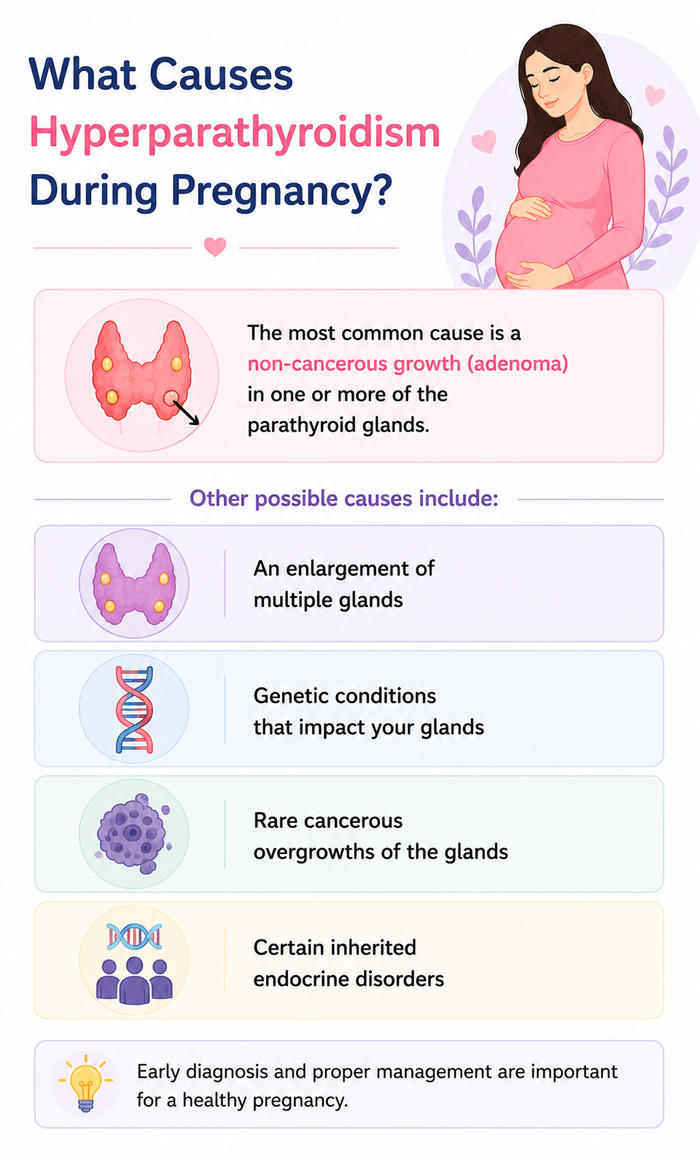
What Causes Hyperparathyroidism During Pregnancy?
Hyperparathyroidism can develop or worsen for several reasons, but the most common cause is a non-cancerous growth (adenoma) in one or more of the parathyroid glands. Other possible causes include:- An enlargement of multiple glands
- Genetic conditions that impact your glands
- Rare cancerous overgrowths of the glands
- Certain inherited endocrine disorders
Impact of Elevated Calcium Levels on Pregnancy
Elevated calcium levels may affect various bodily functions and increase the chances of complications during pregnancy.Hypercalcemia might:
- Affects kidney function
- Lead to dehydration
- Be associated with high blood pressure
- Affect muscles and nerves
- Cause kidney stones
Symptoms of Hyperparathyroidism in Pregnant Women
The symptoms of hyperparathyroidism can be mistaken for common pregnancy discomforts. Many pregnant women with the condition have few or no symptoms. When symptoms do occur, they may include:- Increased thirst and frequency of urination
- Nausea
- Vomiting
- Constipation
- Fatigue and exhaustion
- Weakness in muscles
- General lethargy
- Stomach pains
- Loss of appetite
- Behavioural changes
There are various effects on the mother’s health in case the hyperparathyroidism is not treated, which include:
- Kidney stones
- High blood pressure
- Pancreatitis
- Bone loss
- Miscarriage
- Hypercalcemic crisis
Hyperparathyroidism may affect the baby during pregnancy in the following ways:
- Underweight baby
- Premature birth
- Developmental issues
- Baby with hypocalcemia
- Stillbirth
Why Is It Important to Detect Hyperparathyroidism Early During Pregnancy?
Early diagnosis of hyperparathyroidism is important for a healthy pregnancy. Doctors can usually detect the condition through blood tests that check for elevated calcium and parathyroid hormone levels and low phosphorus levels.What Can Be Done About This Condition in Pregnancy?
Depending on the severity of the problem and stage of pregnancy, there is a variety of possible solutions. Treatment can include:- Ensuring you are drinking plenty of water
- Keeping your calcium levels closely monitored
- Making appropriate changes to your diet
- Medication, in specific situations, but only under observation
- Surgery during the second trimester, when the condition is more serious
When to Talk to Your Doctor
You should consult a physician immediately if you experience:- Symptoms like nausea or vomiting that are not improving with time
- Extreme fatigue
- Unusually frequent thirst and urination
- Recurring kidney stones
- Sudden abdominal pain
- High levels of calcium show up on your blood test
Hyperparathyroidism during pregnancy is a rare disease that causes hypercalcemia and poses some dangers not only for the mother but also for the baby. Early detection of the disease and treatment can help prevent possible complications during pregnancy.
Whether you’re pregnant, a new mom, or navigating postpartum, you don’t have to do it alone. Join our support group to connect, share, and support one another.
FAQs on Can Hyperparathyroidism Affect Pregnancy? What Experts Want You to Know
- What can lead to hyperparathyroidism during pregnancy?
One of the main reasons why hyperparathyroidism occurs during pregnancy is a parathyroid adenoma leading to overproduction of parathyroid hormones. - Can you control hyperparathyroidism when pregnant?
Yes. It all depends on how severe your case is, as different treatments like monitoring, hydration, medications, or even surgery may be utilised. - How do you diagnose hyperparathyroidism when pregnant?
Hyperparathyroidism is usually diagnosed through blood tests where one’s levels of calcium, phosphorus, and parathyroid hormone are assessed.