In this article:
Treatment is mainly aimed at relieving symptoms and may range from dietary changes and oral medicines to hospitalisation for intravenous fluids and nutritional support when needed.
What Are Anti-Nausea Medicines?
Anti-nausea medicines are also known as antiemetics. These medicines help reduce nausea and vomiting. But they do not treat the underlying cause.Your doctor will prescribe the most appropriate medicine after considering your pregnancy stage and overall health.
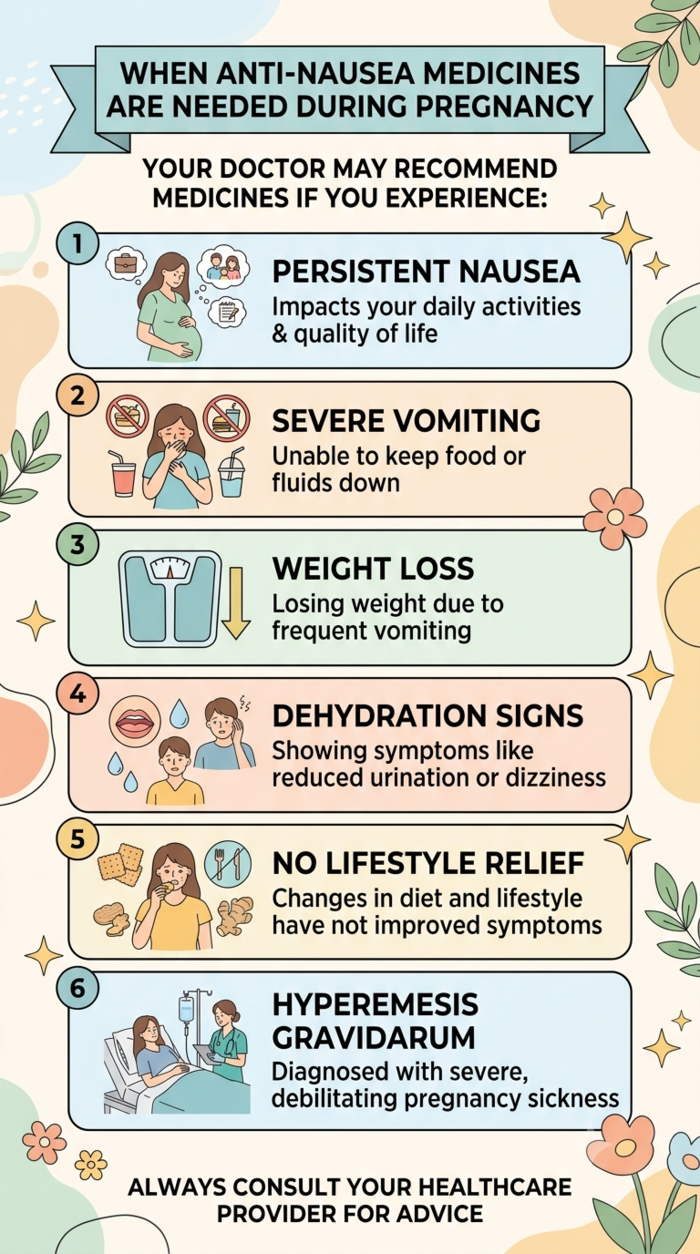
When Might You Need Anti-Nausea Medicines During Pregnancy?
Your doctor may recommend medicines if you:- Have persistent nausea that affects your daily activities
- Are unable to keep food or fluids down
- Experience weight loss due to frequent vomiting
- Show signs of dehydration
- Do not improve with dietary and lifestyle changes
- Develop hyperemesis gravidarum
Common signs may include:
- Signs of dehydration
- Dry mouth or skin
- Low blood pressure
Which Anti-Nausea Medicines May Be Used During Pregnancy?
The treatment options mainly depend on your symptoms and your response to treatment.| Medicine | How it may be used |
| Doxylamine + pyridoxine | Commonly used for nausea and vomiting during pregnancy |
| Ondansetron | May be considered when other treatments do not provide adequate relief |
| Antacids | May help when heartburn or acid reflux contributes to nausea |
| Corticosteroids | Reserved for refractory or severe cases under specialist supervision (as excessive steroid use might increase the risk of fetal malformations) |
What Are the Side Effects of Anti-Nausea Medicines During Pregnancy?
Most commonly prescribed anti-nausea medicines are usually safe during pregnancy.They may cause the following side effects in some cases:
- Drowsiness
- Dry mouth
- Constipation
- Dizziness
- Headache
If you develop severe side effects or your symptoms worsen, consult your doctor immediately.
What Measures Can Help You Manage Pregnancy Nausea Without Medicines?
According to Dr Sushma K, eating small, frequent meals rather than large meals may help manage pregnancy-related nausea. Ginger may also help some women.The following are other simple lifestyle measures to manage your nausea without medicines:
- Avoiding foods and smells that trigger nausea
- Drinking fluids regularly to stay hydrated
- Getting enough rest
Effect of Anti-Nausea Medicines on Pregnancy
Treating moderate or severe nausea and vomiting can improve your overall well-being during pregnancy.Appropriate treatment may help you
- Maintain adequate nutrition and hydration
- Reduce the risk of dehydration
- Improve your quality of life
- Prevent the risk of possible complications such as hyperemesis gravidarum
If you are experiencing nausea and vomiting that is affecting your ability to carry out routine activities, consult your doctor for proper assessment and timely care.
Whether you’re pregnant, a new mom, or navigating postpartum, you don’t have to do it alone. Join our support group to connect, share, and support one another.
FAQs on Anti-Nausea Medicines During Pregnancy: Are They Safe for You and Your Baby?
- Can I stop taking anti-nausea medicine once I start feeling better?
Do not stop your medicine without speaking to your healthcare provider. Depending on your symptoms, they can advise you when and how to stop treatment based on your symptoms and the medicine you are taking. - Can anti-nausea medicines be taken throughout pregnancy?
Some women may need treatment for only a few weeks, while others with persistent symptoms may require medicines for longer. - Will anti-nausea medicines make me feel sleepy?
Some anti-nausea medicines can cause drowsiness or dizziness. If you feel sleepy after taking your medicine, avoid driving or operating machinery until you know how it affects you.