
What Is Lactose Overload in Babies?
Lactose is the natural sugar found in breast milk and infant formula. It provides energy and supports healthy brain development.Lactose overload occurs when a baby drinks more lactose than their digestive system can comfortably process at one time. This usually happens because the baby takes in a large amount of the milk available at the beginning of a breastfeed (often called foremilk), which is naturally higher in lactose and lower in fat.
When excess lactose reaches the large intestine without being fully digested, gut bacteria ferment it. This produces gas and draws extra water into the bowel, leading to loose, frothy stools and tummy discomfort.
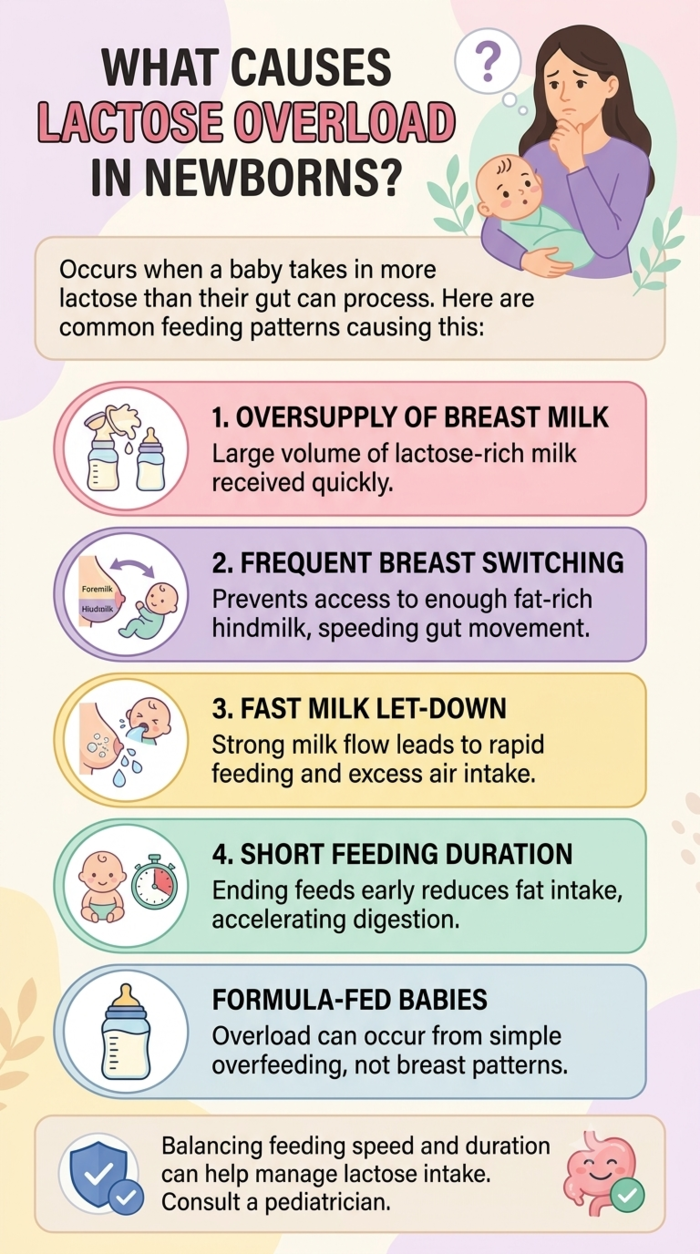
What Causes Lactose Overload in Newborns?
Breastfeeding patterns can cause a baby to take in more lactose than their gut can process:- Oversupply of breast milk: An abundant milk supply may cause a baby to receive a large volume of lactose-rich milk quickly before reaching the higher-fat milk later in the feed.
- Frequent switching between breasts: Changing breasts too early may prevent the baby from getting enough fat-rich milk, leading to faster stomach emptying and excess lactose intake.
- Fast milk let-down: Some mothers have a strong let-down reflex, causing babies to gulp milk rapidly and swallow more air along with large amounts of lactose.
- Feeding for short durations: Breast milk contains lactose throughout a feed, but its fat content rises as the breast empties. Fat slows down how quickly milk moves through a baby's gut, giving the lactose more time to be digested by the enzyme lactase. Ending feeds too early may reduce the amount of hindmilk the baby receives.
What Are the Symptoms of Lactose Overload?
The most recognisable signs are:- Green, frothy, explosive stools
- Excessive gas
- Loud stomach noises
- Fussiness during or after feeds
- Pulling off the breast repeatedly
- Crying because of abdominal discomfort
- Increased feed frequency
- Hungry again soon after a feed
- Good or even above-average weight gain in many cases
Lactose Overload vs Lactose Intolerance
| Aspect | Lactose Overload | Lactose Intolerance |
| What it is | Baby takes in lactose faster than it can be digested in one feed | Body cannot produce enough lactase to digest lactose |
| Cause | Breastfeeding pattern (oversupply, fast let-down, short feeds) | Rare genetic condition (galactosemia) or, later in life, natural drop in lactase |
| How common in babies | Common | Primary lactose intolerance is extremely uncommon in babies under five years of age. |
| Weight gain | Normal or rapid | Poor, with signs of dehydration if untreated |
| Stools | Green, frothy, watery | Watery, may include malabsorption signs |
| Onset | Can occur any time during breastfeeding | Present from birth (if congenital) |
| Fix | Adjust feeding pattern (drain one breast fully, avoid early switching) | Requires medical diagnosis and management; not resolved by feeding changes alone |
| Is breastfeeding stopped? | No | Managed medically, breastfeeding usually continues under guidance |
How to Fix Lactose Overload in Babies
Most cases resolve with small adjustments to feeding technique, without stopping breastfeeding or changing formula:- Feed from one breast until it softens: Allow your baby to finish feeding from one breast before offering the other. This increases the chance of receiving higher-fat milk.
- Improve breastfeeding position: A good latch helps babies feed efficiently and swallow less air.
- Manage oversupply: If milk supply is excessive, a lactation consultant may suggest feeding from the same breast for a set period before switching.
- Avoid unnecessary formula changes: Switching formulas or stopping breastfeeding usually does not solve lactose overload.
- Burp your baby: Burping during and after feeds may reduce swallowed air and improve comfort.
- Seek breastfeeding support early: Certified lactation consultants can assess feeding technique and identify problems that may be causing symptoms.
When Should You See a Doctor
Consult your paediatrician if your baby has:- Poor weight gain
- Blood in stools
- Persistent vomiting
- Fever
- Signs of dehydration
- Severe diarrhoea lasting more than a day or two
- Symptoms that do not improve after feeding adjustments
- Rash or eczema along with digestive symptoms, which may suggest cow's milk protein allergy
Whether you’re pregnant, a new mom, or navigating postpartum, you don’t have to do it alone. Join our support group to connect, share, and support one another.
FAQs on Lactose Overload in Babies: Causes, Symptoms, and How to Fix It
- Does lactose overload mean my breast milk is unhealthy?
No. It reflects how the baby is fed within a session, not the quality of the milk. - Is lactose-free formula needed for lactose overload?
Not usually. Overload is a digestion-speed issue, not a lactose allergy. Switching formulas should only be done on a doctor's advice. - How long does lactose overload take to improve?
Many babies show improvement within a few days after correcting breastfeeding techniques, although the exact time varies depending on the underlying feeding issue.