In this article:
We spoke with Dr Chetna Jain, Director – Department of Obstetrics & Gynaecology at Cloudnine Group of Hospitals, Gurgaon, to understand retained products of conception, how they are diagnosed and what treatment options may be considered.
What Are Retained Products of Conception?
Retained products of conception (RPOC) means that some tissue associated with a pregnancy is still present inside the uterus after the pregnancy has ended. Depending on the stage of pregnancy, this may include placental tissue, fetal tissue, or other pregnancy-related material.“Retained pregnancy tissue may sometimes clear on its own, but in other cases it can lead to ongoing bleeding, pain or infection and may require medical evaluation and appropriate treatment.”
- Dr Chetna Jain, Director – Department of Obstetrics & Gynaecology, Cloudnine Group of Hospitals, Gurgaon
What Causes RPOC?
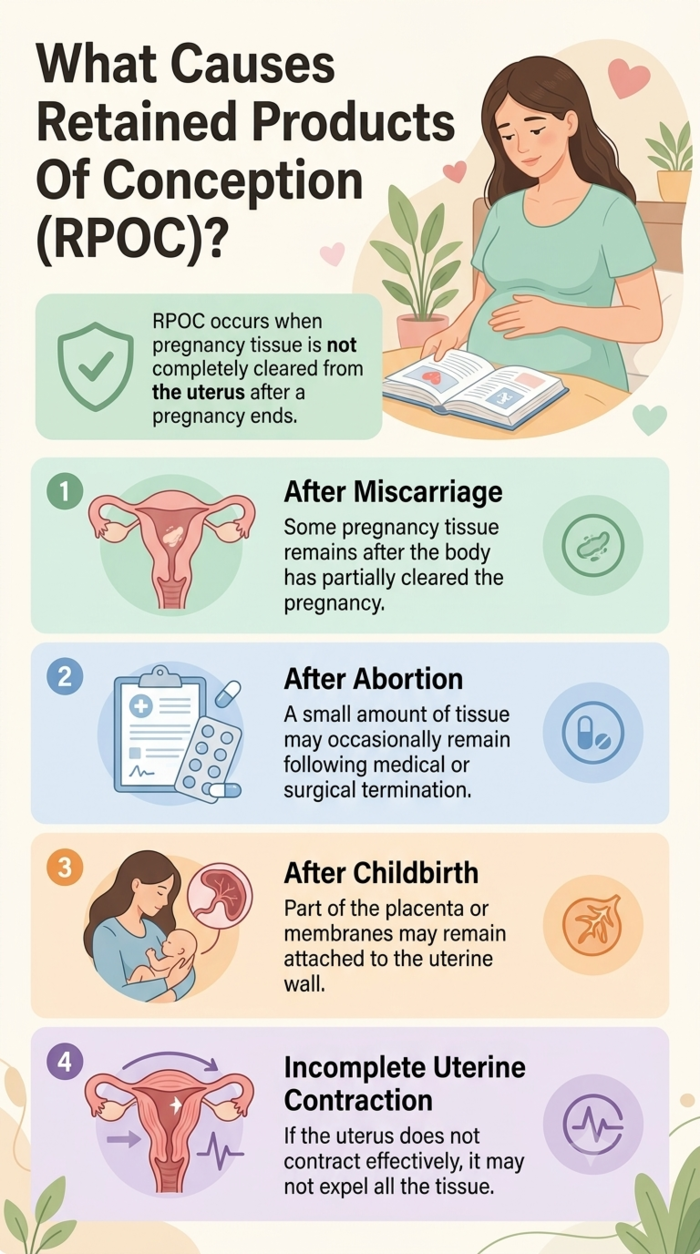
RPOC can develop when the uterus does not completely clear the tissue associated with the pregnancy. This may happen in different situations, including:- After miscarriage: Some pregnancy tissue may remain after the body has passed part of the pregnancy.
- After abortion: A small amount of tissue may occasionally remain following medical or surgical termination.
- After childbirth: Part of the placenta or membranes may remain attached to the uterine wall.
- Incomplete uterine contraction: If the uterus does not contract effectively, it may not expel all the tissue.
What Are the Symptoms of RPOC?
Possible symptoms of RPOC include:- Heavy or prolonged vaginal bleeding
- Persistent or worsening pelvic or lower abdominal pain
- Fever or chills
- Unusual or foul-smelling vaginal discharge
- Weakness, tiredness, or dizziness
- Feeling faint, especially after significant bleeding
How Is RPOC Diagnosed?
Doctors may use several types of information to find out whether pregnancy tissue remains in the uterus.This can include:
1. Medical history
Your doctor may ask when and how the pregnancy ended, how much bleeding you have had, and whether you have pain, fever, or other symptoms.2. Pelvic examination
A pelvic examination can help check for bleeding, tenderness, cervical changes, or signs of infection.3. Ultrasound
Ultrasound is the main imaging test for suspected RPOC.A transvaginal ultrasound may check for material inside the uterus and assess:
- Endometrial lining
- Tissue within the uterus
- Blood flow using Doppler ultrasound
- Other abnormal findings
4. Blood tests
A complete blood count (CBC) may be done to check for anaemia after heavy bleeding. If infection is suspected, we may recommend additional tests. hCG testing may sometimes be used, but a positive result alone cannot confirm RPOC because pregnancy hormone levels can remain detectable for some time after pregnancy ends.What Are the Treatment Options for RPOC?
Treatment depends on several factors, including the amount of tissue remaining, your symptoms, bleeding, infection risk, and ultrasound findings.Possible approaches include:
- Expectant management: If you are stable and the amount of remaining tissue appears small, your doctor may recommend waiting for the uterus to clear it naturally while monitoring you.
- Medication: Medicines may sometimes be used to encourage the uterus to contract and help pass remaining tissue, depending on the circumstances.
- Surgical treatment: If bleeding is significant, infection is suspected, tissue does not pass, or symptoms continue, a procedure may be recommended to remove the remaining tissue.
When Should You Seek Medical Help?
Seek prompt medical attention if you experience:- Very heavy or increasing vaginal bleeding
- Severe or worsening abdominal or pelvic pain
- Fever or chills
- Fainting or severe dizziness
- Foul-smelling vaginal discharge
- Feeling unusually weak after significant blood loss
Whether you’re pregnant, a new mom, or navigating postpartum, you don’t have to do it alone. Join our support group to connect, share, and support one another.
FAQs on Bleeding After Miscarriage or Delivery: Could Tissue Be Left Behind?
- Can RPOC happen without heavy bleeding?
Yes. Some people with retained pregnancy tissue may have only mild bleeding or no noticeable symptoms. An ultrasound may identify the problem even when symptoms are limited. - How long after pregnancy can RPOC be detected?
RPOC can be identified days or even weeks after a pregnancy ends, particularly when bleeding or other symptoms continue instead of gradually improving. - Can RPOC go away on its own?
In some cases, the uterus may naturally pass the remaining tissue. Your doctor may recommend observation when your condition is stable and there are no signs of complications.