In this article:
How Does the Placenta Protect the Baby From Viruses?
The placenta is an active organ made of both maternal and foetal tissue, with a layer called the syncytiotrophoblast forming its outer surface. This layer has tightly packed cells, antiviral proteins, and immune cells such as natural killer cells and macrophages that detect and destroy most pathogens before they reach foetal blood vessels.The placenta also controls which substances can move between maternal and foetal circulation. This is why most common viral infections, including the common cold, do not harm an unborn baby.
"The ability of a virus to cross the placenta depends on several factors, including the type of virus, the stage of pregnancy, the mother's level of infection, the health of the placenta and the baby's developing immune system."
Dr Soumya Lakshmi, Sr. Consultant, Obs & Gyn, Aster CMI Hospital
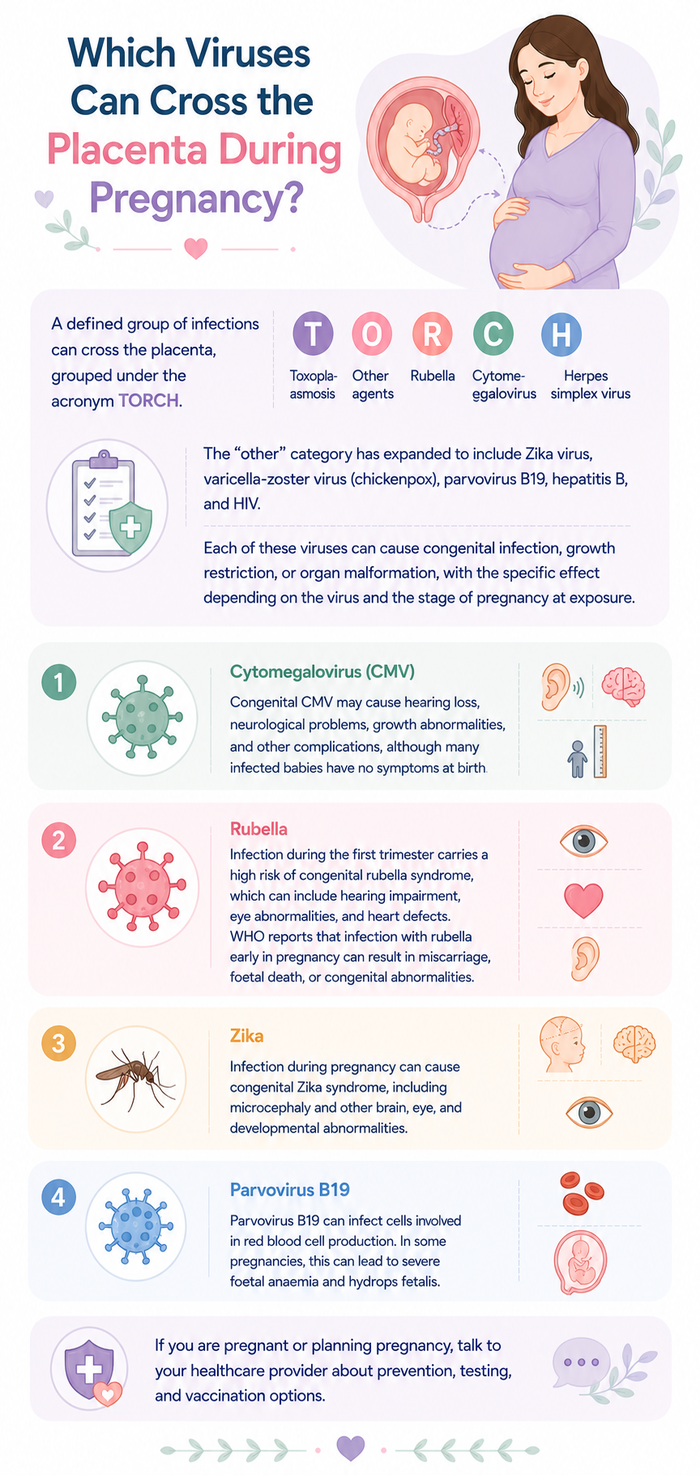
Which Viruses Can Cross the Placenta During Pregnancy?
A defined group of infections can cross the placenta, grouped under the acronym TORCH: toxoplasmosis, other agents, rubella, cytomegalovirus, and herpes simplex virus.The "other" category has expanded to include Zika virus, varicella-zoster virus (chickenpox), parvovirus B19, hepatitis B, and HIV. Each of these viruses can cause congenital infection, growth restriction, or organ malformation, with the specific effect depending on the virus and the stage of pregnancy at exposure.
- Cytomegalovirus (CMV): Congenital CMV may cause hearing loss, neurological problems, growth abnormalities, and other complications, although many infected babies have no symptoms at birth.
- Rubella: Infection during the first trimester carries a high risk of congenital rubella syndrome, which can include hearing impairment, eye abnormalities, and heart defects. WHO reports that infection with rubella early in pregnancy can result in miscarriage, foetal death, or congenital abnormalities.
- Zika: Infection during pregnancy can cause congenital Zika syndrome, including microcephaly and other brain, eye, and developmental abnormalities.
- Parvovirus B19: Parvovirus B19 can infect cells involved in red blood cell production. In some pregnancies, this can lead to severe foetal anaemia and hydrops fetalis.
How Do Viruses Cross the Placental Barrier?
The exact mechanism is not fully understood for every virus, but recognised pathways include:- Direct infection of placental cells: Some viruses, such as CMV, infect the syncytiotrophoblast cells directly and then spread to the foetus.
- Cell-to-cell spread: After infecting one placental cell, a virus may spread to neighbouring cells and gradually move deeper into placental tissue.
- Travel inside immune cells: Certain viruses hide inside maternal white blood cells, which naturally cross into placental tissue, giving the virus a hidden route past the barrier.
- Damage to the barrier itself: Zika virus targets specific placental cells called cytotrophoblasts, using this gateway more efficiently than related viruses like dengue, which rarely cross the placenta.
- Bloodstream spread: Viruses that cause high levels of virus in maternal blood, such as HIV, can cross during placental micro-injuries, labour, or delivery.
Does the Stage of Pregnancy Affect Viral Transmission?
The risk and effects of congenital infection can vary according to gestational age. Some viruses cause greater developmental harm when infection occurs early, when organs are forming. This is more likely to cause structural birth defects, such as heart defects, cataracts, or hearing loss. Infection later in pregnancy is more likely to cause a newborn infection rather than a congenital abnormality.Rubella carries the greatest risk of severe congenital disease when maternal infection occurs during early pregnancy. For other viruses, transmission may occur throughout pregnancy, while the type or severity of foetal effects can vary with the timing of infection.
Can Viral Infections That Cross the Placenta Be Prevented?
Prevention depends on the virus:- Rubella and chickenpox: Largely preventable through vaccination completed before pregnancy, since live vaccines are not given during pregnancy itself.
- CMV: No vaccine is available, so prevention relies on hand hygiene, particularly after contact with young children's saliva or urine.
- HIV: Transmission to the baby can be reduced to under 1% with antiretroviral treatment during pregnancy.
- Zika: Prevention involves avoiding mosquito bites in affected regions.
Whether you’re pregnant, a new mom, or navigating postpartum, you don’t have to do it alone. Join our support group to connect, share, and support one another.
FAQs on Why Are Some Viruses Able to Cross the Placenta?
- Is it safe to get the rubella vaccine before pregnancy?
Yes. The rubella vaccine is given before conception, since it contains a live virus and is not administered during pregnancy. Doctors generally advise waiting one month after vaccination before trying to conceive. - Which trimester carries the highest risk from viral infections?
The first trimester carries the highest risk of structural birth defects, since this is when the baby's major organs are forming.