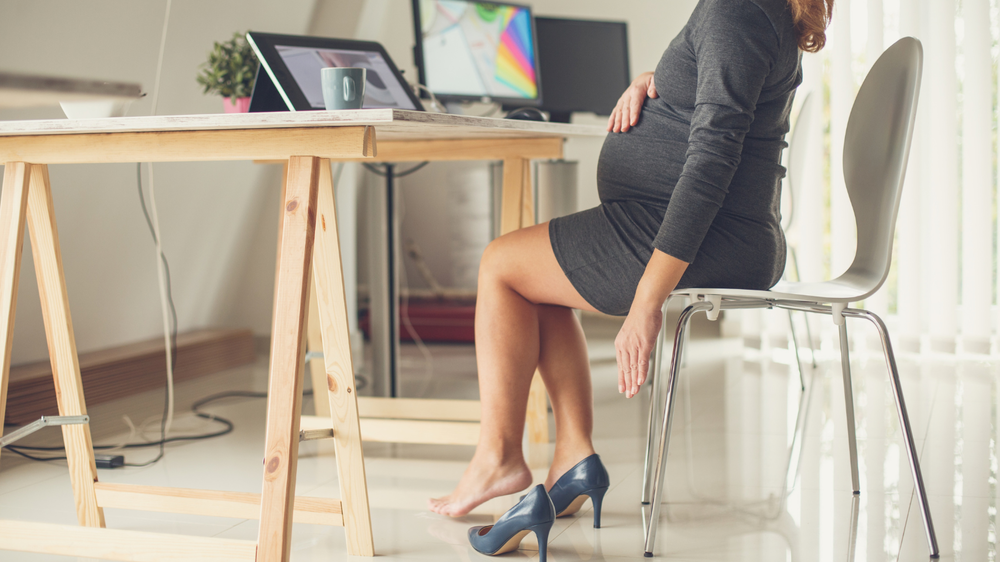
We spoke to Dr Akhilesh Yadav, Director - Orthopaedics & Joint Replacement, Max Super Speciality Hospital Vaishali, to get verified expert insight on this.
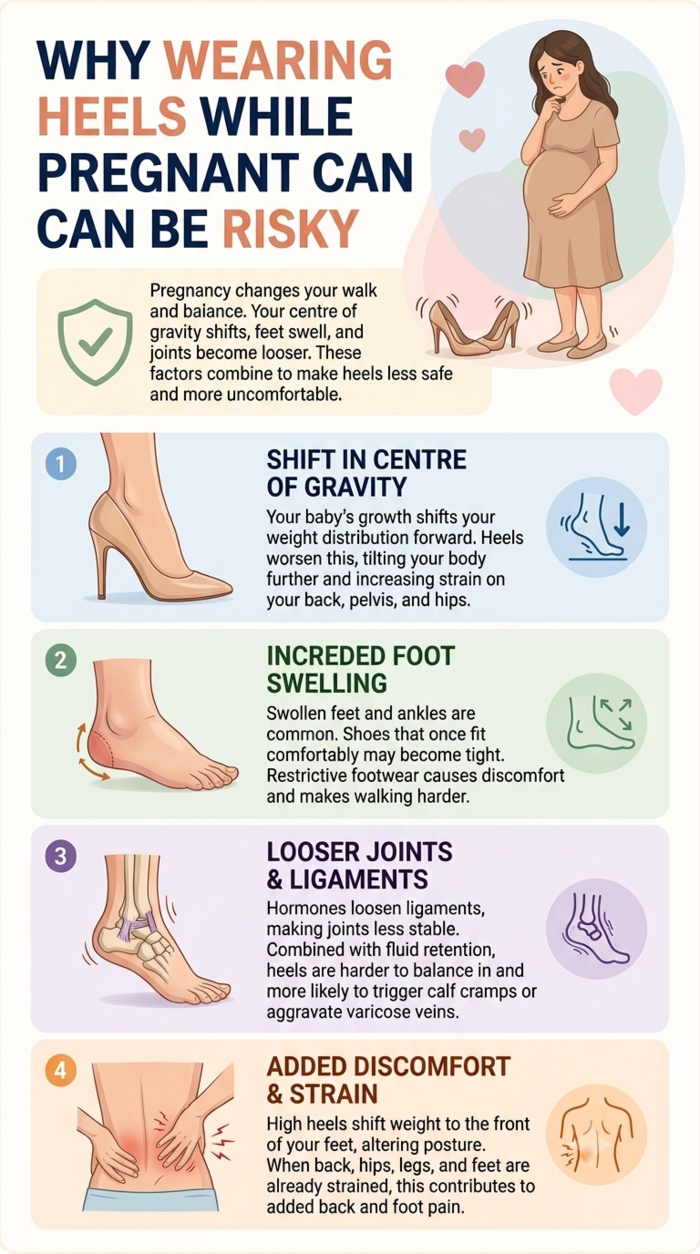
Why Wearing Heels While Pregnant Can Be Risky
Pregnancy affects several parts of the body that are important for walking and balance.1. Your centre of gravity changes: As your baby and uterus grow, your weight distribution changes. This shifts the centre of gravity ahead of the hips, and heels tilt the body further forward, adding strain on the back, pelvis and hips. You may naturally lean backwards or alter the way you walk to maintain balance.
2. Your feet may swell: Swollen feet and ankles are common during pregnancy. Shoes that previously fit comfortably may become tight, particularly later in the day. Tight or restrictive footwear can cause discomfort and make walking more difficult.
3. Your joints and ligaments become more flexible: Pregnancy hormones change ligaments and joints, making them looser and less stable. Combined with fluid retention that swells the feet and ankles, heels become harder to balance in and more likely to trigger calf cramps or aggravate varicose veins.
4. Back and foot discomfort may increase: High heels shift more of your weight towards the front of your feet and can alter your posture. During pregnancy, when your back, hips, legs, and feet may already be under additional strain, this can contribute to discomfort.
It is usually advised against wearing high heels when pregnant, especially as the pregnancy approaches its end. However, if a woman feels confident when wearing high heels at the early stages of her pregnancy, they are unlikely to harm the baby.
Are Low Heels Safer During Pregnancy?
If you want to wear heels in pregnancy, low, broad heels are generally a more stable choice than stilettos or high heels.A study published in a peer-reviewed journal examined footwear in the third trimester and found that heel heights above 45 mm significantly increased ankle inversion during walking and raised the risk of ankle sprain. The same study noted that a heel height of 15–45 mm suited women with posterior shank muscle strain, while a heel under 15 mm suited those with ankle instability.
Look for shoes with:
- A low, wide heel
- A comfortable, supportive sole
- Good grip to reduce slipping
- Enough room for your toes
- Adjustable straps or secure fastening
- A stable fit that does not allow your foot to slide
When Should You Stop Wearing High Heels in Pregnancy?
There is no specific week of pregnancy when every woman must stop wearing heels. However, they often become less practical as pregnancy progresses.You may want to switch to supportive footwear when:
- You feel unsteady while walking
- Your feet or ankles are swollen
- Your usual shoes feel tight
- You have back, hip, foot, or leg pain
- You are walking for long periods
- You will be standing for several hours
- The event involves stairs, uneven ground, or slippery floors
Can Wearing Heels Cause a Miscarriage?
No direct medical evidence links wearing heels to miscarriage. The risk comes indirectly, through falls. Pregnant women already have a higher chance of losing balance because of weight gain and postural change, and a fall from height, on stairs, or on uneven ground can injure the abdomen.A survey found that around 26% of working pregnant women had experienced a fall, a rate comparable to adults aged 65 and above. Major falls account for a substantial share of pregnancy-related trauma requiring hospital treatment, and a small proportion of these result in foetal loss.
High heels during pregnancy are best limited because they can make balance more difficult and increase the risk of a fall.
Whether you’re pregnant, a new mom, or navigating postpartum, you don’t have to do it alone. Join our support group to connect, share, and support one another.
FAQs on Can You Wear High Heels During Pregnancy?
- Which trimester is riskiest for wearing heels?
The second and third trimesters carry the highest risk, as the bump grows, balance shifts, and ligaments loosen. - Do heels harm the baby directly?
There is no direct evidence that heels harm the baby. The concern is through falls and back strain. - What is the safest heel height during pregnancy?
A low, wide block heel under 3 cm for a short duration is a safer choice, and heel height should be reduced further as pregnancy progresses.