In this article:
How Do Changes During Late Pregnancy Affect the Selection of Footwear?
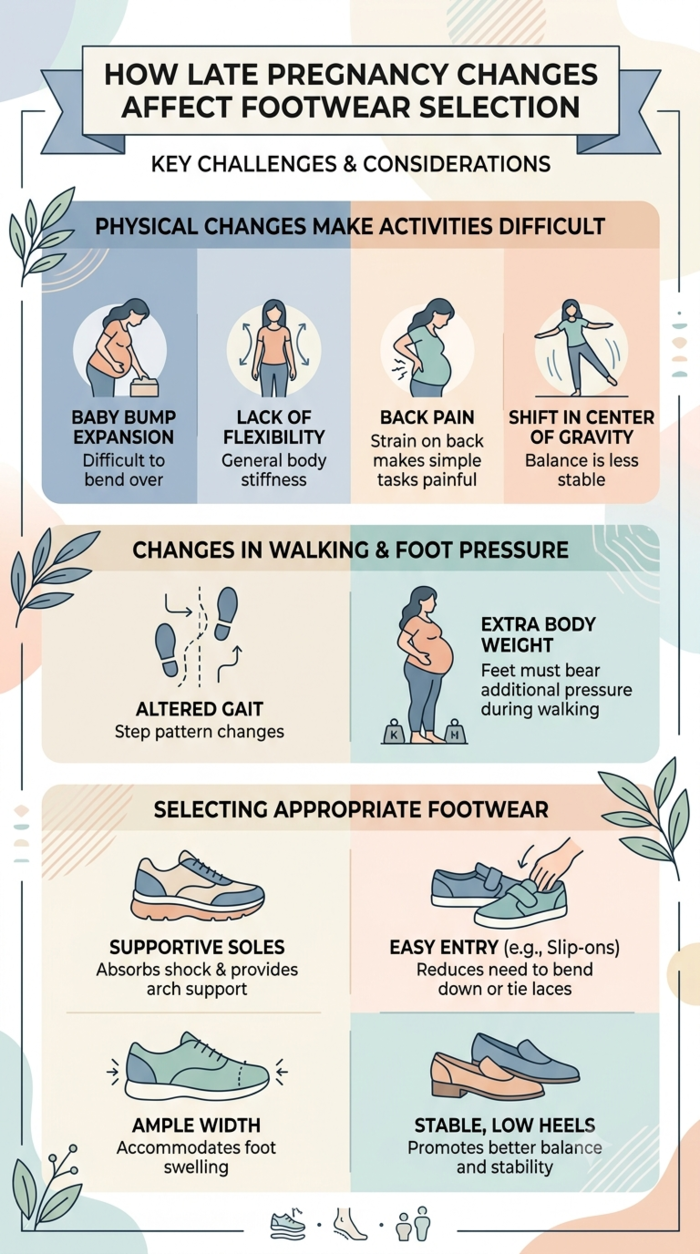
As Dr Reddy states, changes during late pregnancy, such as the expansion of the baby bump, the lack of flexibility, pain in the back, and the shift in the centre of gravity, make simple activities much more difficult to complete. Wearing shoes is among such activities.Changes occur in walking as well. Extra weight is added to the body and, thus, the feet have to endure additional pressure during walking. In order to cope with the problem, appropriate footwear should be chosen.
What Kind of Shoes Can Be Put On Easier?
Dr Reddy suggests paying attention to those patterns that do not require bending and retieing of the laces. The list of such types includes:- Slip-on shoes that can be put on easily at once
- Sneakers with elastic laces providing the look of a lace-up model but not requiring any tying
- Footwear with Velcro fastening that provides quick fitting and almost no finger work
What Features Contribute to Safer Footwear?
Comfort level is just one aspect. According to Dr Reddy, the best footwear options include comfortable shoes with proper arch supports and non-slip soles to minimise the chances of falling down.Each element is there for a reason:
- Proper arch support distributes body weight more evenly around the foot and reduces pressure on the heel as well as the lower back
- A non-slip sole increases stability on smooth and slippery surfaces, which is crucial because of shifting balance
- Proper fit prevents the foot from slipping inside the shoe
Why Should High Heels Be Avoided?
High heels are usually not recommended, especially in the third trimester. First of all, wearing high heels shifts body weight forward and, thus, contributes to shifting the centre of gravity. Such a combination of factors can make one less stable and increase stress on the lower back. Therefore, flat supportive shoes should be chosen to stay steady.How Does Footwear Help the Joints and Reduce Tiredness?
Comfort and Safety matter more than convenience.
Pregnant women need to remain active, and appropriate footwear would go a long way towards helping them do just that. The right footwear from morning till night will mean little pain in the feet, hips, and back at night.
Is It Necessary for Your Shoes to be Changed Monthly?
This is not mandatory. There may be swelling, enlargement or increased sensitivity of the feet as the pregnancy progresses. A comfortable fit during the second month will be tight in the third one. Periodic checking of the shoes and their replacement with more appropriate ones can help prevent blisters and soreness.It is not necessary to purchase many pairs. One or two comfortable and fitting ones are sufficient for the rest of the months.
Seasons and everyday activities also matter. Comfortable material will be useful in hot summer months as it keeps the feet cool. During a long walk, shoes with some cushioning will relieve tired feet. It is useful to have a comfortable pair at hand by the entrance door.
When Should a Doctor Be Consulted?
In the following instances, a doctor must be consulted:- Painful feet, ankles or legs that do not go away even after wearing comfy shoes
- Unexpected or sudden swelling in the feet or legs
- Persistent back pain
- Numbness or tingling sensations in the feet
- Almost falling while walking
Shoes might seem a trivial matter, but they make a big difference concerning comfort, balance and even energy throughout the day. Easy on-and-off designs, elastic lacing and Velcro fastenings make dressing simpler; arch support and non-slip soles help to ensure safety. In this case, daily activities will become easier at the final stage of pregnancy.
Whether you’re pregnant, a new mom, or navigating postpartum, you don’t have to do it alone. Join our support group to connect, share, and support one another.
FAQs on Choosing the Right Footwear in Late Pregnancy: Comfort, Support, and Safety
- Can I wear flat sandals or chappals?
Flat sandals with good footbeds and straps will usually work well. Thin flat sandals which have no arch support will not be as effective, especially on slippery floors. - Should I purchase new shoes when pregnant?
Only if you find that your existing pair no longer fits properly. During pregnancy, your feet can change shape; therefore, choosing your shoe size based on how your feet feel at the end of the day is reasonable. - Is there any use of cushioning insoles?
Cushioned insoles may provide relief for some women. A doctor can guide you to use a specific type of insole.