
In this article:
What is DVT?
DVT is a condition in which a blood clot forms in a deep vein, usually in the leg, thigh, or pelvis. It develops when blood flow slows down, the blood becomes more likely to clot, or a vein is damaged. The clot can block circulation and cause swelling, pain, and tenderness.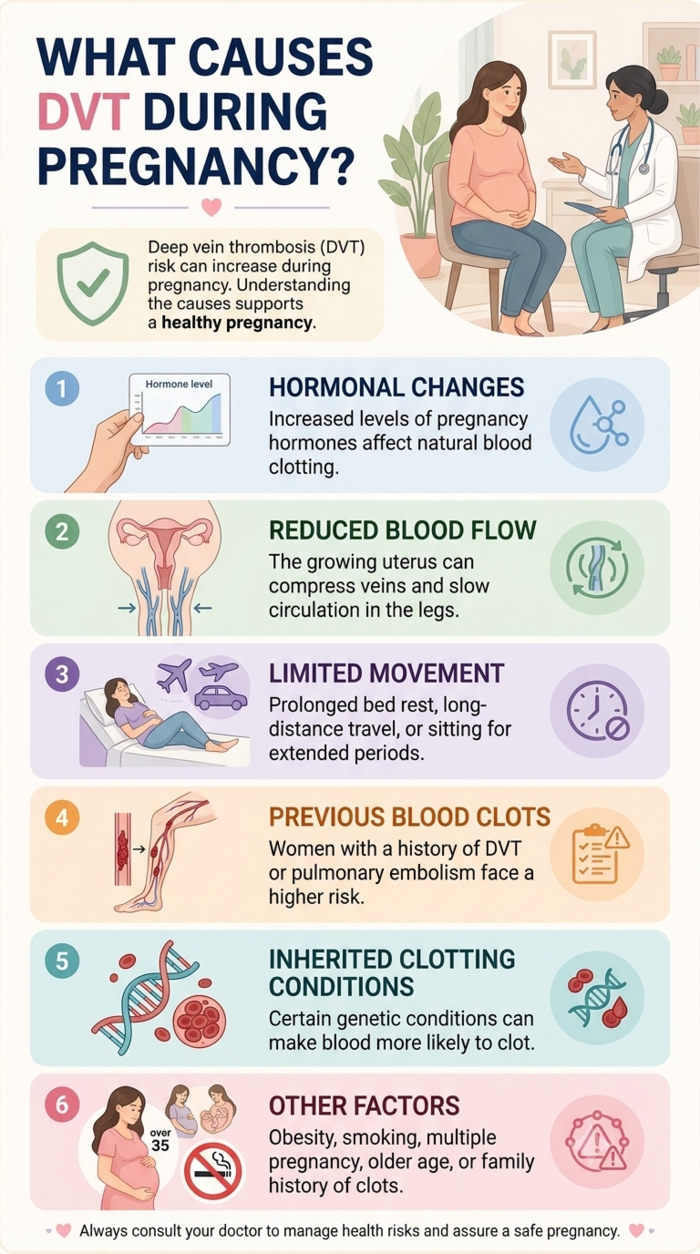
What Causes DVT During Pregnancy?
Common risk factors include the following:- Hormonal changes: Increased levels of pregnancy hormones affect blood clotting
- Reduced blood flow: The growing uterus can compress veins and slow blood circulation in the legs
- Limited movement: Prolonged bed rest, long-distance travel, or sitting for extended periods can increase the risk
- Previous blood clots: Women with a history of DVT or pulmonary embolism have a higher risk
- Inherited clotting conditions: Certain genetic conditions can make blood more likely to clot
- Other factors: Obesity, smoking, multiple pregnancy, older maternal age, and a family history of blood clots may increase the risk
In pregnancy, a swollen, painful leg is never just fatigue. If you notice it, walk, hydrate, and call your doctor immediately; early action protects both mother and baby.
What Are The Signs of DVT During Pregnancy?
DVT usually affects one leg rather than both. Some women may experience only mild symptoms, while others develop noticeable discomfort.Dr Sahana KP suggests you watch for the following warning signs:
- Swelling in one leg, particularly the calf or thigh
- Pain or tenderness that may feel like cramping or soreness
- Warmth in the affected area
- Redness or discolouration of the skin
- A feeling of heaviness in the affected leg
How is DVT Diagnosed During Pregnancy?
Doctors assess symptoms, medical history, and individual risk factors before recommending tests. Compression duplex ultrasound is usually the first test used to identify a clot in the leg.If the initial ultrasound is negative but DVT remains suspected, the doctor may recommend repeat ultrasound examinations or additional imaging, depending on the symptoms and suspected location of the clot.
Pregnant women should not delay assessment because of concerns about diagnostic tests. Doctors select investigations carefully, considering both maternal and foetal safety.
How is DVT Treated During Pregnancy?
According to Dr Sahana KP, the purpose of treatment is to keep the clot from growing, reduce the risk of pulmonary embolism, and stop any new clots from forming.Common treatment measures include the following:
- Anticoagulants: The most common anticoagulant used is low-molecular-weight heparin (LMWH), which does not cross over the placenta
- Monitoring: Doctors monitor the severity of the condition to determine the necessary treatment
- Safe physical activity: Gentle movement is often encouraged wherever possible, but existing medical conditions are always considered in doing so
- Treatment after the birth: Anticoagulation is often continued even after the pregnancy, but the doctor will advise the duration
Can DVT Be Prevented During Pregnancy?
Although not every blood clot can be prevented, several measures may help lower the risk:- Stay physically active as recommended by your doctor
- Avoid sitting still for long periods and move your legs regularly
- Drink adequate fluids
- Discuss your risk factors with your gynaecologist, particularly if you have had a previous blood clot
- Use compression stockings or preventive anticoagulants only when recommended by your gynaecologist
FAQs on Deep Vein Thrombosis During Pregnancy
- Could DVT develop without any evident symptoms during pregnancy?
Yes, DVT may at times appear without any evident symptoms. Some women may not have the usual swelling and discomfort. Therefore, women with considerable risk factors should consider proper monitoring and prevention with a gynaecologist. Any new and unknown symptoms should be checked right away. - Is it safe to breastfeed while taking medications for DVT?
Yes, many medicines used to treat DVT, including heparin and warfarin, are generally considered safe during breastfeeding. However, some newer anticoagulants may not be recommended. Mothers should discuss their medication with their gynaecologist before breastfeeding and avoid stopping prescribed treatment without medical advice. - Will I need special attention in my next pregnancy if I had DVT before?
Yes, women with a previous DVT may need special care during their next pregnancy. Their gynaecologist will assess the cause of the earlier clot and individual risk factors. Preventive anticoagulant treatment, regular monitoring, and an early pregnancy care plan may help reduce the risk of another blood clot.