
In this article:
When Does Colostrum Leaking Start in Pregnancy?
Colostrum production can begin from around 16 weeks, though visible leaking is more common from the second trimester onward and increases closer to 28 weeks.Many women first notice it while pinning a saree or removing a bra, when a dried yellow mark appears on the fabric. There is no fixed week when leaking should start; not leaking colostrum does not mean your breasts are not producing it or that you will have a low milk supply.
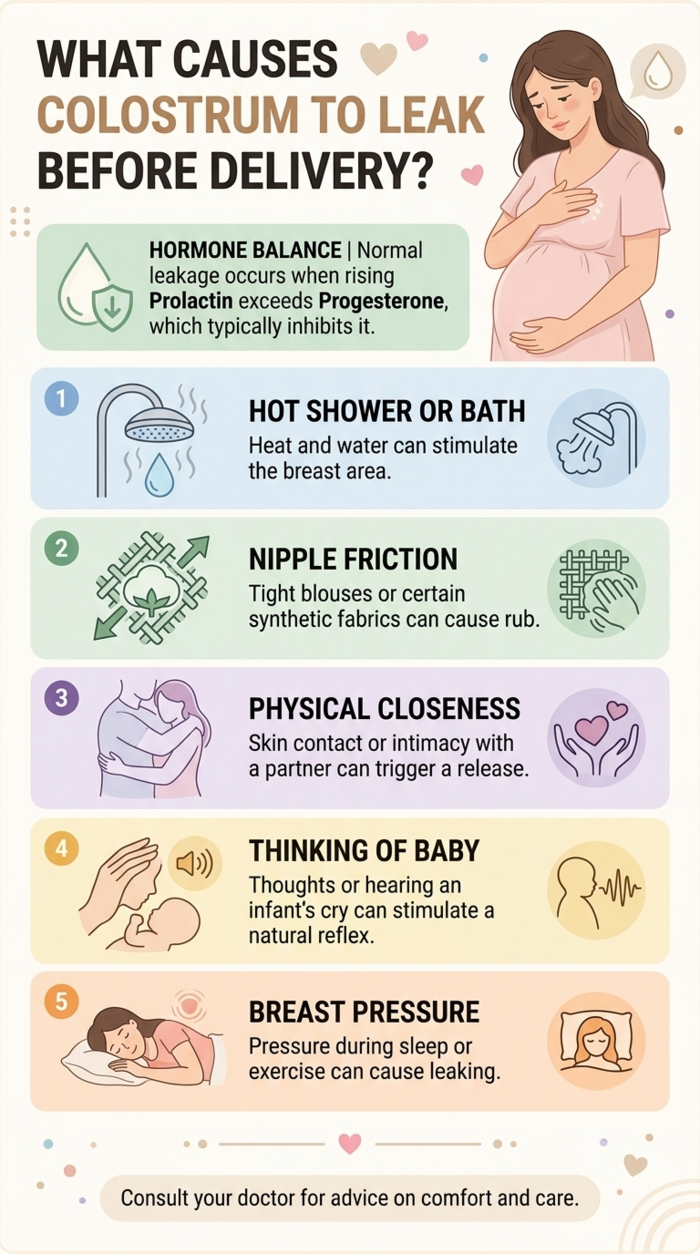
What Causes Colostrum to Leak Before Delivery?
Prolactin rises through pregnancy, and progesterone normally holds it; when prolactinexceeds progesterone, some leaking occurs.
Common triggers include:
- A hot shower or bath
- Nipple friction from tight blouses or synthetic fabric
- Physical closeness with a partner or skin contact
- Thinking about the baby or hearing an infant cry
- Pressure on the breasts during sleep or exercise
This leakage is usually perfectly normal and does not indicate that there is anything wrong with the pregnancy. Changes in the breast are a natural step in the process of preparation for breastfeeding.
Should You Squeeze or Express Colostrum During Pregnancy?
Spontaneous leakage does not usually require treatment or intervention. However, do not routinely squeeze your nipples to expel colostrum, particularly earlier in pregnancy.Nipple stimulation during hand expression releases oxytocin, a hormone involved in uterine contractions. Healthcare professionals generally advise starting around 36–37 weeks in an uncomplicated pregnancy.
Antenatal colostrum expression may be particularly useful when a baby is at higher risk of low blood sugar or feeding difficulties after birth. This can include some pregnancies complicated by diabetes, including gestational diabetes, or pregnancies involving twins or triplets.
It may not be recommended if you have a risk of premature labour, a short cervix, a cervical stitch, vaginal bleeding, a low-lying placenta or certain other pregnancy complications. Your obstetrician should decide whether it is appropriate for you.
How to Manage Colostrum Leakage During Pregnancy
Leaking rarely needs treatment; only comfort measures:- Wear breast pads inside a supportive bra, and change them when damp to avoid skin irritation
- Choose breathable cotton blouses and a supportive maternity bra
- Rinse the area with plain water during your daily bath; avoid scrubbing
- Keep a spare dupatta or shawl handy for workplace or travel days
What Are the Benefits of Colostrum for the Baby?
Colostrum is dense in immunoglobulin A (IgA), an antibody that protects a newborn's gut and airway before their own immune system matures. Other benefits include:- Coats the intestinal lining, limiting the entry of harmful bacteria
- Has a laxative effect that clears meconium (baby's first stool) and lowers the risk of jaundice
- Delivers concentrated protein and nutrients in a low volume suited to a newborn's small stomach
- Supports blood sugar stability in the hours after birth
When Should You See a Doctor About Colostrum Leakage?
Most leakage needs no medical review. Consult your gynaecologist if you notice:- Blood or a persistent pink tinge in the fluid
- Leaking accompanied by a lump, redness, or fever
- Heavy leaking in the first trimester
- Leaking with contractions before 37 weeks
Whether you’re pregnant, a new mom, or navigating postpartum, you don’t have to do it alone. Join our support group to connect, share, and support one another.
FAQs on Is It Normal to Leak Colostrum During Pregnancy?
- Is it normal to leak colostrum only from one breast?
Yes. One breast often produces or releases more than the other, and this difference does not affect future breastfeeding. - Is leaking colostrum a sign of labour?
No. Leaking colostrum does not mean labour is starting or that delivery is close. It can happen weeks or months before birth. - Can I use my leaked colostrum to feed the baby later?
Only if it has been collected and stored under medical guidance using sterile methods; casual leakage on clothing cannot be reused.