In this article:
How Long Should You Sit in the Winter Sun While Pregnant?
No formal consensus exists on the exact duration for pregnant women. Commonly cited advice ranges from 5 to 10 minutes, 2 to 3 times a week, to 10 to 30 minutes daily, with arms, legs, or face uncovered. The right amount depends on skin tone, season, and location.Vitamin D forms only when UVB rays reach the skin, which in winter happens mainly from late morning to early afternoon. Winter sun is mild, but sit in the shade if you feel hot, dizzy, or thirsty.
What Are the Benefits of Sitting in the Winter Sun During Pregnancy?
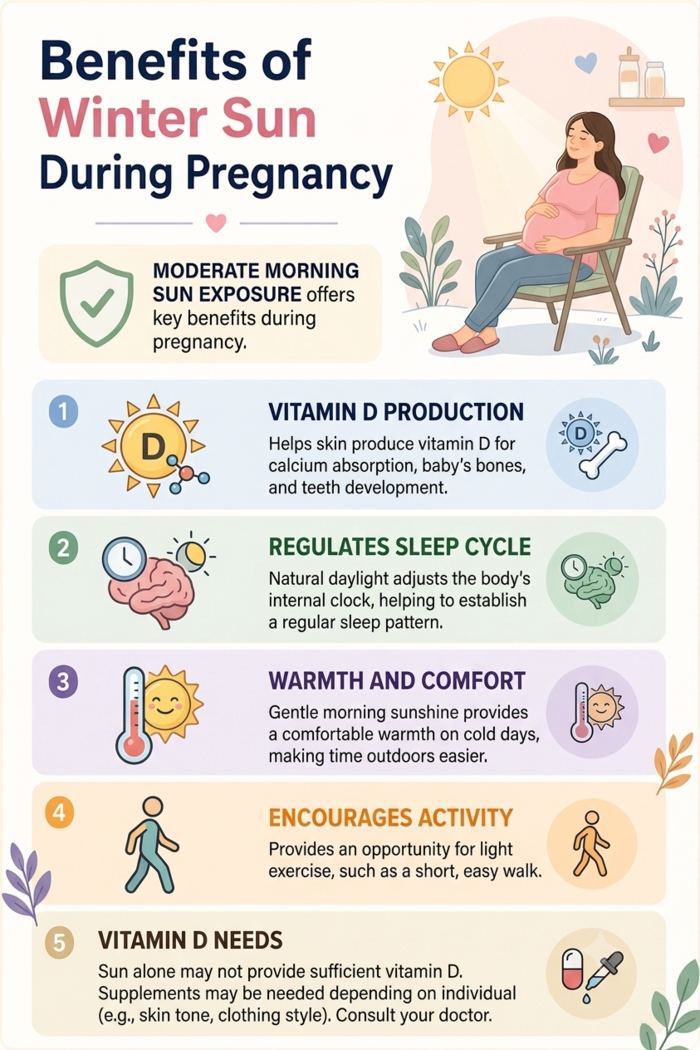
Moderate sun exposure can offer some benefits during pregnancy, including:- Supports vitamin D production: Sunlight helps the skin produce vitamin D, which helps the body absorb calcium. Vitamin D supports the development of the baby's bones and teeth and maintains the mother's bone health.
- Supports the body's sleep-wake cycle: Natural daylight helps regulate the body's internal clock, which plays a role in maintaining a regular sleep pattern.
- Provides warmth and comfort: Mild morning sunshine adds gentle warmth on cold days, which makes a short time outdoors easier for pregnant women.
- Encourages outdoor activity: Spending some time outdoors gives pregnant women a chance for gentle exercise, such as a short walk.
Precautions for Sitting in the Winter Sun During Pregnancy
Moderate exposure to winter sunlight is generally safe throughout pregnancy. However, pregnant women should take a few precautions:- Avoid sitting in direct sunlight for prolonged periods, particularly when temperatures rise.
- Drink enough water to prevent dehydration.
- Wear comfortable, breathable clothing.
- Use sunscreen on exposed skin to reduce the risk of sunburn.
- Move to a shaded or cooler area if feeling unusually warm, dizzy, or uncomfortable.
When pollution levels are poor or severe, outdoor exposure should be minimised, particularly near traffic-heavy roads. Women can instead maintain vitamin D levels through appropriate dietary sources and doctor-recommended supplements.
When Should Pregnant Women Avoid Sitting in the Winter Sun?
Check the air quality index (AQI) before you step outside. According to India's Central Pollution Control Board (CPCB), the AQI is classified into six categories:| AQI level | Category |
| 0–50 | Good |
| 51–100 | Satisfactory |
| 101–200 | Moderate |
| 201–300 | Poor |
| 301–400 | Very Poor |
| 401–500 | Severe |
How Does Air Pollution Affect Pregnant Women?
Cities such as Delhi, Mumbai, Pune, and other urban areas can experience increased pollution during colder months because of vehicle emissions, construction dust, industrial activity, and other sources.When pregnant women sit outdoors in polluted surroundings, they may inhale fine particulate matter such as PM2.5. These particles are small enough to enter deep into the lungs and may contribute to inflammation and oxidative stress.
Prolonged exposure to air pollution during pregnancy has been associated with:
- Preterm birth: Exposure to air pollutants has been associated with an increased risk of babies being born before 37 weeks.
- Low birth weight: Some studies have linked maternal exposure to air pollution with restricted foetal growth and lower birth weight.
- Maternal respiratory problems: Pollution can worsen breathing difficulties, particularly in women with asthma or existing respiratory conditions.
FAQs on Is It Safe to Sit in the Winter Sun During Pregnancy?
- What is the best time to sit in the sun during pregnancy?
Late morning, when UVB reaches the ground in winter. Avoid early morning in smog-prone cities, when pollution is often highest. - Do I need sunscreen in winter during pregnancy?
Yes. UV rays are present in winter, and pregnancy makes skin prone to pigmentation. Use a mineral SPF 30 or higher. - Can I take vitamin D supplements instead of sitting in the sun?
Yes, and doctors often recommend them in India because deficiency is common. Take the dose your doctor prescribes.