In this article:
Why Does Melasma Appear During Pregnancy?
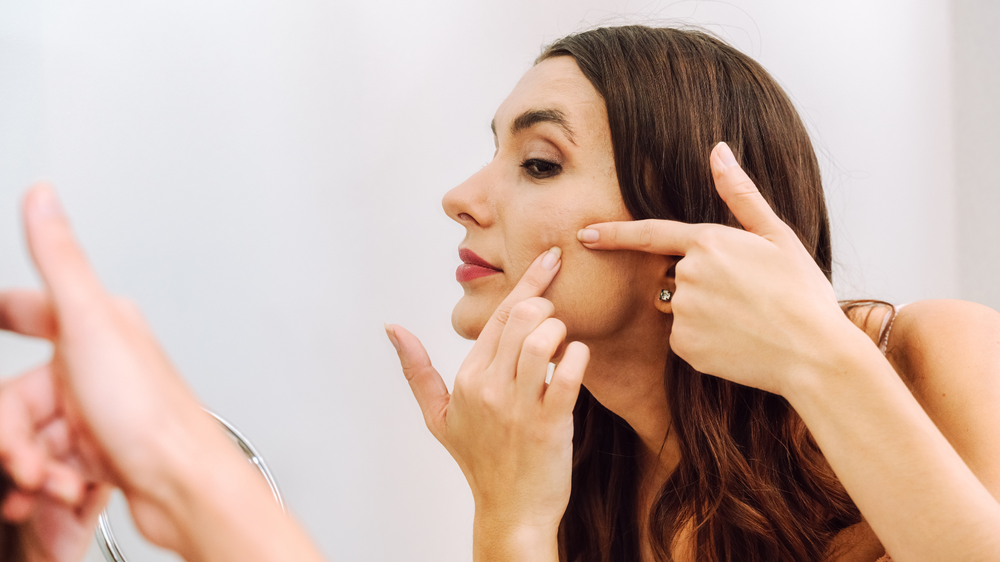
Melasma, or the mask of pregnancy, is so named because the patches often appear symmetrically across the central face, resembling a mask. It is also called chloasma, specifically for the melasma that develops during pregnancy or with the use of oral contraceptives.
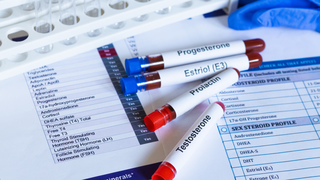
Pregnancy causes a significant rise in oestrogen and progesterone. These hormones stimulate melanocytes (skin cells responsible for producing pigment called melanin). When melanocytes become overactive, they deposit excess melanin in certain areas of the face, creating the patchy, uneven darkening that characterises melasma. Melanocyte-stimulating hormone (MSH) also rises during pregnancy, adding to the effect.
Sun exposure accelerates this process. UV rays directly trigger melanocytes to produce more pigment, which is why melasma tends to darken in summer months or after outdoor activity without sun protection.
Women with medium to darker skin tones are more prone to developing melasma and may find that patches are more visible. A family history of melasma also increases the likelihood of developing it during pregnancy.
What Is Safe to Use For Melasma During Pregnancy?
Several ingredients commonly used to treat melasma, including hydroquinone, tretinoin, and high-dose chemical peels, are not recommended during pregnancy due to absorption risks or insufficient safety data.
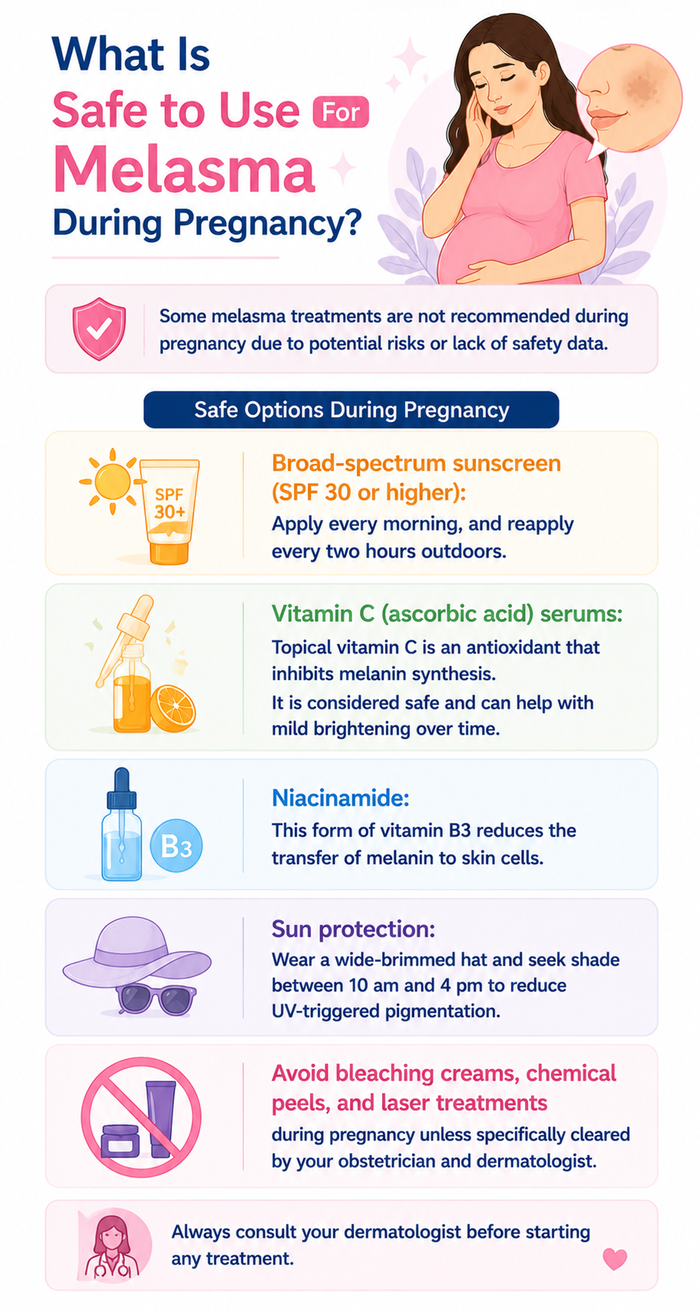
The following options are considered safe during pregnancy, but always check with your dermatologist before starting any treatment:
- Broad-spectrum sunscreen (SPF 30 or higher): Apply every morning, and reapply every two hours outdoors.
- Vitamin C (ascorbic acid) serums: Topical vitamin C is an antioxidant that inhibits melanin synthesis. It is considered safe and can help with mild brightening over time.
- Niacinamide: This form of vitamin B3 reduces the transfer of melanin to skin cells.
- Sun protection: Wearing a wide-brimmed hat and seeking shade between 10 am and 4 pm reduces UV-triggered pigmentation, particularly in summers where UV index levels regularly reach extreme ranges.
- Avoid bleaching creams, chemical peels, and laser treatments during pregnancy unless specifically cleared by your obstetrician and dermatologist.
Home Remedies For Melasma During Pregnancy
These are commonly used in households but have limited clinical evidence for melasma:
- Aloe vera gel: Contains aloesin, a compound that may reduce melanin production. Generally well tolerated on the skin.
- Turmeric paste: Curcumin in turmeric has mild antioxidant properties. Used traditionally for skin brightening.
- Sandalwood powder mixed with rose water: Used in Ayurvedic practice for cooling and brightening.
- Raw milk or yoghurt: Contains lactic acid, which may mildly exfoliate the skin surface over time.
- Tomato pulp: Contains lycopene, an antioxidant.B
Does Melasma Go Away After Delivery?
In many women, melasma fades significantly within three to six months after delivery as hormone levels normalise. In women who are breastfeeding, fading may take longer as hormone levels remain elevated until breastfeeding reduces or stops. However, it does not always disappear completely on its own.
If patches persist after delivery and you are not breastfeeding, a dermatologist can recommend additional treatment options for stubborn melasma.
Sun protection remains essential even after delivery. Unprotected sun exposure after pregnancy can cause melasma to return, even if it had previously faded.
Melasma during pregnancy is a hormonal skin response, not a skin condition requiring urgent treatment. Consistent sun protection is the most effective step you can take during pregnancy, and most cases fade gradually after delivery with the right care.
Whether you’re pregnant, a new mom, or navigating postpartum, you don’t have to do it alone. Join our support group to connect, share, and support one another.
FAQs on Melasma: Causes & Treatment for Pigmentation During Pregnancy
- Can melasma during pregnancy spread to other parts of the body?
Melasma primarily affects the face. It can also appear on the forearms and neck, which are areas frequently exposed to sunlight, but it does not spread in the way any other skin infection does. - Will melasma come back in a future pregnancy?
Yes, it is likely to recur in subsequent pregnancies because the hormonal trigger is the same. Women who have had melasma during one pregnancy should use broad-spectrum mineral sunscreen from early in future pregnancies to reduce the severity. - Does melasma during pregnancy affect the baby's skin colour?
No. Melasma is a response in your own skin cells triggered by hormonal changes. It has no connection to your baby's skin development or colour.