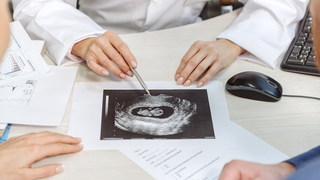
Because its symptoms can resemble those of other ectopic pregnancies, recognising the warning signs can be difficult. Understanding how doctors diagnose it can help you know when medical evaluation is important.
To understand ovarian ectopic pregnancy and how it is diagnosed, we spoke with Dr Renu Gupta, Principal Consultant, Obstetrics and Gynaecology, Sri Balaji Action Medical Institute, Delhi.
What Is an Ovarian Ectopic Pregnancy?
An ovarian ectopic pregnancy occurs when a fertilised egg implants and begins developing within your ovary instead of attaching to the lining of your uterus.Ovarian ectopic pregnancy is a rare type of ectopic pregnancy where the fertilised egg implants inside the ovary instead of travelling to the uterus. Since the ovary is not designed to support pregnancy growth, this condition requires early diagnosis and medical attention.
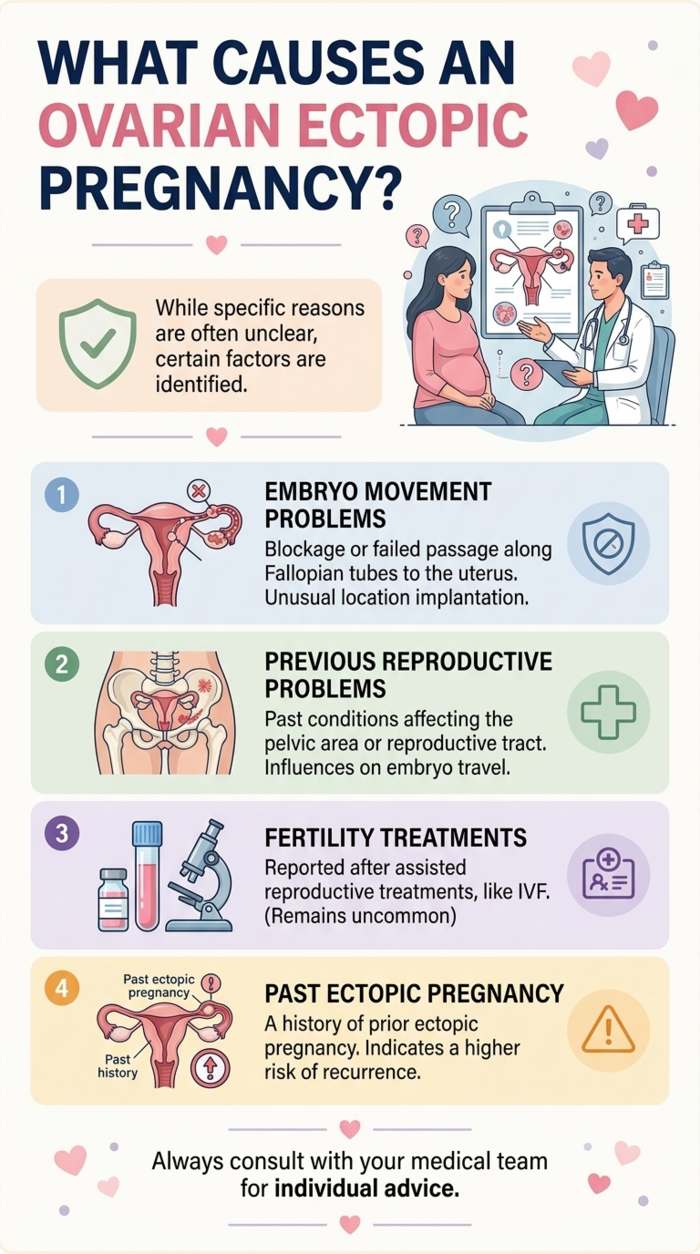
What Causes an Ovarian Ectopic Pregnancy?
The exact reason an embryo implants in the ovary is not always clear.Doctors may consider several possible factors, including:
- Problems with the normal movement of the fertilised egg: If the embryo does not reach the uterus as expected, implantation may occur in an unusual location.
- Previous pelvic or reproductive problems: Certain conditions affecting the reproductive tract may influence how an embryo travels.
- Assisted reproductive treatment: Ovarian ectopic pregnancy has been reported after fertility treatments, although it remains uncommon.
- Previous ectopic pregnancy: A history of ectopic pregnancy may increase the risk of having another ectopic pregnancy.
What Are the Symptoms of an Ovarian Ectopic Pregnancy?
The symptoms can be similar to those of other ectopic pregnancies.You may experience:
- Lower abdominal or pelvic pain, sometimes more noticeable on one side
- Vaginal bleeding or spotting
- Shoulder-tip pain, particularly if internal bleeding irritates the diaphragm
- Dizziness or weakness
- Fainting
- Pain that becomes sudden or severe
Why Can Ovarian Ectopic Pregnancy Be Difficult to Diagnose?
The ovary normally contains structures that can look similar to an early pregnancy on an ultrasound. For example, a corpus luteum develops after ovulation and can appear as a cyst-like structure.This can make it challenging to distinguish an ovarian ectopic pregnancy from other ovarian findings, particularly during very early pregnancy.
Doctors may therefore use repeated ultrasound examinations, β-hCG measurements and the overall clinical picture before confirming the diagnosis.
Can an Ovarian Ectopic Pregnancy Be Seen on an Early Ultrasound?
Sometimes, but not always.A very early pregnancy may be too small to identify clearly. If your pregnancy test is positive but an intrauterine pregnancy cannot yet be seen, your doctor may recommend a follow-up scan and repeat β-hCG testing.
If an abnormal structure is seen near the ovary, further assessment may be needed to determine whether it represents an ovarian ectopic pregnancy or another ovarian finding.
How Is Ovarian Ectopic Pregnancy Treated?
An ovarian ectopic pregnancy requires medical treatment because it cannot develop safely in the ovary.Treatment depends on the pregnancy's size, β-hCG levels, symptoms and risk of rupture.
- Surgery: Often needed, especially if there is bleeding or rupture. Doctors may try to preserve healthy ovarian tissue.
- Medication: Doctors may consider methotrexate in selected cases, depending on your individual condition.
Can an Ovarian Ectopic Pregnancy Rupture?
Yes. As the pregnancy grows, it can damage the ovarian tissue and cause bleeding.A ruptured ovarian ectopic pregnancy can lead to significant internal bleeding and may become a medical emergency.
Seek urgent medical care if you have
- Sudden severe abdominal pain
- Heavy bleeding
- Dizziness
- Weakness
- Shoulder pain
- Fainting during early pregnancy
Whether you’re pregnant, a new mom, or navigating postpartum, you don’t have to do it alone. Join our support group to connect, share, and support one another.
FAQs on Ovarian Ectopic Pregnancy: What Is It and How Is It Diagnosed?
- Can an ovarian ectopic pregnancy affect future fertility?
It can depend on the treatment required and your overall reproductive health. If the affected ovary can be preserved, ovarian function may continue. Your doctor can discuss your individual fertility outlook based on the ovary, fallopian tubes and other reproductive factors. - Can an ovarian ectopic pregnancy happen again?
Having one ectopic pregnancy can increase the risk of another ectopic pregnancy, although recurrence is not inevitable. If you become pregnant again, your doctor may recommend an early ultrasound to confirm that the pregnancy is developing inside the uterus. - Can an ovarian ectopic pregnancy be found before symptoms appear?
Yes, sometimes an ectopic pregnancy is identified during early pregnancy monitoring before severe symptoms develop. Ultrasound and β-hCG testing can help doctors assess the pregnancy's location, particularly when an intrauterine pregnancy is not yet visible.