
Understanding these factors helps parents make informed decisions about prenatal care, recognise potential risks, and seek timely medical guidance to support their child's health, growth, and development. In this article, Dr Savitha Shetty, Consultant Obstetrician and A gynaecologist at Apollo Hospital, will highlight some important perinatal factors that may contribute to ADHD.
What Are Perinatal Factors?
Perinatal factors refer to events and conditions relating to the pregnancy, delivery, and the time shortly after the birth. Such factors affect brain development in early childhood and may increase the possibility of a child developing ADHD.There is no one cause of ADHD. Genetics, environmental exposure, and early development may all be contributing factors. Researchers continue investigating the interactions of these causes.
Certain pregnancy and birth-related factors may influence a child's neurodevelopment, potentially increasing the likelihood of ADHD, although they do not directly determine its development.
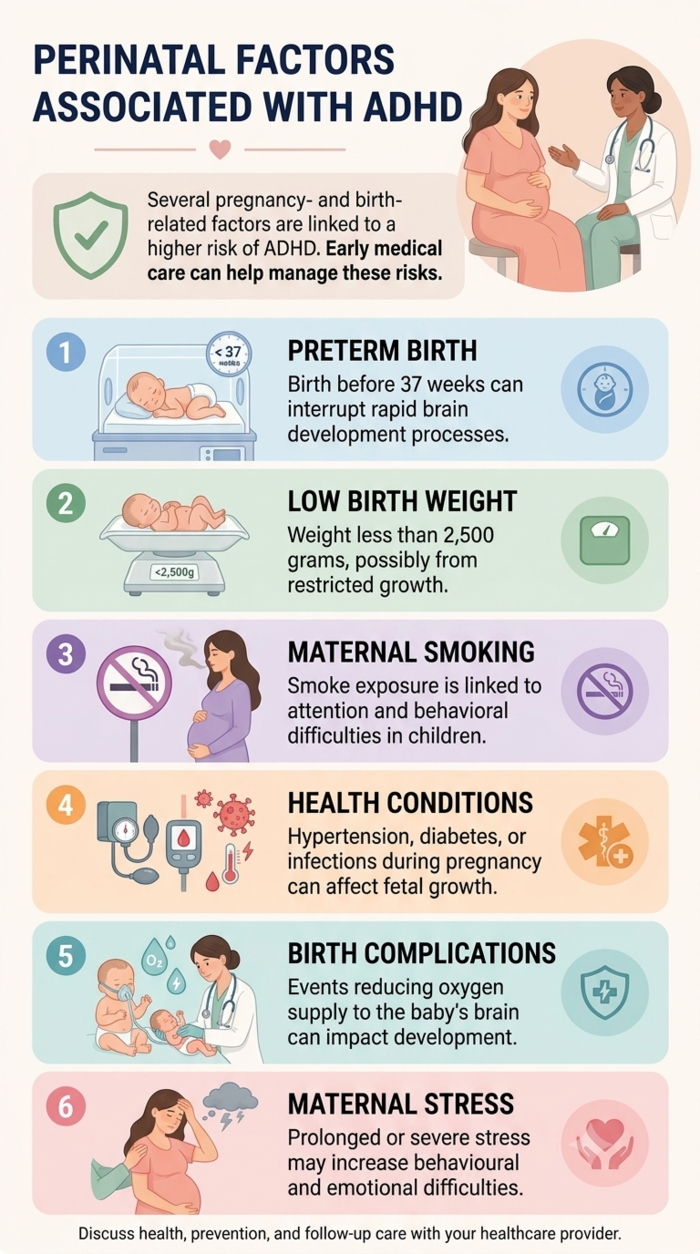
Perinatal Factors Associated with ADHD
Several pregnancy-and birth-related factors have been linked to an increased risk of ADHD.Preterm Birth
Babies born before 37 weeks of pregnancy may have a higher likelihood of developing ADHD. The brain continues to develop rapidly during the final weeks of pregnancy, and premature birth may interrupt some of these developmental processes.The risk may be greater among babies born very early. However, many children born prematurely develop normally, and appropriate neonatal care and developmental follow-up can help address emerging concerns.
Low Birth Weight
Low birth weight, generally defined as less than 2,500 grams, has been associated with an increased risk of ADHD. It may reflect premature birth, restricted foetal growth, or other pregnancy-related complications.Low birth weight does not directly cause ADHD in every child. Healthcare professionals consider the baby's overall health, gestational age, and developmental progress when assessing potential concerns.
Maternal Smoking During Pregnancy
Exposure to tobacco smoke during pregnancy has been associated with a higher likelihood of attention and behavioural difficulties in children. However, research suggests that shared genetic and environmental influences may explain part of this association.Avoiding smoking and second-hand smoke during pregnancy supports healthy foetal development and reduces several pregnancy-related risks.
Maternal Health Conditions
Certain maternal health conditions may be associated with a higher likelihood of ADHD in offspring. These include the following:- Hypertension: High blood pressure and related pregnancy complications may affect placental function and foetal growth
- Diabetes: Poorly controlled blood sugar during pregnancy can increase the risk of several complications that may affect foetal development
- Maternal infections: Some infections during pregnancy may influence foetal development, depending on their severity and timing
Birth Complications
Complications that significantly reduce oxygen supply to a baby's brain may increase the risk of neurological problems. Severe oxygen deprivation around birth can cause brain injury, which may sometimes be associated with later attention or behavioural difficulties.However, not all birth complications lead to brain injury or ADHD. Prompt medical care and careful newborn assessment are important when complications occur.
Maternal Stress During Pregnancy
Prolonged or severe stress during pregnancy has been associated with a higher likelihood of behavioural and emotional difficulties in children, including ADHD-related symptoms.Several factors, including family circumstances, genetics, and maternal mental health, may influence this relationship. Emotional support, adequate rest, and access to appropriate mental healthcare can help support maternal well-being during pregnancy.
Can Perinatal Factors Be Prevented?
It is not possible to avoid all the perinatal risk factors. However, the following measures can help ensure a healthy pregnancy and avoid unnecessary complications:- Attend regular antenatal checkups
- Control diabetes, hypertension, and other diseases under the guidance of a doctor
- Avoid all forms of smoking, drinking, and use of illegal drugs during pregnancy
- Follow the instructions of a doctor regarding food, medicine, and monitoring during pregnancy
- Get mental support in case you need it
FAQs on Perinatal Factors Causing ADHD: A Comprehensive Guide
- At what age can ADHD symptoms first become noticeable in children?
ADHD symptoms may become noticeable during preschool years, often before age 4. However, symptoms are more commonly identified when children start school and face greater demands for attention and self-control. Diagnoses usually require symptoms to persist and affect daily functioning. - Does prolonged labour increase the risk of ADHD?
Prolonged labour has been studied as a possible risk for ADHD, but evidence remains limited. Complications associated with difficult labour, such as significant oxygen deprivation, may affect brain development. However, prolonged labour does not mean a child will develop ADHD. - Is ADHD more common in boys born prematurely?
Children born prematurely have an increased risk of ADHD compared with those born at full term. Boys may be diagnosed more often than girls, partly because their symptoms are more noticeable. However, premature birth does not necessarily mean a child will develop ADHD.