
In this article:
Cold vs Flu Symptoms in Pregnancy: A Quick Comparison
| Symptom | Cold | Flu |
| Onset | Gradual | Sudden |
| Fever | Uncommon | Common |
| Chills | Uncommon | Fairly common |
| Body aches | Mild | Often severe |
| Tiredness | Mild | Marked |
| Headache | Rare | Common |
| Runny nose, sneezing, sore throat | Common | Sometimes |
| Recovery | 7–10 days; cough may last longer | Exhaustion for several days or longer |
Is Flu More Dangerous Than a Cold During Pregnancy?
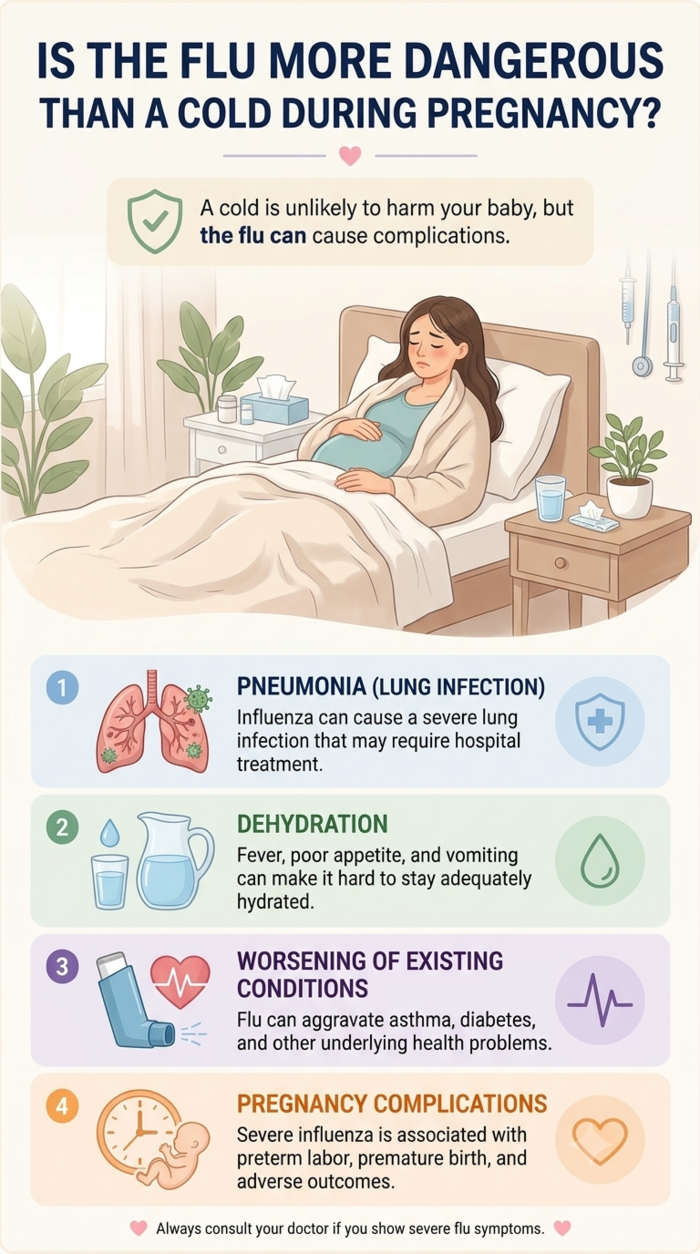
A cold is unlikely to harm the baby, but flu can cause complications in pregnancy.Pregnancy affects the immune system and places additional demands on the heart and lungs. This increases the risk of complications such as:
- Pneumonia: Influenza can cause a lung infection that may require hospital treatment.
- Dehydration: Fever, poor appetite, and vomiting can make it hard to stay adequately hydrated.
- Worsening of existing conditions: Flu can aggravate asthma, diabetes, and other underlying health problems.
- Pregnancy complications: Severe influenza has been associated with preterm labour, premature birth, and other adverse pregnancy outcomes.
When to See a Doctor
Seek immediate medical attention if you experience:- Difficulty breathing or shortness of breath
- Chest or abdominal pain or pressure
- Severe or persistent vomiting
- Confusion, dizziness, or severe weakness
- High fever that does not settle with paracetamol
- Reduced or no baby movements
Distinguishing between the two is particularly important during pregnancy because influenza can lead to serious complications, including pneumonia and hospitalisation. Pregnant women should seek medical advice if they experience sudden fever, significant body aches, or worsening respiratory symptoms.
How to Treat a Cold or Flu During Pregnancy
Treatment depends on the infection and severity of symptoms.For a common cold:
- Drink water, soups, and other fluids.
- Get adequate rest.
- Use saline nasal drops or sprays for nasal congestion.
- Gargle with warm salt water to soothe a sore throat.
- Use a clean humidifier if dry air worsens nasal discomfort.
- Inhale steam from plain hot water and sleep with extra pillows to ease a post-nasal cough.
Doctors may prescribe antiviral medicines to treat influenza during pregnancy. Treatment works best when started within 48 hours of symptom onset. However, pregnant women may still benefit from treatment even if they seek medical attention later.
Do not take antibiotics for a cold or flu unless a doctor identifies a bacterial infection. Avoid self-medicating with combination cold medicines, decongestants, or herbal remedies during pregnancy.
How to Prevent Cold and Flu During Pregnancy
Some precautions can reduce the risk of respiratory infections during pregnancy:- Get the flu vaccine: The CDC recommends the inactivated flu shot during pregnancy
- Wash your hands: Use soap and water, particularly after touching frequently used surfaces or returning from public places.
- Avoid close contact with sick people: Keep away from people who have a fever, cough, or other cold-like symptoms.
- Wear a mask: Consider wearing a well-fitting mask in crowded or poorly ventilated places, particularly during periods of increased respiratory infections.
- Maintain good ventilation: Keep indoor spaces ventilated whenever possible.
- Avoid touching your face: Wash your hands before touching your eyes, nose, or mouth.
FAQs on Cold vs Flu During Pregnancy: How to Identify the Difference
- Can a common cold during pregnancy harm the baby?
A common cold usually does not harm the developing baby. However, persistent fever or worsening symptoms require medical evaluation. - How long does a cold last in pregnancy?
Most colds improve within one to two weeks. See a doctor if symptoms last three weeks or suddenly worsen. - Can I get a flu vaccine during pregnancy?
Yes. The inactivated flu shot can be given at any stage of pregnancy. It also helps provide antibodies to the baby before birth.