In this article:
Why Does Sweating Increase During Pregnancy?
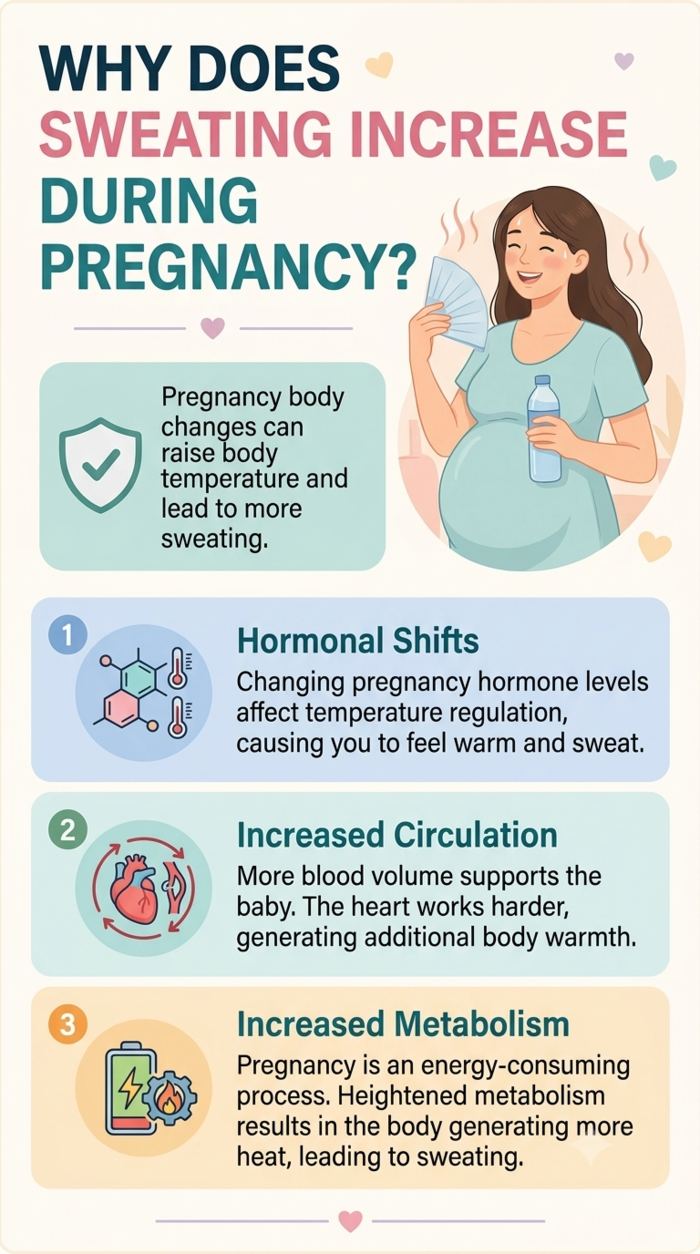
Various changes occur in the body during pregnancy to aid the developing baby. These changes can raise the body temperature and lead to more sweating.1. Changes in Hormones
Hormones released during pregnancy (hCG, progesterone, oestrogen, prolactin, and oxytocin) affect various functions in the body, such as temperature regulation. Fluctuations in the levels can cause women to feel warm and sweat easily. Some women may find that they sweat more during the day, while some may sweat more at night.
2. Increased Circulation
Pregnancy increases blood volume, providing support and nourishment to the baby and placenta. The heart has to work harder to circulate blood; therefore, women may feel warm and sweat more.
3. Increased Metabolism
Pregnancy is an energy-consuming process. Heightened metabolism results in the body generating more heat, leading to increased sweating.
Staying hydrated, choosing breathable clothing, and keeping cool can make increased sweating during pregnancy much easier to manage.
When is Sweating More Common During Pregnancy?
Increased perspiration or sweating may occur in any trimester during pregnancy. However, women may notice more sweating during the first and third trimesters.- First trimester: Rising hormones, particularly oestrogen and progesterone, can influence the body's temperature regulation and make you feel warmer
- Third trimester: The growing baby, increased blood volume, and higher metabolic demands to nourish the baby can make you feel warmer, especially during physical activity or sleep.
Tips to Stay Comfortable
Dr K. Ramana recommends a few simple changes that can make daily life more comfortable for pregnant women who experience increased sweating. These include the following:1. Wear Clothes That “Breathe”
Opt for clothes that are comfortable and made of breathable materials, like cotton. These types of clothes allow air to pass through and moisture from the skin to evaporate. Try to avoid wearing tight clothes whenever you can, especially in hot weather.
2. Stay Hydrated
Proper hydration enables the body to maintain its temperature and replenish the fluids lost through sweating. Remember to drink sufficient water throughout the day in the form of water and other fluids like juices or soups. Women who sweat excessively should be attentive to their fluid intake. Follow your doctor's recommendations regarding fluid intake that is specific to your individual needs.
3. Keep Your Bedroom Cool
Use a fan or air conditioning system if necessary and ventilate the room properly. You can also use lightweight bedding and breathable pyjamas to reduce your discomfort due to night sweats.
4. Avoid Hot Showers
Very hot showers can raise body temperature and make you feel warmer or sweat more. Choose lukewarm showers that will help you stay cool, comfortable, and fresh. Avoid spending too long in hot water, especially in a warm environment.
5. Avoid Triggers
Certain foods, drinks, and environmental factors can make sweating more noticeable during pregnancy. Spicy foods, hot beverages, warm rooms, and excessive physical activity can increase body warmth. Notice what triggers sweating for you and reduce exposure when possible.
6. Use Mild Deodorant
Increased sweating can make body odour more noticeable. Choose a mild, pregnancy-safe deodorant to help you feel fresh throughout the day. If your skin is sensitive, choose a fragrance-free option and avoid products that cause irritation.
When Should You Seek Medical Attention?
Sweating by itself is often a normal pregnancy change. Dr K. Ramana suggests seeking medical attention if you notice symptoms like:- Fever
- Chills
- Dizziness
- Palpitations
- Unexplained weight loss
- Persistent weakness
Increased sweating is a common pregnancy change linked to hormonal changes, increased blood flow, and a faster metabolism. You can stay more comfortable by drinking water regularly, choosing loose cotton clothes, keeping your room cool, and choosing lukewarm showers. Limit foods or activities that make you feel warmer. Use a mild deodorant if needed, and speak with your gynaecologist if sweating is persistent or accompanied by other unusual symptoms.
Whether you’re pregnant, a new mom, or navigating postpartum, you don’t have to do it alone. Join our support group to connect, share, and support one another.
FAQs on Sweating During Pregnancy: Why It Happens and Tips to Stay Comfortable
- Will excess sweating during pregnancy affect my skin?
Excess sweating may leave the skin damp and increase irritation, prickly heat, or body odour. Keeping skin clean and dry, wearing breathable clothing, and staying cool can help. - Is increased sweating common during pregnancy at night?
Yes, night sweating can be common during pregnancy. Various factors contribute to sweating at night, such as endocrine system changes, fluctuations in body temperature, room temperature, and the bedding materials used. - What is the impact of physical activities on pregnancy sweating?
Physical activity naturally raises body temperature and can increase sweating during pregnancy. Pregnancy-safe exercises, adequate hydration, breathable clothing, and exercising in a cool environment can improve comfort.