In this article:
She recommends oral rehydration solution or plenty of fluids, small bland meals once vomiting settles, and adequate rest. She also advises taking medicines for nausea only when prescribed by your doctor.
How is Food Poisoning Managed During Pregnancy?
Your treatment for food poisoning during pregnancy mainly depends on how severe your symptoms are and what the cause is.Dr Sharma recommends:
| Supportive care options | Outcomes |
| Oral rehydration solution (ORS) | Restores fluid and electrolyte balance |
| Fluids intake | Take small, frequent sips if you feel nauseous to improve hydration |
| Take easily digestible, bland food in small portions |
|
| Medicines to manage nausea |
|
Is It Necessary to Take Antibiotics For Managing Food Poisoning During Pregnancy?
Food poisoning during pregnancy is often managed with fluids, rest, gradual return to food, and appropriate symptom management. Not every case of food poisoning requires antibiotics. The treatment depends on the infection causing your symptoms. However, certain bacterial infections can be particularly serious during pregnancy.Listeriosis, caused by Listeria monocytogenes, can lead to complications such as pregnancy loss, preterm birth, or serious infection in a newborn. Dr Sharma highlights that infections such as listeriosis require prompt antibiotic treatment because they can seriously affect the baby. Therefore, you should never self-medicate with antibiotics during pregnancy.
If listeriosis is suspected or confirmed, your doctor can decide whether testing and antibiotic treatment are needed. However, severe vomiting, dehydration, high fever, blood in stools, reduced foetal movements, or persistent symptoms require medical attention.
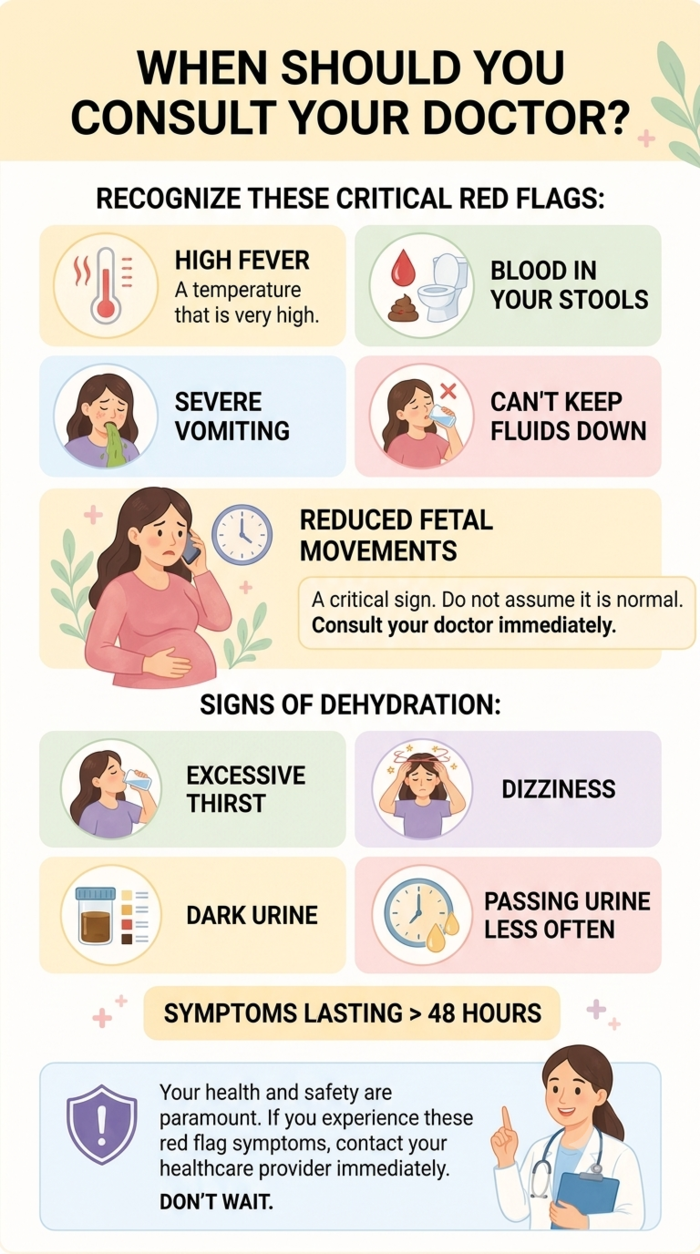
When Should You Consult Your Doctor?
Dr Sharma recommends getting immediate medical care if you experience the following:- High fever
- Blood in your stools
- Severe vomiting
- Inability to drink fluids
- Reduced fetal movements
- Signs of dehydration
- Symptoms lasting more than 48 hours
- Excessive thirst
- Dizziness
- Dark urine
- Passing urine less often than usual
With timely hydration, adequate rest, and appropriate medical care, most cases of food poisoning during pregnancy can be managed safely. However, if your condition worsens or persists, reach out for immediate medical care.
Whether you’re pregnant, a new mom, or navigating postpartum, you don’t have to do it alone. Join our support group to connect, share, and support one another.
FAQs on Treatment Options For Managing Food Poisoning During Pregnancy
- What is the main treatment for food poisoning during pregnancy?
Preventing dehydration is the mainstay of supportive care during pregnancy. ORS, sufficient fluid intake, rest, and gradually returning to small meals can help. However, Severe symptoms may require medical treatment. - Can I take antibiotics for food poisoning during pregnancy?
Do not take antibiotics without medical advice. Many cases do not require them. However, certain infections, including listeriosis, may require prompt antibiotic treatment. - When should I get medical care for food poisoning during pregnancy?
Reach out to your doctor immediately if you have a high fever, blood in your stools, severe vomiting, cannot keep fluids down, signs of dehydration, or reduced foetal movements.