
What Is Hypothalamic Amenorrhoea?
Hypothalamic amenorrhoea (HA), also called functional hypothalamic amenorrhoea (FHA), is a type of secondary amenorrhoea. Secondary amenorrhoea means that periods stop for three months or more in someone who previously had regular menstrual cycles.The hypothalamus normally releases gonadotropin-releasing hormone (GnRH), which signals the pituitary gland to produce luteinising hormone (LH) and follicle-stimulating hormone (FSH). These hormones stimulate the ovaries to release an egg each month.
When the hypothalamus senses that the body is under physical or emotional stress, it reduces GnRH production. As a result:
- Ovulation stops
- Oestrogen levels fall
- Periods become irregular or stop completely
- Fertility decreases
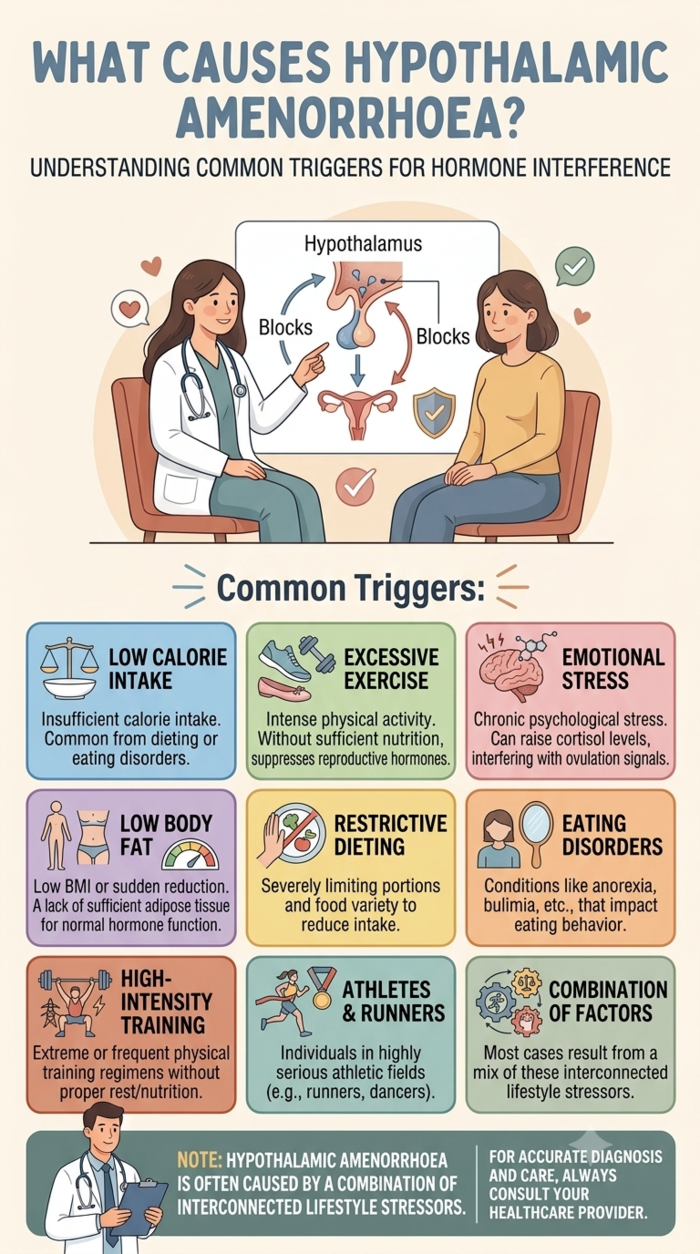
What Causes Hypothalamic Amenorrhoea?
Several factors can interfere with normal hormone production.Common triggers include:
- Low calorie intake: Eating too few calories compared with the body's needs is one of the most common causes. This may occur due to:
- Restrictive dieting
- Eating disorders
- Skipping meals
- Rapid weight loss
- Excessive exercise: High-intensity exercise without enough nutrition can suppress reproductive hormones. It is commonly seen in:
- Marathon runners
- Professional athletes
- Dancers
- Fitness enthusiasts
- Emotional stress: Long-term emotional or psychological stress may increase cortisol levels, which can interfere with the hormones needed for ovulation.
- Low body fat: Women with a low body mass index (BMI) or a sudden reduction in body fat are at higher risk.
- Multiple issues: A combination of the above factors rather than a single cause.
What Are the Symptoms of Hypothalamic Amenorrhoea?
The primary symptom is missed periods for three months or more, or irregular cycles beyond six months. Other signs include:- Low libido (reduced sex drive)
- Fatigue
- Cold intolerance
- Vaginal dryness due to low oestrogen
- Difficulty conceiving
- Low bone density over time
- Stress fractures in severe cases
How Is Hypothalamic Amenorrhoea Diagnosed?
Diagnosis is based on ruling out other causes of missed periods. A doctor typically checks for pregnancy first, then evaluates:- Thyroid function
- Prolactin levels
- Pelvic ultrasound
- Bone density scan (if periods are absent for several months)
- A detailed history of eating habits, exercise routine, weight changes, and stress levels
Can Hypothalamic Amenorrhoea Cause Infertility?
Hypothalamic amenorrhoea directly affects fertility because low GnRH means the ovaries do not receive the signal to release an egg. Without ovulation, natural conception is not possible.However, this type of infertility is often reversible. Restoring adequate calorie intake, reducing excessive exercise, and managing stress can bring back ovulation and periods within a few months.
In cases where lifestyle changes are not enough, doctors may prescribe GnRH therapy or other fertility medications to induce ovulation.
How Is Hypothalamic Amenorrhoea Treated
Treatment focuses on correcting the root cause:- Nutrition: Increasing calorie intake to match energy expenditure, guided by a dietitian
- Exercise modification: Reducing training intensity or frequency, particularly for athletes
- Stress management: Stress management techniques such as meditation, counselling, yoga and adequate sleep may support hormonal recovery. Counselling or cognitive behavioural therapy where psychological stress is a factor.
- Reach a healthy weight: Even a modest increase in body weight may help restart ovulation in underweight women.
- Medical support: Hormone therapy to protect bone health, or fertility treatment if pregnancy is being planned
Can You Get Pregnant After Hypothalamic Amenorrhoea?
Many women successfully conceive once ovulation returns.Pregnancy chances improve when:
- Menstrual cycles become regular
- Hormone levels normalise
- A healthy body weight is maintained
- Nutritional deficiencies are corrected
Hypothalamic amenorrhoea is a manageable condition, and most women regain regular periods and fertility once the underlying trigger for low GnRH is identified and treated.
You’re not alone in your journey when trying to conceive. Join our supportive community to connect with others, share experiences, and find encouragement every step of the way.
FAQs on What Is Hypothalamic Amenorrhoea and Can It Affect Fertility?
- Is hypothalamic amenorrhoea permanent?
No. It is usually reversible once the underlying cause, such as low calorie intake or excessive exercise, is corrected. - Can you have hypothalamic amenorrhoea if your weight is normal?
Yes. Even women with a normal BMI can develop hypothalamic amenorrhoea if they have high physical activity, chronic stress, or consume fewer calories than their body requires. - Can I get pregnant with hypothalamic amenorrhoea?
Natural conception is difficult without ovulation, but restoring hormonal balance through lifestyle changes or medical treatment can help pregnancy occur.