In this article:
What Is a Normal Baby Head Size?
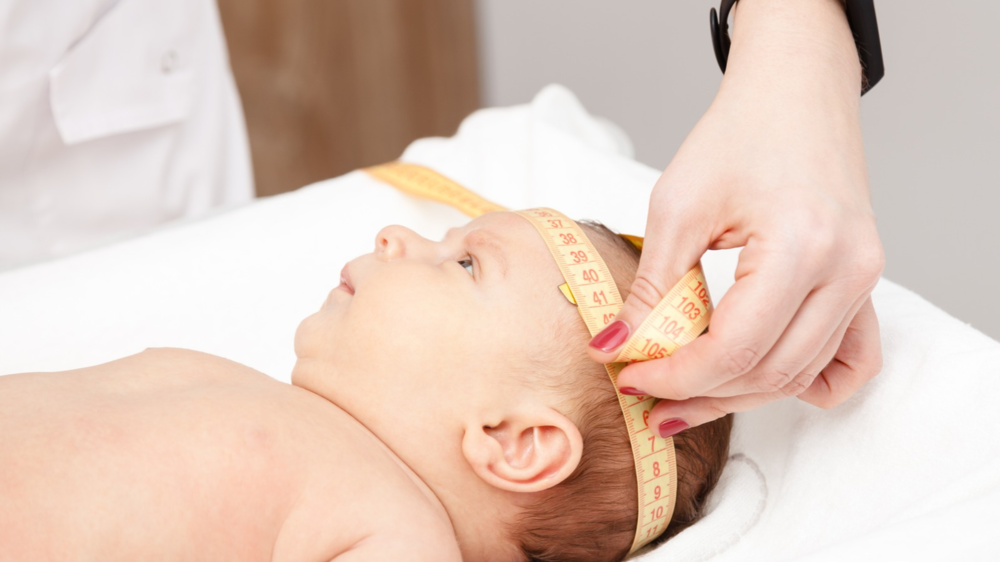
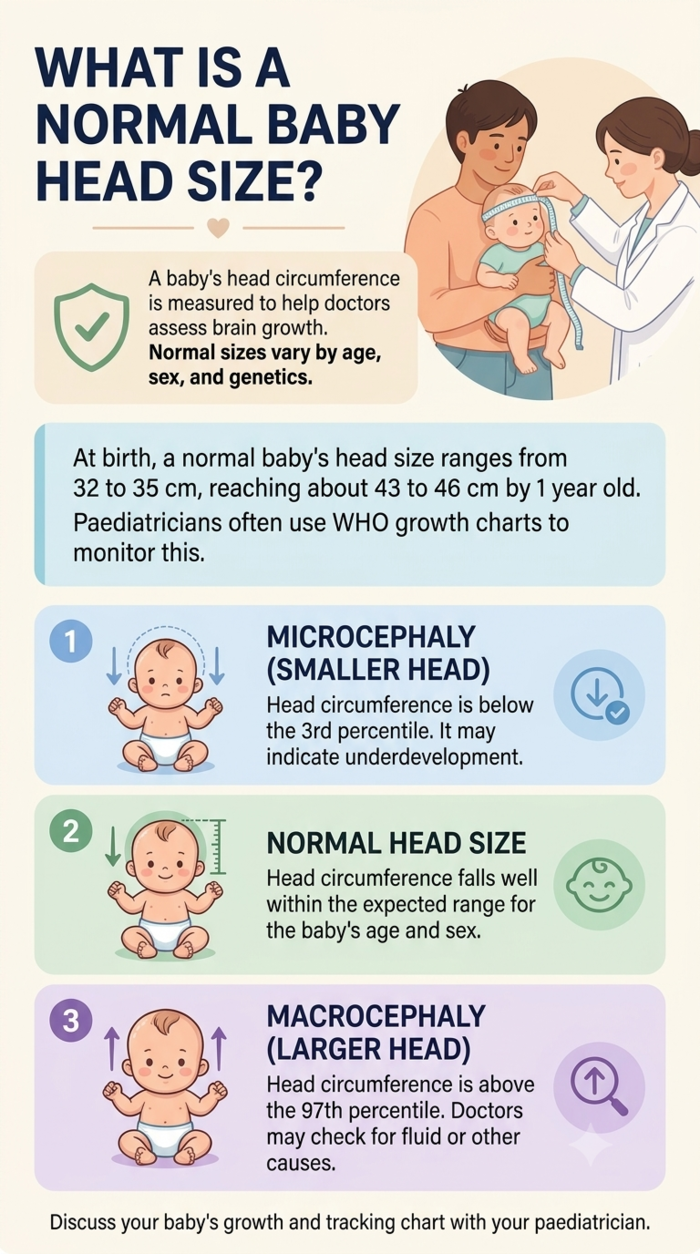
A baby's head circumference is measured around the widest part of the head, just above the eyebrows and ears and around the back of the head. This measurement helps doctors assess brain growth.The normal head circumference varies with the baby's age, sex, and gestational age at birth. In India, most paediatricians use WHO growth charts. Head size at birth ranges from 32 to 35 cm and reaches about 43 to 46 cm by one year.
Doctors generally use the following guidelines:
- Microcephaly: Head circumference below the third percentile (or more than two standard deviations below the average).
- Normal head size: Head circumference within the expected range for the baby's age and sex.
- Macrocephaly: Head circumference above the 97th percentile (or more than two standard deviations above the average).
What Causes Microcephaly?
The cause is unknown in most babies. Known causes include:- Genetic and chromosomal conditions
- Infections in pregnancy, such as Zika, rubella, cytomegalovirus, and toxoplasmosis
- Alcohol or drug exposure in pregnancy
- Severe malnutrition in the womb
- Reduced blood supply to the baby's brain
- Seizures
- Delayed sitting, walking, or speech
- Intellectual disability
- Feeding and swallowing difficulty
- Hearing or vision problems
What Causes Macrocephaly?
About 60% of mild cases are benign familial macrocephaly, where a parent also has a large head, and the child develops normally.Other causes need investigation:
- Hydrocephalus (fluid build-up in the brain)
- Megalencephaly (an enlarged brain)
- Bleeding inside the skull
- Thickened skull bone
- Brain tumours
- Genetic syndromes
When to See a Doctor
Warning signs that need a doctor's review:- A tight or bulging soft spot
- Rapid head growth
- Prominent scalp veins
- Developmental delay
- Abnormal eye movements
- Poor feeding
The parents should be talking to their obstetrician about the ultrasound findings rather than making any judgements from a single measurement. Early assessment and appropriate follow-up can go a long way to ensuring that any issues that may be underlying are properly dealt with.
How Are Microcephaly and Macrocephaly Diagnosed?
Doctors assess a baby's head size through physical examinations, growth measurements, and, when necessary, imaging tests.- Before birth: An ultrasound in the late second or early third trimester can detect a small head.
- After birth: The doctor measures the head, compares it with growth charts, and repeats the measurement at later visits.
- Family check: Parents' head sizes are measured, as size can run in families.
- Further tests: MRI or CT scans, genetic tests, and blood tests for past infection.
What Are the Treatment Options for Abnormal Baby Head Size?
Treatment depends on the cause, associated symptoms, and the baby's overall development.- For microcephaly: There is no treatment that directly increases head size or reverses the underlying brain development changes. However, early intervention can support the baby's development. Treatment may include physiotherapy, occupational therapy, speech and feeding therapy, and medicines to manage seizures when present.
- For macrocephaly: Babies with familial macrocephaly and normal development may only need regular monitoring. If hydrocephalus is responsible, treatment may involve surgery to drain excess cerebrospinal fluid, such as placing a ventriculoperitoneal (VP) shunt. Other underlying conditions require treatment according to their cause.
FAQs on Microcephaly and Macrocephaly: What an Abnormal Baby Head Size Means
- Can a baby with microcephaly have normal intelligence?
Yes. Babies with mild microcephaly may have normal intelligence and development. Outcomes depend on the underlying cause and severity. - Can microcephaly be cured?
No. Therapies and medicines manage symptoms such as seizures and delayed milestones, and mild cases may need only monitoring. - What is the life expectancy with microcephaly?
It depends on severity. Some children have a normal life expectancy, while severe cases can shorten it.