
Tummy Time by Age: A Simple Guide
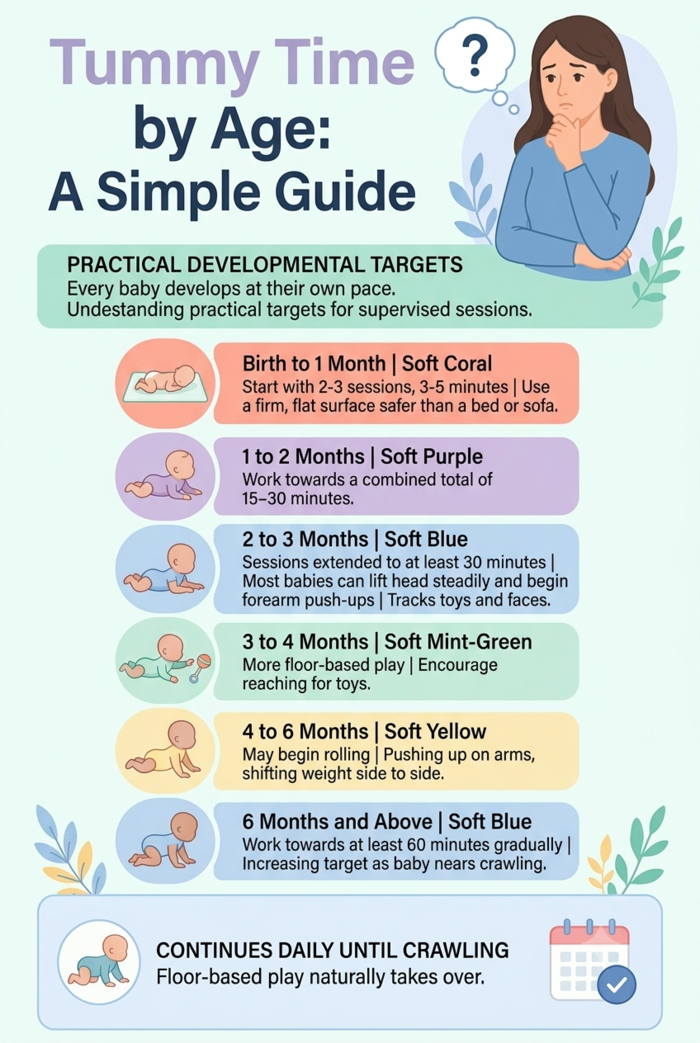
Every baby develops at their own pace; here are some practical targets:Newborn (birth to 1 month)
Newborns can begin tummy time within one to two days of birth, starting with two to three sessions of 3–5 minutes at a time, spread across the day. Short sessions after a nappy change or after waking from a nap work well, since the baby is already alert. A firm, flat surface such as a clean mat on the floor is safer than a bed or sofa, where a baby could sink in or roll unsupervised.1 to 2 months
By around two months of age, paediatricians recommend short sessions throughout the day, gradually working towards a combined total of 15–30 minutes. Your baby may begin lifting or turning their head while on their tummy.2 to 3 months
By three months, sessions can be extended to at least 30 minutes as the baby's neck control improves. At this stage, most babies can lift their head steadily and begin pushing up on their forearms, which is a sign of growing upper body strength. Babies also start tracking toys and faces from side to side. Placing a rattle or a bright toy just out of reach during tummy time encourages this skill further.3 to 4 months
Continue with regular supervised tummy time, allowing your baby to spend more time playing on the floor. Reaching for toys while on the tummy encourages movement and upper-body strength.4 to 6 months
Keep offering plenty of floor-based play and tummy time. Your baby may begin rolling, pushing up on their arms and shifting their weight from side to side.6 months and above
By six months, babies should be getting at least 60 minutes of tummy time a day, working towards this total gradually rather than all at once. Guidelines from movement and development bodies recommend around 30 minutes of tummy time spread through the day for babies who are not yet mobile. The 60-minute mark by six months reflects an increasing, age-appropriate target as the baby nears crawling.When to stop
Tummy time continues daily until the baby can crawl on their own, after which floor-based play naturally takes over. There is no fixed cut-off age; it depends on when the individual baby reaches that motor milestone.How to Make Tummy Time Easier for Your Baby
Some babies dislike tummy time at first. Instead of trying to keep them in the position for a long period, offer short sessions and gradually increase them.Try these approaches:
- Place your baby on your chest while you are awake and closely supervising.
- Lie down in front of your baby and talk, smile or sing to encourage them to lift their head.
- Put a safe toy within easy reach to encourage looking and reaching.
- Use a firm, flat surface for floor-based tummy time.
- If your baby struggles to lift their chest, a small rolled towel placed under the upper chest and armpits may provide support, with the baby's arms positioned forward.
- Choose a time when your baby is awake and alert rather than tired or immediately after a feed.
Building up tummy time gradually from a few minutes at birth to about an hour by six months gives a baby's muscles, vision, and motor skills the daily practice they need to reach the next milestone.
Whether you’re pregnant, a new mom, or navigating postpartum, you don’t have to do it alone. Join our support group to connect, share, and support one another.
FAQs on Tummy Time: How Much Is Enough at Each Age
- Is it normal for babies to cry during tummy time?
Yes, it is common in the early weeks. Start with shorter sessions and increase gradually as the baby's tolerance improves. - What if my baby refuses tummy time completely?
Try shorter, more frequent sessions, place a toy within reach, or try tummy time on a caregiver's chest before moving to the floor. - Does tummy time help with flat head syndrome?
Yes, regular tummy time reduces pressure on the back of the skull and lowers the risk of flat spots developing.