In this article:
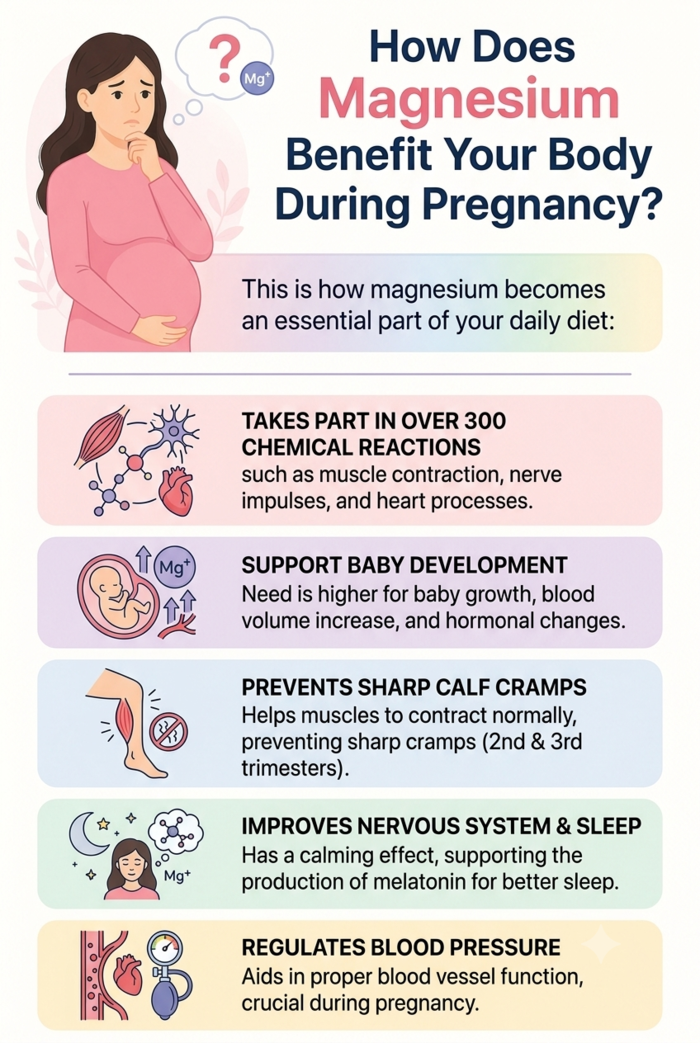
How Does Magnesium Benefit Your Body During Pregnancy?
This is how magnesium becomes an essential part of your daily diet:- Magnesium takes part in more than 300 chemical reactions, such as muscle contraction, transmission of nerve impulses, and heart processes.
- The need for this mineral becomes higher to support the development of your baby, the increase in blood volume and hormonal changes.
- It helps muscles to contract normally, preventing sharp cramps in calves during the second and third trimesters.
- It has a calming effect on the nervous system, supporting the production of melatonin, thus supporting better sleep.
- Aids in regulating blood pressure. It contributes to the proper function of blood vessels that become crucial in pregnancy.
How Much Magnesium Do You Need During Pregnancy?
The amount of magnesium that should be taken by a pregnant woman every day is about 350 to 400 mg per day for the majority of women, slightly higher compared to non-pregnant women. The average woman could easily meet this requirement through dietary sources in the form of a variety of foods, but due to increasing demands, increased excretion, and aversion to some foods, many fail to meet the needs.Magnesium should be obtained through foods because it is better absorbed. Always consult your doctor regarding supplementation, as magnesium can interact with drugs and can be excreted by the kidneys.
Symptoms that Your Magnesium Levels May Be Insufficient
While magnesium deficiency in pregnancy may not be obvious, there are some indications which may point out that your magnesium levels may be insufficient.- Having frequent muscle cramps, especially at nighttime
- Struggling to fall asleep despite feeling exhausted
- Having muscle spasms or constant tightness in the legs
- Constipation, even while drinking a sufficient amount of water and having enough fibre
- Getting regular headaches for no apparent reason
- Feeling physically restless at night
When to Contact Your Doctor?
You should speak with your doctor in case:- Your leg cramps are severe, occur frequently, and severely interfere with your sleep despite diet modifications.
- You are planning on taking magnesium, and you need advice about which type of magnesium and dosage to take for your personal circumstances.
- You have high blood pressure readings and wish to talk about the importance of nutrition besides your treatment.
- You suffer from kidney problems or are on any medication; magnesium supplementation needs to be medically assessed in both cases.
Whether you’re pregnant, a new mom, or navigating postpartum, you don’t have to do it alone. Join our support group to connect, share, and support one another.
FAQs on What Is the Role of Magnesium in Pregnancy?
- Is it safe to take a magnesium supplement together with a prenatal vitamin?
Prenatal vitamins generally come with some magnesium. The use of magnesium together with a prenatal vitamin is safe for most women, but it is always good to seek medical advice to prevent taking more than what is recommended. - Is magnesium good for restless leg syndrome during pregnancy?
Restless leg syndrome in pregnancy can be linked to deficiency in iron and magnesium. If restless leg syndrome is making it hard for you to sleep, ask your doctor to assess your iron and magnesium levels before you take any supplement. - Can taking too much magnesium cause any harm?
Yes. Taking too much magnesium through supplements and not foods may lead to diarrhoea and nausea. High levels of magnesium may cause other health problems.