In this article:
When Does hCG Become Detectable After Ovulation?
Ovulation releases an egg, but pregnancy only begins if that egg is fertilised and implants in the uterine lining. hCG is produced by the placenta, which starts forming only after implantation.Implantation timing varies, and hCG needs additional time to rise to a level detectable in urine.
According to NHS pathology guidance, a urine pregnancy test typically turns positive 7 to 10 days after conception, and by the time of a missed period, hCG levels usually exceed 100 IU/L.
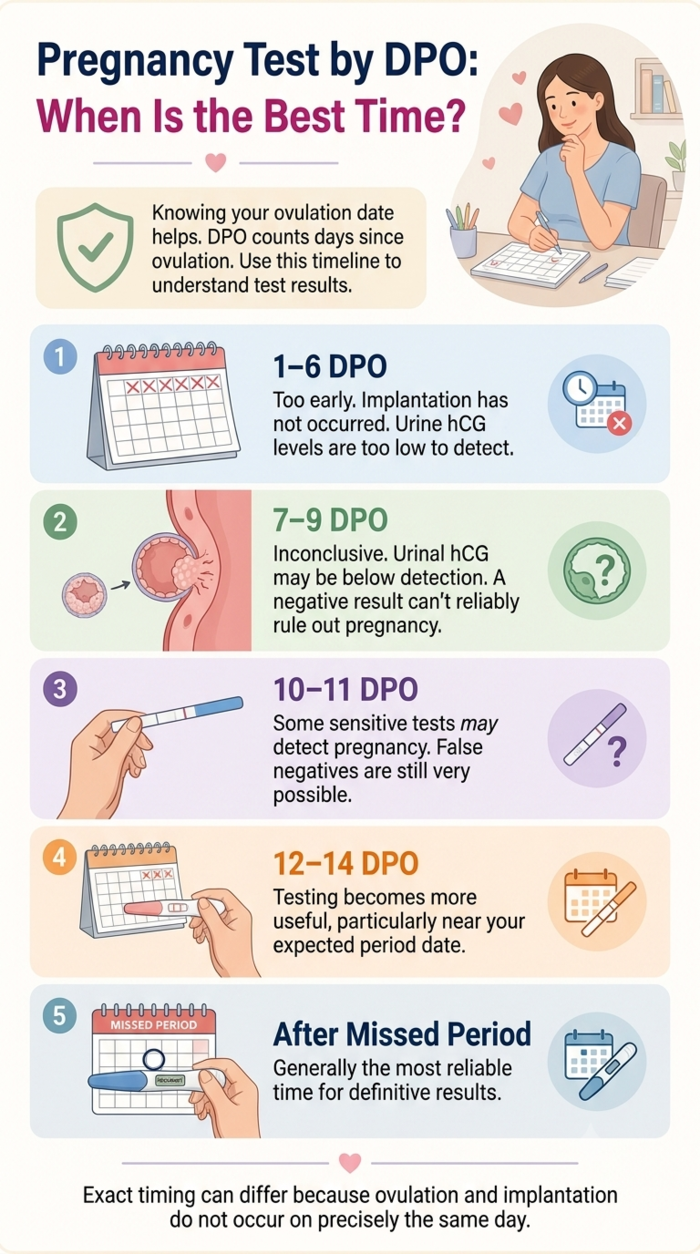
Pregnancy Test by DPO: When Is the Best Time?
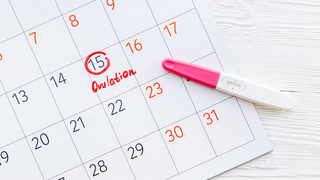
If you know your ovulation date, you can count the days afterwards as DPO (days past ovulation). For example, 10 DPO means 10 days have passed since ovulation. The following timeline can help you understand what a test may show:- 1–6 DPO: It is generally too early for a home pregnancy test. Implantation has usually not occurred yet.
- 7–9 DPO: A pregnancy may exist, but urine hCG may still be below the test's detection level. A negative result at this stage cannot reliably rule out pregnancy.
- 10–11 DPO: Some sensitive tests may detect pregnancy, but false negatives are still possible.
- 12–14 DPO: Testing becomes more useful, particularly around the expected date of your period.
- After a missed period: This is generally the most reliable time to take a home pregnancy test.
Why Do Pregnancy Tests Give False Negatives Early?
A negative test does not always rule out pregnancy, especially when testing early. You may have ovulated later than expected, or implantation and subsequent hCG production may have occurred later.A false negative can also happen when hCG is present but below the test's detection threshold. This is common when testing before the missed period, using diluted urine, or testing at the wrong time of day.
If an early test is negative but the period still does not arrive, retesting after 2 to 3 days or after the missed period gives a more reliable result.
This is particularly useful for women with irregular cycles, PCOS, or uncertain ovulation dates, wherein calculating the expected period from ovulation is difficult.
How to Take a Pregnancy Test for the Most Accurate Result
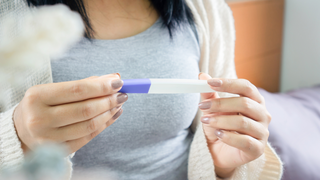
When using a home pregnancy test, follow the instructions supplied with that particular kit. Tests differ in their sensitivity and recommended testing procedures.For the best chance of detecting low hCG levels:
- Test with first-morning urine, when hCG is most concentrated
- Wait until the day of the missed period, or later, for best accuracy
- Follow the exact wait time given in the test instructions before reading the result
- Avoid drinking excessive amounts of water immediately before testing
- Retest after a few days if the first test is negative but the period has not started
- Confirm any positive result with a doctor to plan early prenatal care
You’re not alone in your journey when trying to conceive. Join our supportive community to connect with others, share experiences, and find encouragement every step of the way.
FAQs on How Soon After Ovulation Can You Test for Pregnancy?
- How many days after ovulation is hCG detectable in blood?
Blood tests can detect hCG around 8 to 10 days after ovulation, once implantation has taken place, a few days earlier than most home urine tests. - Should I test in the morning or evening after ovulation?
Morning testing is preferred, as first-morning urine has a higher hCG concentration, improving accuracy in early testing. - What if my pregnancy test is negative but my period is late?
Wait 2 to 3 days and retest, or consult a doctor for a blood hCG test to confirm the result.