In this article:
To understand uterine peristalsis, how uterine contractions may affect embryo implantation, and what women should know during fertility treatment, we spoke with Dr Nikita Kulkarni, Obstetrician and Gynaecologist.
What Is Uterine Peristalsis?
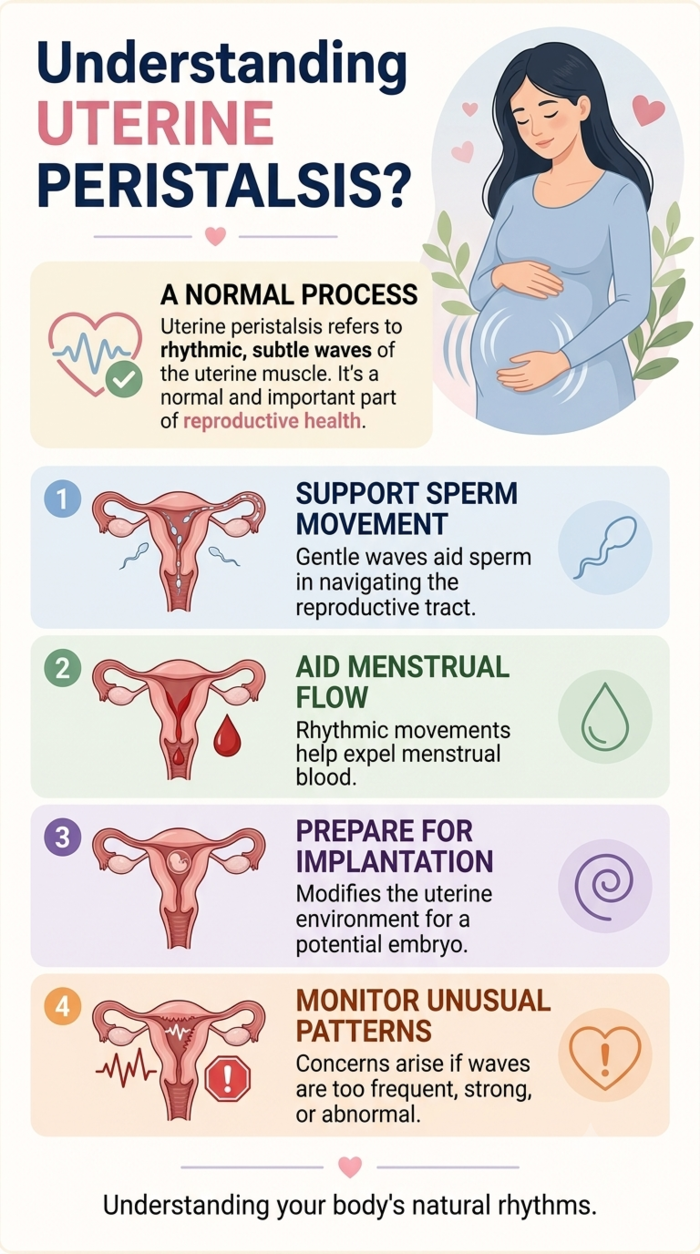
Uterine peristalsis refers to rhythmic movements or contractions of the uterine muscle.Think of these contractions as gentle waves moving through the uterus. They are not the same as the strong contractions experienced during labour. Instead, they are usually subtle and may occur without you noticing.
Uterine contractions may have different functions at different times, including:
- Helping move menstrual blood out of the uterus
- Supporting the movement of sperm through the reproductive tract
- Helping transport fluids within the uterus
- Changing the uterine environment around the time of implantation
The concern arises when contractions are unusually frequent, strong, or directed differently than expected at a particular stage of the cycle.
How Does Uterine Peristalsis Change During the Menstrual Cycle?
Uterine contractions do not remain the same throughout the month.- Around ovulation, uterine movements can help create conditions that support sperm transport towards the fallopian tubes.
- After ovulation, progesterone rises and the pattern of uterine activity changes. As the uterus prepares for a possible pregnancy, contractions generally become less frequent and less pronounced.
Could Abnormal Uterine Contractions Affect Embryo Implantation?
Researchers are still studying this.For an embryo to implant, it needs to reach the uterus and interact with a receptive endometrial lining. Excessive or poorly timed uterine contractions could theoretically make it more difficult for an embryo to remain in the appropriate area of the uterus.
Some research has suggested that increased uterine activity around the time of embryo transfer may be associated with lower implantation or pregnancy rates in some IVF cycles.
However, this does not mean that abnormal uterine contractions are a proven cause of implantation failure.
Implantation itself is a complex process influenced by several factors, including the health of the embryo, receptivity of the endometrium and the uterine environment.
What Causes Increased Uterine Contractions?
Several factors can affect how often or strongly the uterus contracts, including:- Hormonal changes: Oestrogen and progesterone can influence uterine activity.
- Prostaglandins: These natural chemicals can stimulate uterine muscle contractions.
- Endometriosis or adenomyosis: These conditions may affect normal uterine movement.
- Fibroids: Some fibroids can change the uterine environment.
- Fertility treatment: IVF medicines may temporarily influence uterine activity.
- Embryo transfer: The procedure can sometimes cause short-term uterine contractions.
How Are Abnormal Uterine Contractions Evaluated?
No routine test measures uterine peristalsis.If a doctor suspects that a uterine problem may be affecting fertility, they may evaluate the uterus using tests such as:
- Transvaginal ultrasound
- Saline infusion sonography, when appropriate
- Hysteroscopy
- MRI, particularly when adenomyosis or another uterine condition is suspected
Can Uterine Peristalsis Be Treated?
There is no single treatment specifically used for “abnormal uterine peristalsis.”Instead, doctors usually focus on finding and treating an underlying condition when one is present.
Depending on the situation, treatment may involve:
- Managing endometriosis or adenomyosis
- Treating uterine fibroids when necessary
- Adjusting fertility medicines
- Reviewing the timing or method of embryo transfer
- Using other fertility treatments based on the individual situation
When Should You Talk to a Fertility Specialist?
Consider speaking with a fertility specialist if you have:- Repeated implantation failure
- Several unsuccessful IVF cycles
- Known endometriosis or adenomyosis
- Uterine fibroids or other uterine abnormalities
- Recurrent pregnancy loss
- Difficulty conceiving despite regular attempts
You’re not alone in your journey when trying to conceive. Join our supportive community to connect with others, share experiences, and find encouragement every step of the way.
FAQs on What Is Uterine Peristalsis and Could Abnormal Uterine Contractions Affect Embryo Implantation?
- Can I feel uterine peristalsis?
Usually, no. Normal uterine contractions are generally too subtle to feel. Pelvic cramps or pain may have other causes. - Does walking after embryo transfer affect implantation?
Normal walking does not usually cause an embryo to fall out. Follow your fertility clinic's specific instructions after embryo transfer. - Can IVF medicines affect uterine contractions?
Fertility medicines can influence the hormonal environment and uterine activity. Your fertility specialist can adjust treatment when needed.