We spoke to Dr Sadhna Singhal Vishnoi, Associate Director - Department of Obstetrics and Gynecology at Cloudnine Group of Hospitals, Punjabi Bagh, to understand this better and give you verified information.
What Is Sheehan Syndrome?
Sheehan syndrome is pituitary gland damage caused by severe blood loss and a major drop in blood pressure around childbirth. It is also called postpartum pituitary necrosis. The pituitary is a small gland at the base of the brain that controls several important hormones.During pregnancy, the pituitary enlarges and needs a good blood supply. Severe postpartum haemorrhage can cause a sharp fall in blood flow and oxygen reaching the gland. This can damage pituitary cells and reduce the production of hormones.
The damage may affect one hormone or several hormones. In severe cases, it can cause panhypopituitarism, in which multiple pituitary hormones are deficient.
Sheehan Syndrome Symptoms: What to Look For
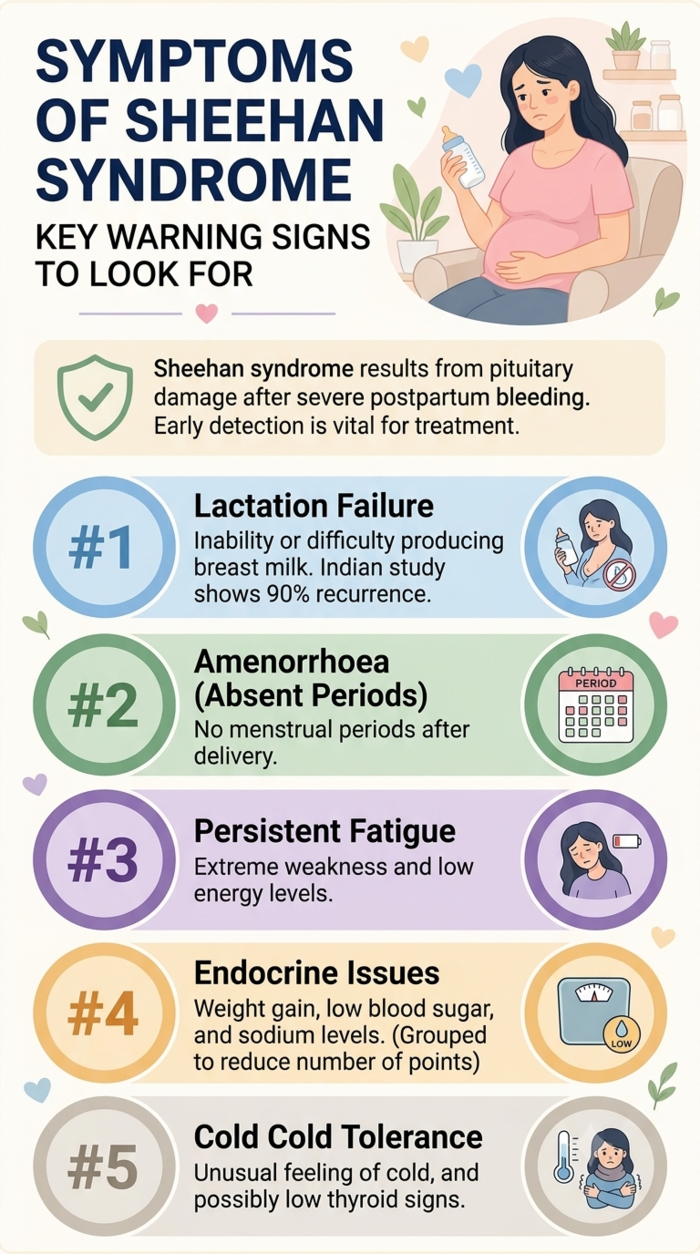
Symptoms depend on which pituitary hormones have been affected. Some appear soon after delivery, while others develop gradually.- Inability to breastfeed or little milk production after delivery
- No periods after delivery
- Persistent fatigue and weakness
- Low blood pressure and dizziness on standing
- Loss of pubic and underarm hair
- Weight gain linked to low thyroid hormone
- Low blood sugar and low sodium levels
- Feeling unusually cold
- Reduced sexual desire
- Constipation
- Difficulty conceiving
The acute form follows extensive damage, and symptoms start soon after delivery. Seizures, collapse, or low blood pressure need emergency care. In the chronic form, symptoms other than failed breastfeeding may take months or years to appear.
Not every woman who experiences heavy bleeding develops Sheehan syndrome. However, persistent symptoms after a complicated delivery should not be dismissed as ordinary postpartum exhaustion.
Risk Factors of Sheehan Syndrome
The direct cause is severe postpartum haemorrhage (PPH). Factors that raise the risk of heavy bleeding include:Can Sheehan Syndrome Happen Years After Delivery?
Yes. Sheehan syndrome can remain undiagnosed for years because its symptoms can be gradual and may resemble common problems such as anaemia, thyroid disease, menopause, or general fatigue.An Indian study found an average delay of about 8.4 years between the last delivery and diagnosis. Some women may present even later.
A history of severe postpartum bleeding, blood transfusion, shock, or low blood pressure should therefore be mentioned to a doctor if new hormonal symptoms develop later.
How Does Sheehan Syndrome Affect Periods, Breastfeeding and Fertility?
Damage to the pituitary can reduce the production of prolactin, the hormone needed for milk production. This can cause failure to breastfeed despite wanting to do so.The pituitary also produces hormones that stimulate the ovaries. Reduced follicle-stimulating hormone (FSH) and luteinising hormone (LH) can stop ovulation and menstruation. As a result, periods may not return after childbirth, and fertility can be affected.
Loss of oestrogen may also cause hot flushes, vaginal dryness and reduced sexual desire.
How Is Sheehan Syndrome Diagnosed?
Doctors look for the combination of heavy bleeding, failed lactation, and absent periods. Blood tests measure pituitary hormones and the hormones of the glands they control, such as cortisol and thyroid hormone.An MRI of the pituitary gland can provide additional evidence of previous pituitary damage.
Sheehan Syndrome Treatment and Hormone Replacement
Treatment focuses on replacing the hormones that the body is no longer producing adequately. Depending on the deficiencies, treatment may include:- Glucocorticoid replacement for ACTH and cortisol deficiency
- Thyroid hormone replacement for central hypothyroidism
- Oestrogen and progesterone therapy when appropriate
- Fertility treatment when pregnancy is desired
- Growth hormone replacement in selected patients
Whether you’re pregnant, a new mom, or navigating postpartum, you don’t have to do it alone. Join our support group to connect, share, and support one another.
FAQs on Sheehan syndrome: Pituitary Damage After Heavy Postpartum Bleeding
- Can a woman with Sheehan syndrome become pregnant?
Pregnancy may be possible with appropriate treatment. Fertility treatment may be needed if pituitary hormone deficiencies prevent ovulation. - Is Sheehan syndrome curable?
Damaged pituitary tissue does not recover. Hormone replacement controls symptoms and is lifelong for most women. - How long after delivery do symptoms appear?
Failure to produce milk is seen immediately. Other symptoms can begin within weeks or as late as years later.