We spoke to Dr Mannan Gupta, Chairman & HOD, Obstetrics and Gynaecology, Elantis Healthcare, New Delhi, to understand this better and get you verified information.
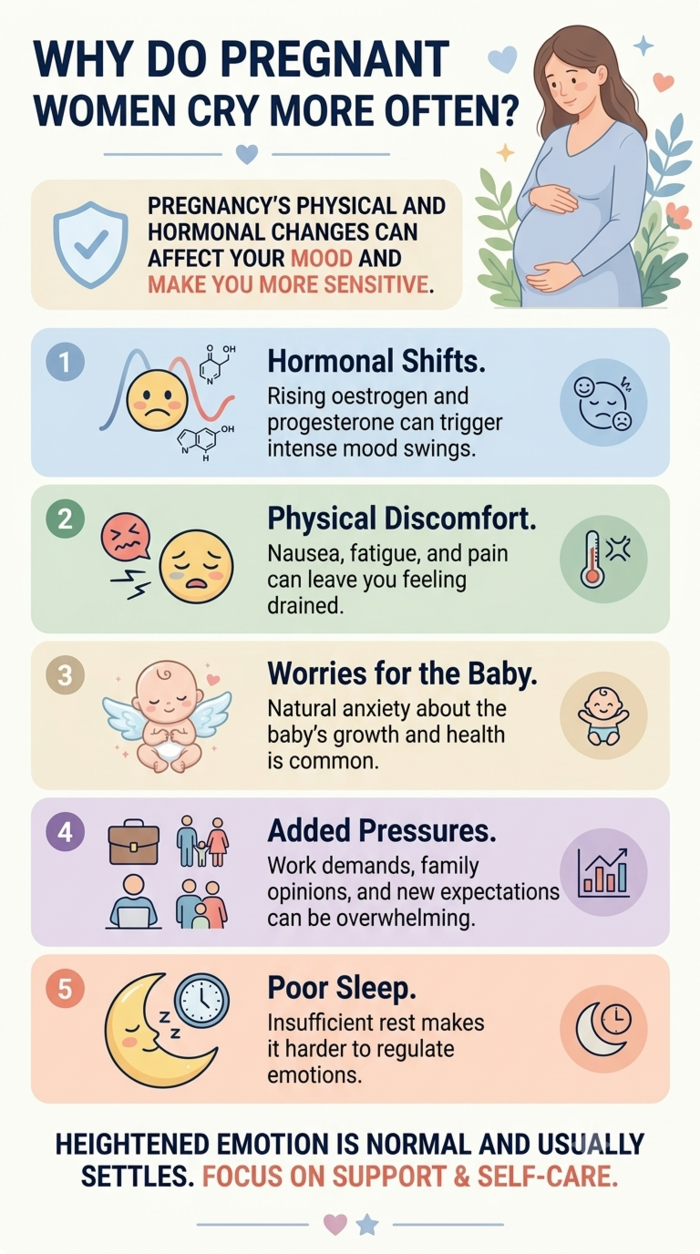
Why Do Pregnant Women Cry More Often?
Pregnancy involves physical, hormonal, and emotional changes. These can affect your mood and make you more sensitive to stress.Common reasons for crying during pregnancy include:
- Hormonal changes (rising oestrogen and progesterone levels) and mood swings
- Pregnancy discomfort, nausea, or tiredness
- Worries about the baby's health
- Fear of labour or childbirth
- Disrupted sleep
- Financial or work-related stress
- Relationship or family problems
- Previous pregnancy loss
- Concerns about becoming a parent
- Lack of emotional or practical support
Can Stress and Crying Affect the Baby?
Occasional stress is a normal part of life and does not mean your baby will be harmed. The placenta contains an enzyme called 11-beta-hydroxysteroid dehydrogenase type 2, which breaks down most of the mother's cortisol before it reaches the baby. A brief cry raises cortisol, and this enzyme buffer keeps foetal exposure within a safe range. The baby is not affected by a single stressful episode, a difficult conversation, or an emotional film.The concern is ongoing or severe stress, particularly when it continues without support or treatment. Research has linked high levels of stress during pregnancy with a higher likelihood of premature birth and low birth weight. Depression during pregnancy has also been associated with poor foetal growth, early labour, and complications after birth. However, pregnancy outcomes are influenced by many factors, and crying alone cannot predict whether a baby will develop a complication.
Crying once in a while will not impact the baby. But constant intense emotional stress could require intervention. When mothers deal with constant anxiety, fear, or stress, their body could remain in a state of heightened stress, which can affect their sleep patterns and their state of health.
What Does Research Say About Stress and Crying During Pregnancy?
A 2021 study involving nearly 1,300 pregnant women found that mothers with high depressive or anxiety scores during pregnancy were more likely to have infants with excessive crying problems after birth.An earlier study following close to 5,000 mother-infant pairs reported that women with several ongoing stress factors during pregnancy, such as depression, anxiety, and job strain, were nearly five times more likely to have a baby who cried excessively in infancy.
Imaging research has linked sustained high maternal cortisol to differences in foetal hippocampal connectivity, the brain region involved in memory and emotional regulation.
All these findings point to a pattern: the duration and intensity of maternal distress, not a single crying episode, carry developmental relevance.
How Much Crying Is Too Much During Pregnancy?
Crying that continues most days for two weeks or more, alongside loss of interest in daily activities, appetite changes, or trouble sleeping beyond pregnancy-related discomfort, needs medical attention.Obstetricians commonly use the Edinburgh Postnatal Depression Scale, adapted for antenatal use, to screen for this during routine check-ups.
What Can You Do to Manage Stress During Pregnancy?
Simple measures that may help include:- Talk to someone: Share your concerns with your partner, a family member, a friend, or a healthcare professional rather than dealing with persistent stress alone.
- Stay physically active: If your pregnancy is uncomplicated and your doctor has not advised otherwise, activities such as walking, prenatal yoga, swimming, or pregnancy-safe exercise can support mental wellbeing.
- Prioritise sleep and rest: Pregnancy can make sleep difficult, but adequate rest can help you cope with physical and emotional demands.
- Keep your antenatal appointments: Regular pregnancy check-ups allow your healthcare team to monitor your health and your baby's growth and address concerns early.
- Seek professional support: If stress, anxiety, or low mood is affecting your everyday life, tell your gynaecologist.
Whether you’re pregnant, a new mom, or navigating postpartum, you don’t have to do it alone. Join our support group to connect, share, and support one another.
FAQs on Can Crying During Pregnancy Affect Your Baby?
- Can crying during pregnancy cause miscarriage?
There is no evidence that crying, even frequent crying, causes miscarriage. Miscarriage risk is linked to chromosomal, hormonal, or medical factors, not emotional episodes. - Is it normal to cry a lot in the first trimester?
Yes. Hormone fluctuation is highest in the first trimester, making mood swings and tearfulness more common during this period than later in pregnancy.